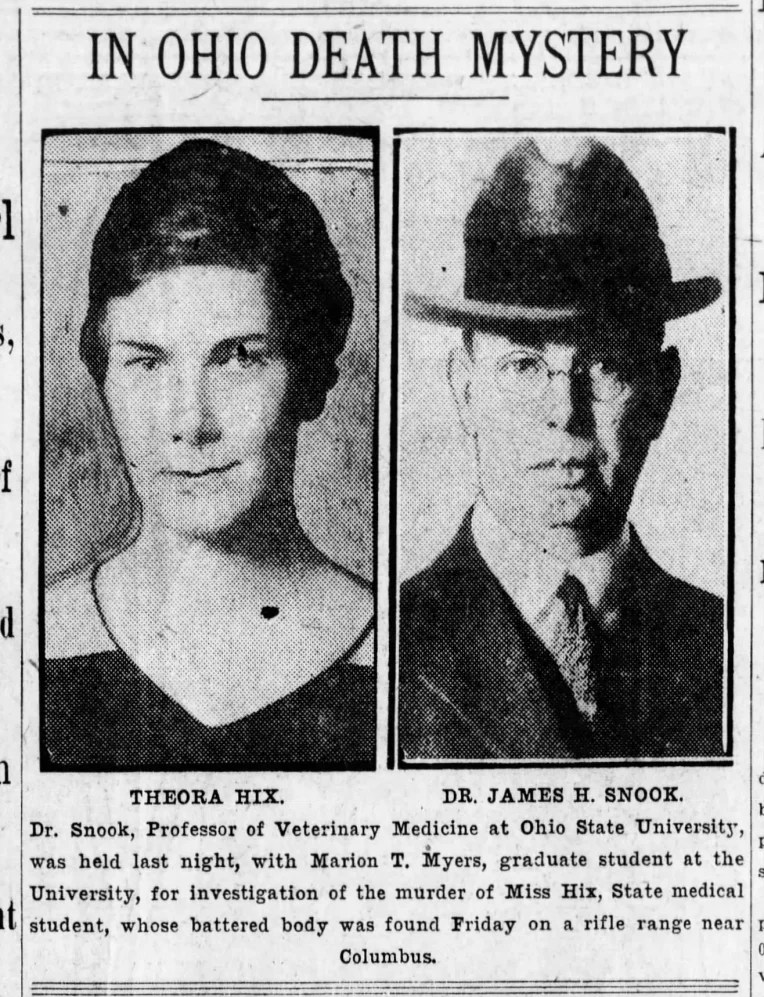
The Summer of 1929 draped Columbus in a heat so heavy it seemed to press secrets out of the ground. That July the city’s polite veneer cracked, and beneath it crawled a story too sordid for print.
Editors warned their readers of testimony “too raw, too indecent” for polite society. But in the courthouse nothing was left to the imagination.
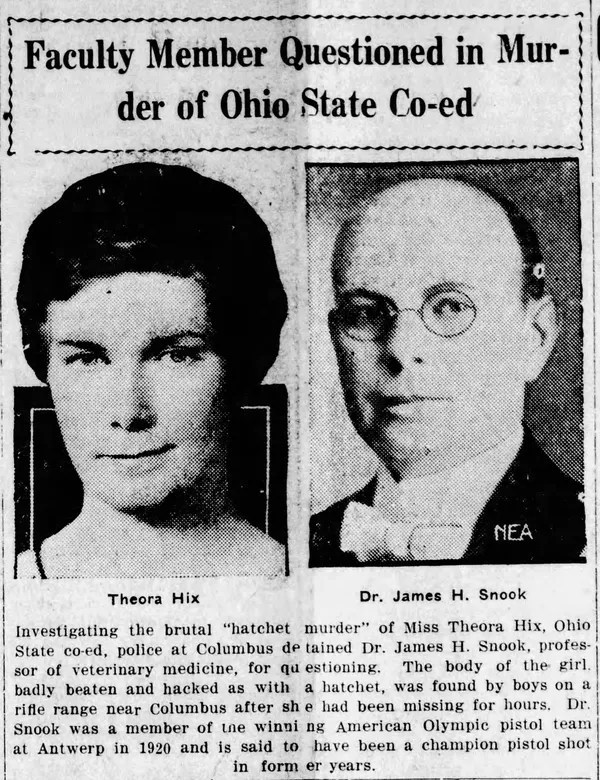
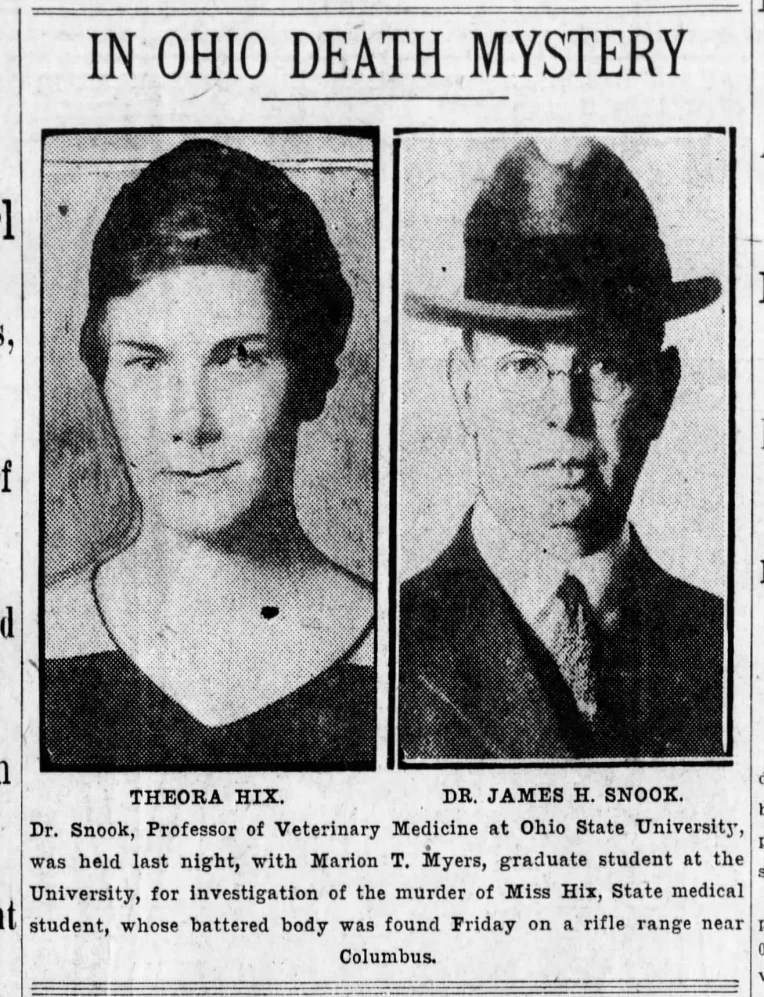
At the center was Dr. James Howard Snook., an olympic champion whose medals still gleamed, a professor whose lectures carried weight, an inventor whose surgical tool bore his name. Yet behind that shine lived shadows. By day, he was the embodiment of midwestern respectability. By night, he lived a double life, one that would lead them to the dirt floor of a firing range, standing over the broken body of Theora Hix, whose future ended where his lies collapsed.
Murder On The Firing Line:
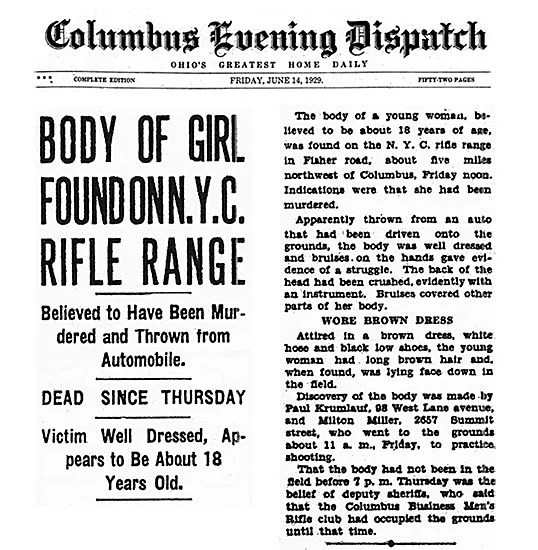
It was June 14, 1929, just before 11 a.m., when two sixteen-year-old boys stumbled onto a sight they could hardly believe. In the tall grass before them lay the body of a woman face down in the dust, her summer dress twisted, her hair matted with blood.
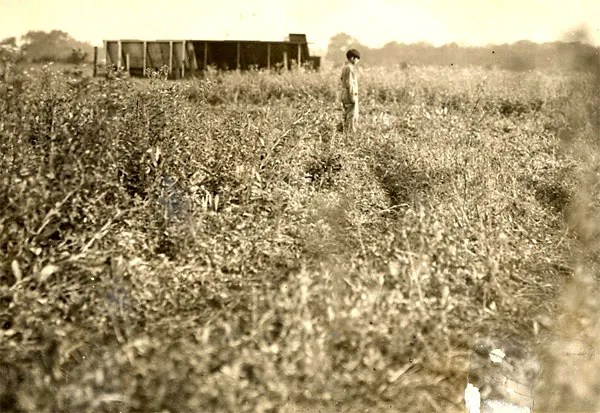
The boys, Paul Krumlauf and Milton Miller, had driven to the Scioto Shooting Range that morning to settle a simple bet: who was the better shot. What they found was death staring back at them from the weeds.
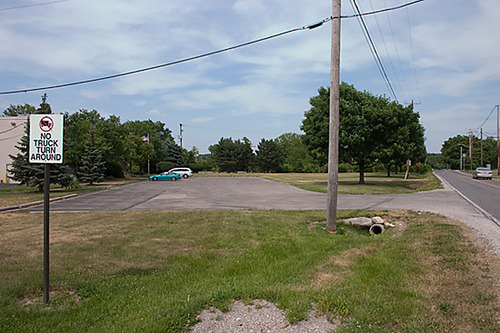
Shaken, they flagged down a farmer, who was working in the next field and begged him to stand guard, while they tore off for the police.
The Body In The Grass:
The police arrived with coroner William Murphy at their side, stepping into the tall grass where the two boys had made their grisly discovery. What they found was enough to silence even the most seasoned officer.
The young woman lay on her left side, her right arm extended forward, fingers clenched around a bloody handkerchief. Her throat had been slashed from left to right. Stab wounds punctured her back and abdomen. Her nose was flattened, her face beaten beyond recognition, her skull caved in. Her brown hair clung to the blood that soaked the dirt beneath her.
She wore a brown crepe dress with a white collar, the undergarments underneath were ripped from waist to hem. Bruises marked the inner side of her left arm. Three crushing blows to the forehead, two to the left, one above the nose had split the skin wide, one gash above the eye was so deep coroner Murphy slid his finger inside to measure it. Her wristwatch was stopped at 9:58. A wound in her right groin spoke of further violence.
Beside her, a broken key ring glinted in the weeds with three keys still attached. In time police would recover eight more. No purse, no identification, no papers. All they had was a body, anonymous and battered lying in the summer heat.
The corpse was lifted and carried to Glen L. Meyers Mortuary, while officers used a callbox to give the papers her description, praying someone, anyone, might recognize her.
The Girl Has A Name:
As the story broke in the papers, two sisters, Alice and Beatrice Bustin walked into the police station with worry written on their faces. Their roommate hadn’t come home the night before. She hadn’t been seen all morning.
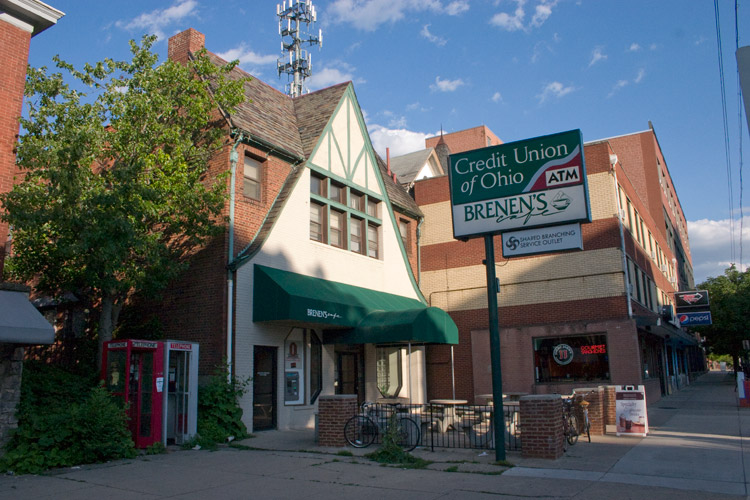
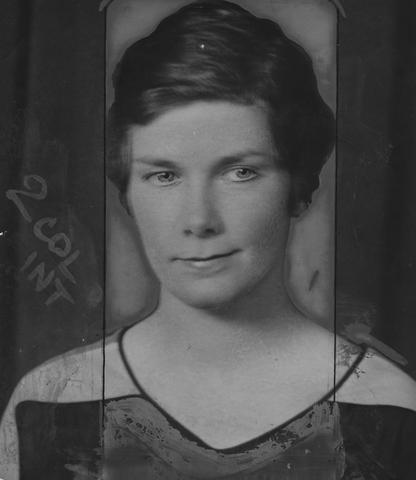
The three young women shared an address at 1658 Neil Avenue. The officer on duty sent the sisters to the mortuary on second avenue. There, with the awful certainty only the living can give the dead, they identified their roommate, 24-year-old medical student, Theora Hix.
Word traveled fast. A phone call rang through the police station almost immediately after. Was it true? Was Theora really dead? The male caller asked, when pressed on how he knew the girl he hung up.
The Bustin sisters filled in the blanks. Theora, they said had been seeing a man by the name of Marion Meyers, a 35-year-old, who worked in the agricultural department at Ohio State.
When police brought him in, Meyers admitted it was him that made the call. Yes, he had known Theora. Yes, they had a relationship at one time, but she broke it off when he asked her to marry him, he hadn’t seen her since, but they remained friends.
Police locked him up as their first suspect, convinced he’d killed her in a jealous rage after she rejected him. Meyers began to talk and he had a name of his own to offer. ” You need to talk to Dr. James Snook, Theora had been seeing him as well.”
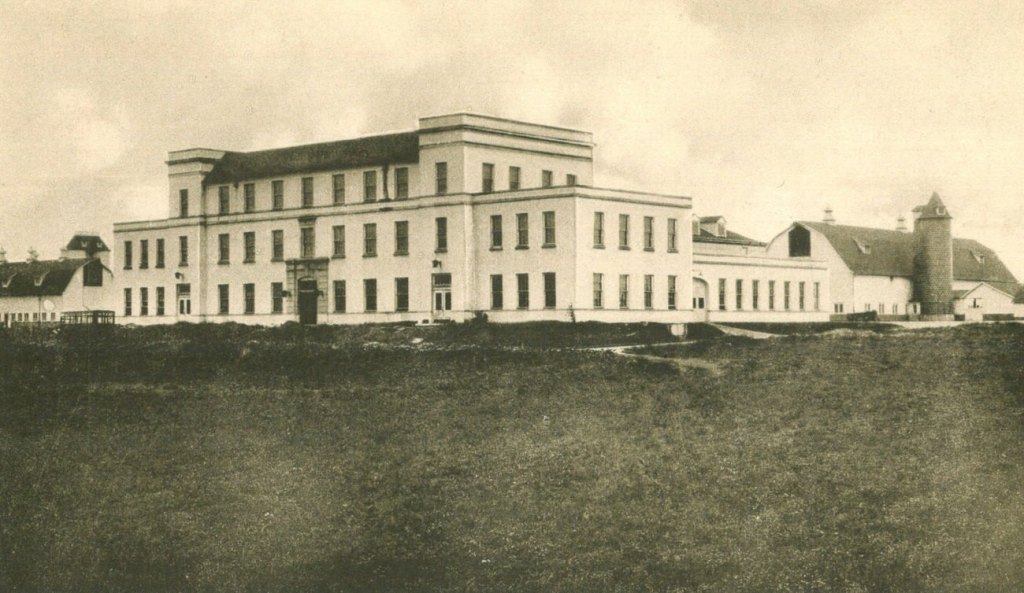
Secrets In The Drawer:
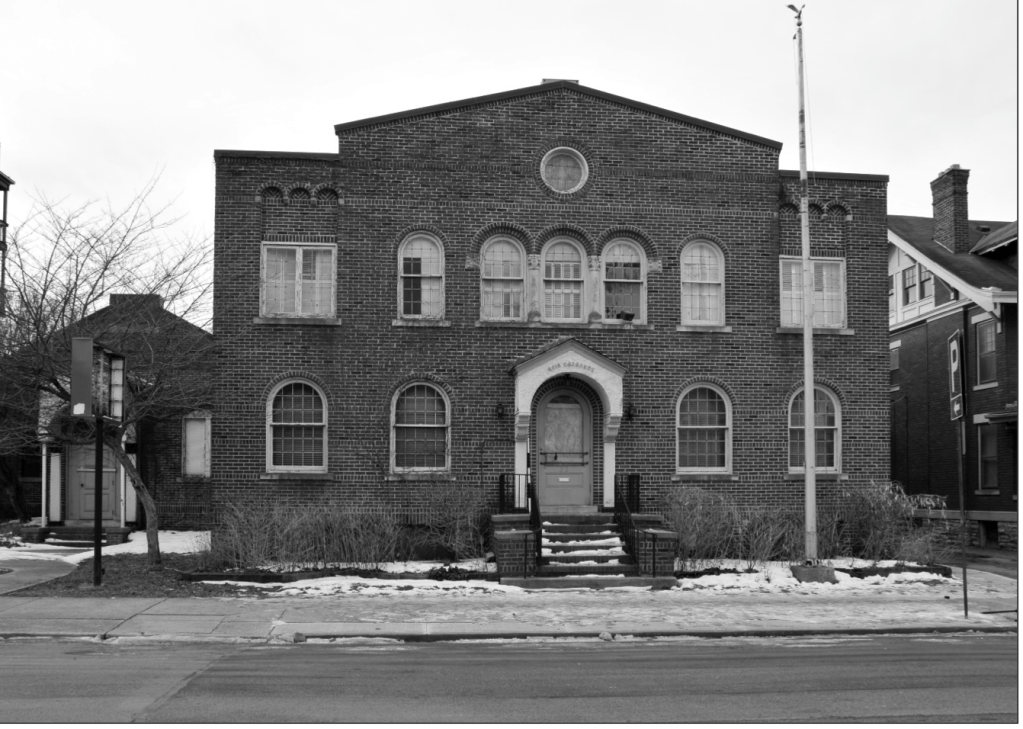
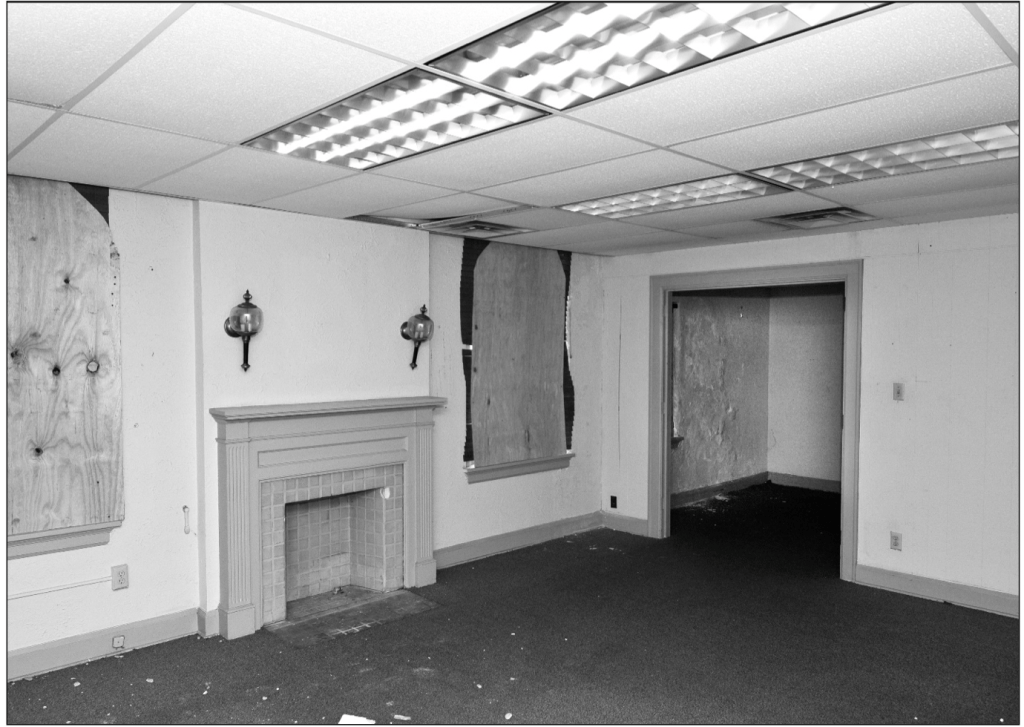
Police moved next to the apartment on Neil Avenue. What they found only deepened the mystery. In her room, in a drawer they found two bank books: one from Buckeye Building and Loan with $615, and another from Columbian Building and Loan with $1,863. For a student, the police learned, who lived on $600 a year from her father and occasional students loans, it was an extraordinary sum, enough to buy a Buick sedan and put %50 down on a home.
Next they found a small .41 caliber Derringer pistol tucked away, its presence raising more questions than it answered. Why did a young medical student need a gun? Most curious of all were a bundle of letters signed by someone named “Janet” the words were strange, intimate and unsettling. One read:
‘You recall that I showed you a little place and had you feel it, and which, severed, would prevent possible trouble. Well, I have been wanting to snip them both for sometime…so thinking that this was a good time to try, I did fix the little one only. Did it as soon as I came back. It was simple and easy, all went well until Friday. There is a chance I may not be able to come up and if I do come up may not be able to then…’
Another rambled with longing:
‘My dearie,
Awakened early about seven and of course thought of you at once, wondered how tough it makes one feel for you to awaken and turn over, reach before opening your eyes, and found no one. I know because I did it yesterday. ’tis awful and I never had such a joke as when I closed the door and clicked the key and reached for you, a long trip, all anticipation, no chance, soon again and I was greeted with a ‘no, I don’t want to muss my hair’ and ‘I’m hungry’ can you imagine anyone doing that? And further, to sit quietly through a show for three hours more.’
And another:
‘My dearie,
I’m surprised to note that you put your entire condition of forlornness and tubulousness on the one thing and wish you never had. You once told me that you would never say that. Neither do I believe it. I could be contended just to be with you, omitting special features, and think you could also. I hope you reconsider and can blame conditions rather than just the other. ‘
The letters hinted at something far deeper than an ordinary romance. Strange confessions, veiled references, words suggesting intimacy blurred with obsession.
The police had more questions than answers. How had Theora come into that much money? Why did she keep a gun? And who, exactly was “Janet”? Just as the investigators were trying to make sense of it, the phone rang at headquarters.
It was a Mrs. Margaret Smalley of Newark, Ohio. She recognized the girl in the paper, the one found in the field, that girl was Mrs. Snook. She and her husband Howard Snook rented a room from her on Hubbard Avenue in February. Mr. Snook was a salt salesman, who paid $4.00 a week for the room. His wife, Mrs. Smalley told them, she met only one time, but the face in the paper was Mrs. Snook.
The police suddenly had a new problem, who was this Howard Snook? Could he be the same man as Dr. James Snook, that their suspect, Marion Meyers, pointed a finger at. If so, they weren’t just looking at a murder victim anymore, they were staring at a tangle of lies, aliases, and secrets that pointed straight back to a respected professor with medals on his wall.
The Girl Who Walked Into Infamy:
She was the kind of girl who turned heads without trying. Smart enough to hold her own in any lecture hall, pretty enough to be noticed in any crowd.
Theora Kathleen “Teddy” Hix was born on August 10,1904, in Queens New York, the only child of Melvin Hix, a school principal and Joanna Smith Hix.
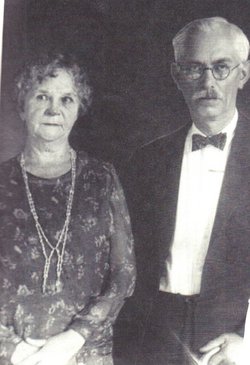
Theora attended New York City Public Schools before graduating from Northfield Seminary in Massachusetts in 1920. She was the only senior that year.
“When her mother and I went to graduation exercises all her teachers came to us and praised her as to ability and character in the highest terms” Her father said in an interview.
Her year book, The Gemini, friends described her as quiet, unassuming, who won a warm place in many of her friends’ hearts. “Her steadfastness of character and her loyalty of spirit have contributed much in upholding the standards of Northfield.”
Classmates remembered her in softer, playful tones. One wrote “Teddy waxes frisky, don’t believe it? Ask her how to use the fire escape ropes” others called her fearless, self-confident, dauntless and courteous. Another student wrote a poem about her.
‘On a platform in a city square. Theora Hix did stand. And from her mouth did come the words ‘Down with man!’ All through the country this cry to all make known, for she has become a believer in woman asserting her own.’
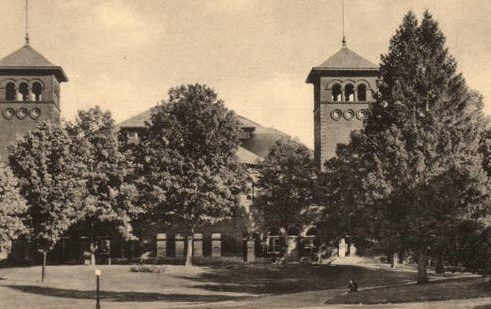
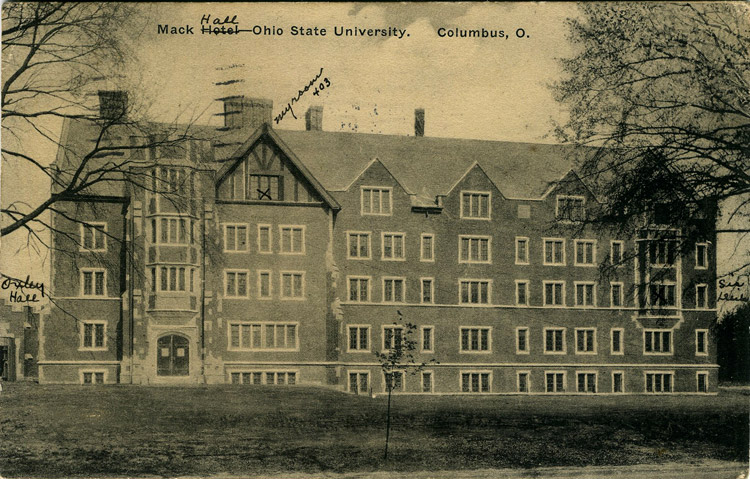
By all accounts, she was a confident, strong, independent woman. Theora wanted to be a doctor and she enrolled at Ohio State University. During her first year she lived at Mack Hall, working hard and keeping her personal life mostly private. Classmates recalled that she didn’t date often, and when she did, it was never with the same man twice, and she never shared the details.
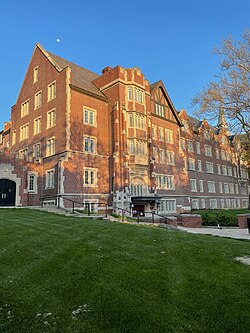
One of those men was Marion T. Meyers, a 35-year-old employed in the agricultural department. Their relationship was sexual and scandalous for the time. In 1928, the two were arrested at “Lovers Lane”, the very same area where Theora’s body would be found the following year, they were brought before the Justice of the peace and fined for fornication.
By her second year of medical school, Theora, had taken a stenographer job in Ohio Sate’s veterinary department. That was where she met Dr. James Howard Snook, a 47-year-old professor.
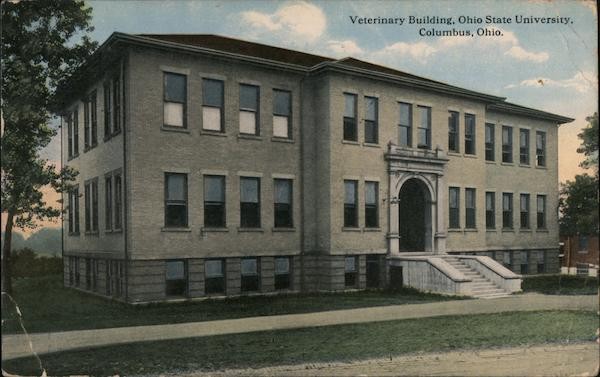
At first it was professional. Then one rainy afternoon, Snook offered her and another student a ride home. One ride turned into weekly drives. They shared hobbies, talked about shooting. She learned he was an Olympic gold medalist. Soon, the conversation turned intimate. They talked about sex, marriage and forbidden ideas.
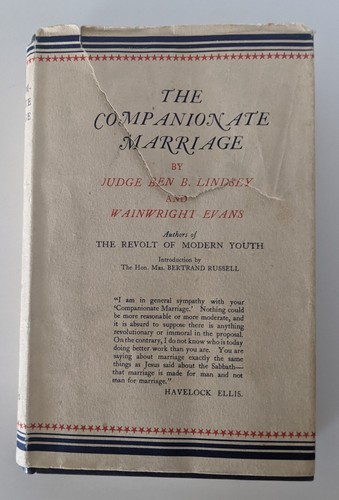
Theora was fascinated. She knew Snook was married, but she didn’t care. She believed in the progressive notion of companionate marriage, championed by Judge Ben Lindsey and Wainwright Evans, in their 1927 book. It was a radical idea for the time: that men and women could live together based on affection, equality, and sexual fulfillment without the obligation of marriage or children.
Their affair grew physical. Sometimes they rented rooms for the day and other times, when the weather was warm, they spread a blanket on the ground. They would also spend hours at the shooting range where he taught her to fire a pistol. For three years their relationship carried on in shadows and secrecy.
Then in June 1929, it ended with Theora lying face-down in the grass, and James Snook sitting in a police interrogation room, about to become the prime suspect in one of the most scandalous trials Ohio had ever seen.
Gold Medals And Tarnished Secrets:
By all accounts, Dr. James Howard Snook should have been the pride of Columbus Ohio. He was an olympic gold medalist and a respected professor of veterinary medicine. He carried himself with the air of midwestern respectability. But behind the gleam of his medals and the crisp white of his lab coat, Dr. Snook harbored a secret life pulsing with desire and deception.
What the world saw was a man of achievements , what Theora saw was the other side, the shadowed half of a man who lived by day in honor and by night in scandal and when those two lives collided, it wasn’t just Snook’s reputation that was destroyed, it was a young woman’s life left broken.
James Howard Snook was born on September 17,1879 in South Lebanon, Ohio, to Albert Snook and Mary Elizabeth “Mollie” Keever. Through his third great-grandmother, Elise Rockefeller Snook, could claim distant ties to the Rockefeller family dynasty.
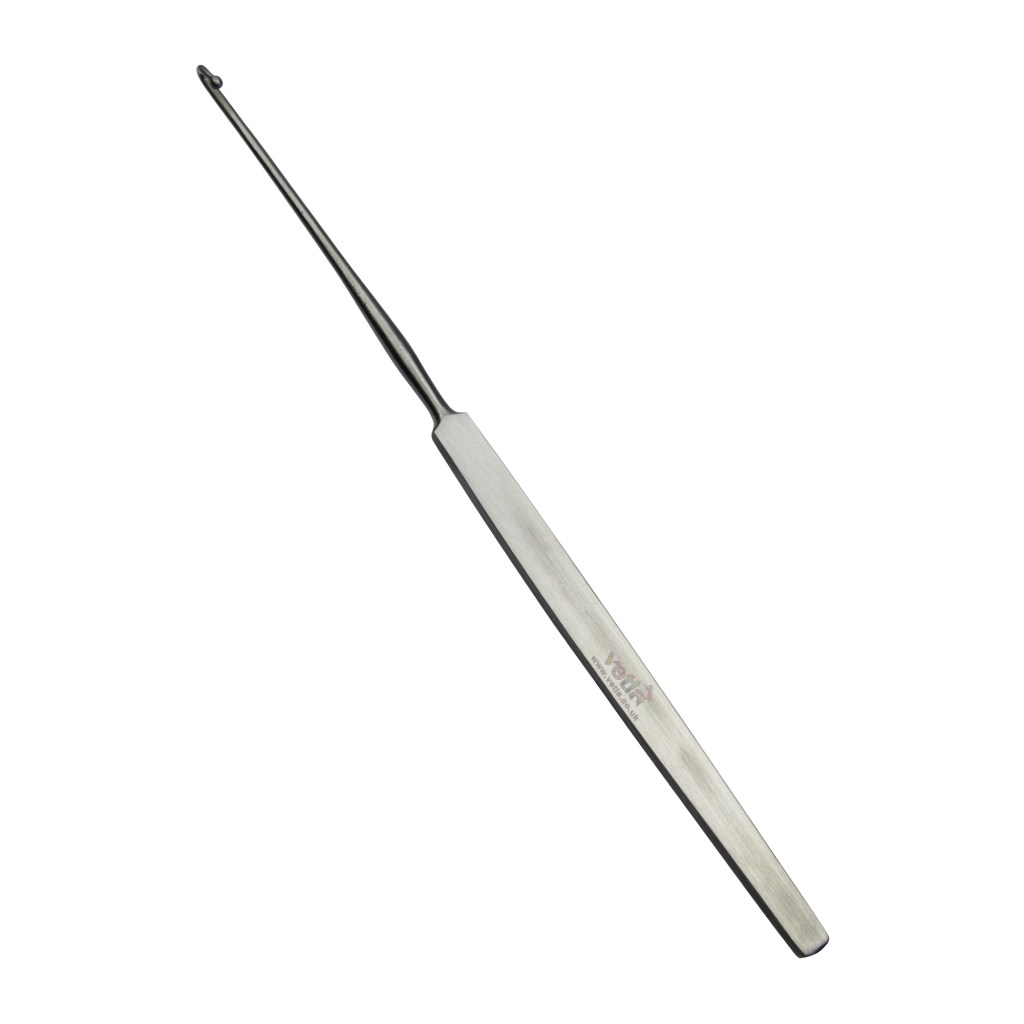
James attended the Ohio State University College of Veterinary Medicine where he graduated in 1908. He was immediately offered a position as a professor and equine surgeon at the university. A skilled surgeon, he invented the Snook Hook, a surgical instrument still used today in the spaying of cats and dogs. He was also the founding member of the Alpha Psi Veterinary Fraternity.
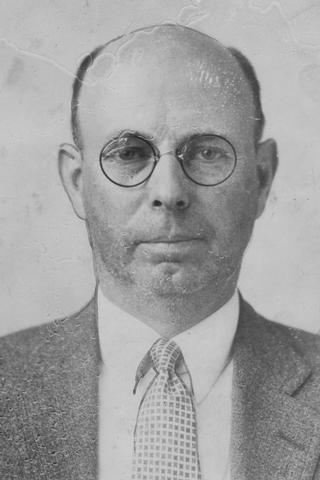
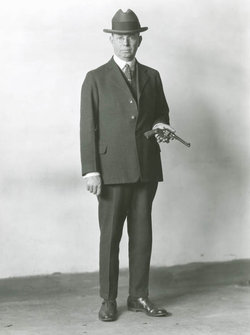
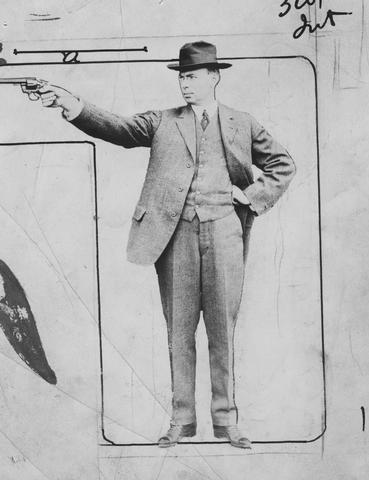
In 1920, Snook competed at the summer Olympics in Antwerp, Belgium. He returned with a gold medal, in the 50 meter team free pistol event, and a reputation as one of the finest marksmen in the world.
GAMES OF THE 7 OLYMPIAD,1920
SHOOTING
MEN
SMALL BORE SINGLY PISTOL OR REVOLVER, TEAM
1
LANE Alfred
USA
2374
1
BRACKEN Raymond
USA
1
SNOOK James
USA
1
FREDERICK Karl
USA
1
KELLY Michael
USA
1
SNOOK James
USA
1310
1
HARANT Louis
USA
1
KELLY Michael
USA
1
LANE Alfred
USA
1
FREDERICK Karl
USA
In 1922 he married Helen Marple, an elementary school science teacher. Their first child, a son, tragically died in 1925. Two years later, they were blessed with a daughter, they named Mary.
To the outside world, the Snooks seemed a model family, but behind closed doors, James was cultivating a life of secrets, a life that would one day spill into scandal and murder.
Whispers In The Dust:The Hunt For The Truth.
The investigation led officers to 349 West 10th Avenue, the tidy Columbus home of Dr. James Snook. It was just before breakfast when Detective Larry Van Skaik knocked on the door. Snook appeared dressed in shirt sleeves and suspenders, his right hand bandaged. He stepped out onto the porch, shutting the door behind him, as if to keep its secrets sealed.
Yes, he admitted, he knew Theora Hix. The hand? He said it was nothing, just a cut from fixing his car. When pressed to come to headquarters, Snook balked until Van Skaik calmly suggested they could just as easily discuss it inside with Mrs. Snook listening in. That ended the debate. Snook agreed to come along, on the condition he could drive his own car and follow behind and they could stop for breakfast.
Van Skaik agreed, Snook followed along in his car and the two men stopped at Gel’s Restaurant. He didn’t know it yet, but it would be the last meal he would eat as a free man.
At the station, his composure held. He told them he had met Theora in 1926, when she worked in his department as a stenographer. Their first real encounter, he said was a simple ride home during a rainstorm. He insisted the last time he saw her was Wednesday June 12th.
His alibi for the night of her murder was precise, almost rehearsed.
” I arrived at the office at 7:30 or 8:00 where I finished an article for Hunter, Trader, and Trapper magazine. Then began another. I left at 8:40 pm and went to the Scioto Country Club, arriving just before 9 o’clock. I saw two or three persons I knew, then returned to town. On the way home I purchased a newspaper and something for my lunch, I arrived home at 9:30 pm. “

While Snook spun his story, other officers paid a visit to Mrs. Margaret Smalley, the Newark woman, who had phoned in her strange claim. She repeated, in person, what she told them over the phone. In February 1929, a salt salesman and his younger wife had rented a room from her at Hubbard Avenue for $4 a week. Just after June 14th, Mr. Snook had stopped by while she was washing the dishes, between 1:30 and 3:00 pm, to say he was moving to the Washington Courthouse, near Cincinnati. His “wife”, he explained would be gone by Sunday and she would leave the keys in the room.
Mrs. Smalley took the officers to the apartment. Inside, they found two keys and a woman’s hat. Once again she insisted that the girl in the paper, the murdered young woman, was none other than Mrs. Howard Snook. Would she be willing to go with them to make a positive identification of Mrs. Snook and Howard Snook. She agreed.
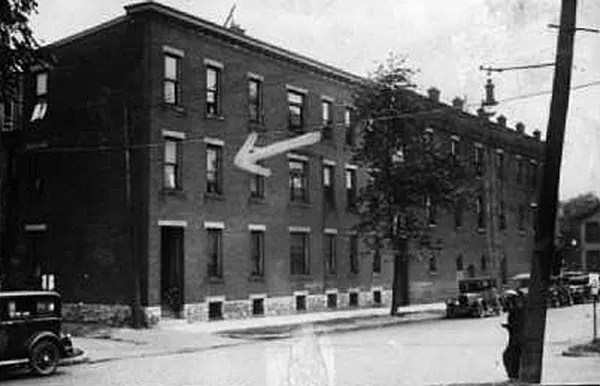
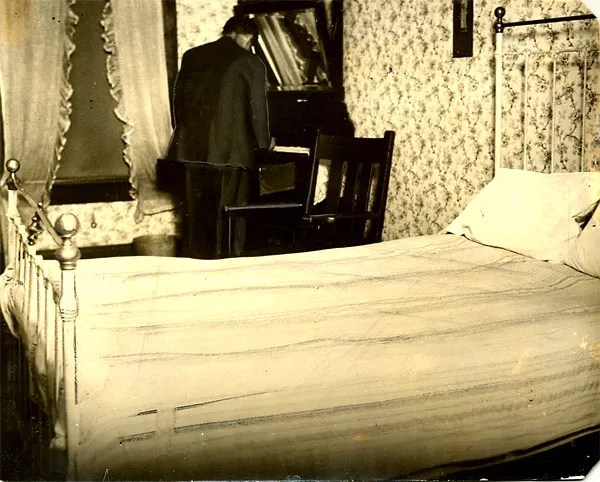
It was becoming clear: If Dr. Snook had been living a double life, then the walls around it were starting to crack.
Back at the shooting range, where Theora’s body had been found, searchers combed the ground and uncovered eight keys, the ones from the broken key ring. But her purse, seen by her roommate the night she disappeared, was no where to be found.
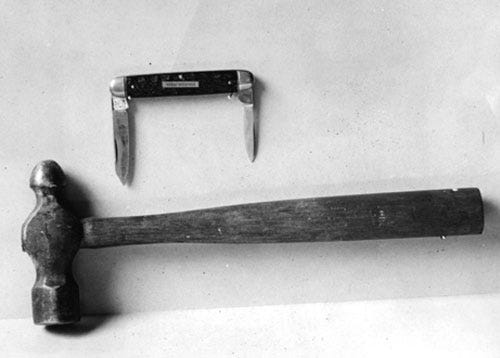
The investigation soon circled back to the Snook residence at 349 West 10th Avenue. In the garage, officers turned up a hammer and a pocket knife, both marked with rust-colored stains. In the basement incinerator, they sifted through the ash and found the remains of burnt clothing, a woman’s garments, alongside a man’s shirt also with rust-colored stains.
When questioned, Mrs. Helen Snook, admitted, she didn’t know where the woman’s clothing came from, but said her husband sometimes burned his shirts that were too bloodstained from surgery to wash. When asked what time her husband got home on Thursday June 13th she told them she thought it was around 9:30 but she couldn’t be sure, after few moments, she said no, I think it was 11:00 or 11:30pm.
Then came the car. Inside Dr. Snook’s vehicle, investigators spotted small rust-colored spots on the passenger side door, as well as along the doorjamb. The rest of the car looked freshly cleaned.
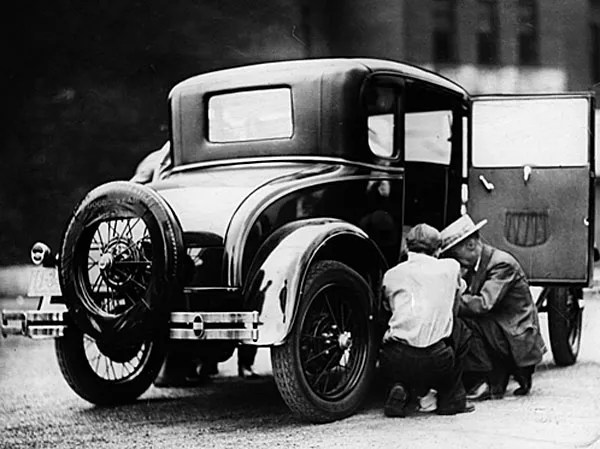
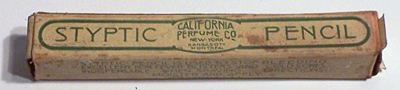
Snook explained he had it washed by a colleague on Wednesday June 11th. When asked about his hand, he again explained that he hurt it fixing his car, and he treated the wound himself by using a styptic pencil to stop the bleeding.
He also admitted to loaning her money at her request for “emergency funds” she that had been repaying him in small amounts.
Meanwhile, Mrs. Smalley was brought to the morgue and shown Theora’s battered body. Yes, this was the woman she knew as Mrs. Snook. Next, they took her to the police station. She was about to come face-to-face with the professor himself.
“Hello Mr. Snook. Do you remember me?” She asked.
Snook looked at her cooly. “Hello Mrs. Smalley, Yes, I remember you. How are you?”
Mrs. Smalley confirmed without hesitation, this man was Howard Snook, who had rented the room from February to June 14th.
The net was tightening. The veneer of respectability was starting to crumble.
The Autopsy Of Violence:
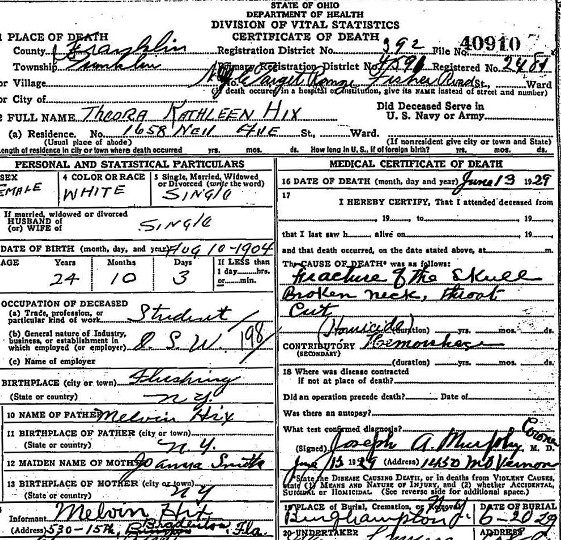
At the morgue, Coroner William Murphy began to set down his preliminary findings. The body of Theora Hix spoke in wounds, each one a mark of cruelty, each one a piece of the truth.
WOUND NUMBER ONE: A gash of 1 1/4 inches long in the middle of the forehead, driven through the front sinus, but not into the skull vault. Made by the small end of a hammer.
WOUNDS TWO AND THREE: Blows to the right side of the forehead, made by the flat end of the hammer.
WOUND FOUR: Left side of forehead. Made by the flat end of the hammer.
WOUND FIVE: A slash to the left side of the neck, 4 1/2 inches long, severing both the jugular vein and carotid artery.
Across the top of her head were 5 lacerations. 4 from the small end of a hammer, which fractured the skull. Another made by the small end of a hammer which also fractured the skull.
In all there are 12 other lacerations on the back of the head. One a puncture wound in the right ear. Small pieces of bone were removed from the occipital and temporal bone, below the right ear, which left a hole in the skull 2 1/2 x 1 1/2 inches.
The cerebellum was badly lacerated by the bones being driven into it. There is no blood clot in the brain, both hemispheres are congested, but little blood is found.
LEFT ARM: Shows distinct bruising.
RIGHT HAND: Is broken.
Cuts traced her back.
CAUSE OF DEATH: Neck wound, victim was still alive when throat was slit.
STOMACH CONTENTS: Partially digested roast beef sandwich and a powder identified as cannabis indica and cantharides. SPANISH FLY.
CLOSING THE NET:
The next trail led to the cleaners. There detectives found the suit Dr. Snook claimed to have worn on June 13th. The jacket sleeve and pants both bore suspicious stains. They’d have to be tested. But in 1929, science could only go so far. Blood typing was possible only on liquid blood. On dried stains? Investigators could only ask one question: Was it blood, and if so human or animal?
At Ohio State University, Detective Lavely pressed Dr. O.V. Brumley, a colleague of Dr. Snook. Brumley confirmed that both drugs found in Theora’s stomach, cannabis indica and cantharides, were stocked in the university pharmacy and anyone could have access to them.
In Snook’s office, Lavely discovered a jar of cantharides sitting on a shelf.
Theories began to stack as quickly as the evidence:
- Marion Meyers age 35 spurned suitor and rejected proposal of marriage-was it jealously?
- Dr. James Snook, married professor. Did he kill her to silence her, or out of rage when she would not let him go?
- Mrs Helen Snook, could the wife have learned the truth and exacted vengeance?
The police were betting on the professor. They turned up the heat. Questioning became relentless, firing at him in shifts. Snook admitted to loaning Theora money. He admitted to removing her things from the apartment. He denied murdering her.
Investigators pushed harder. They told him a witness had come forward and had seen Theora climb into a blue coup just like his. The driver? Thin, balding, wearing spectacles,. The description that could fit both him and Marion Meyers.
Still Snook held firm for the moment. The pressure mounted. Detectives told Dr. Snook they’d spoken with his family doctor, who stated he treated Snook’s injured hand on Friday June 14th not on Wednesday June 12th as Snook claimed.
Cornered, Snook adjusted his story. Yes, he had treated the cut himself on Wednesday, like he said, but the wound had festered, forcing him to see the doctor on Friday.
The interrogation dragged on. Snook was exhausted, the cops knew it was only a matter of time before he cracked. He asked for his lawyer. The attorney spent a mere fifteen minutes with his client before reporting back that his client had no intention of confessing.
Cops played their trump card. The stains on the car, the knife, the clothing, they all tested positive as human blood.
When questioning resumed, the lawyer tried to stay. Tempers flared. The interrogation sometimes turned physical, an officer’s hand striking across Snook’s face as they demanded the truth. The lawyer intervened, demanding they stop and let his client rest. It had been three days of nonstop interrogation. The attorney was shown to the door.
On Monday June 17th a grand Jury convened, but no indictment came down for Theora’s murder. Even without charges, Snook’s life was unraveling. He was removed from his post at Ohio State. Marion Meyers, disgraced after his affair with Theora came to light was also fired, though police released him and no longer considered him a suspect.
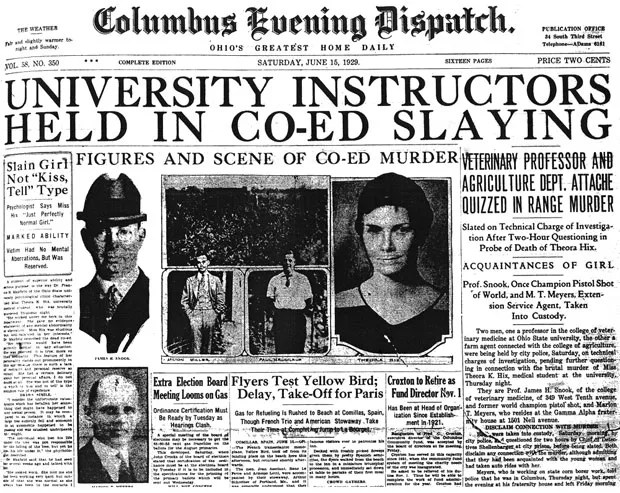
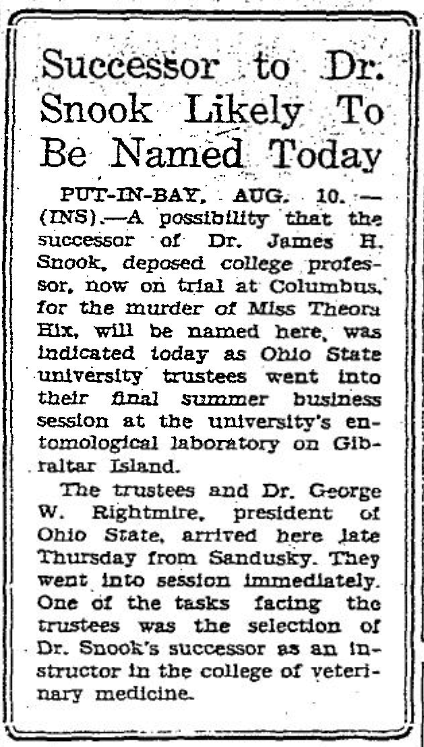
On Wednesday June, 19th, police announced what the city had been waiting for. Dr James Howard Snook had confessed.
The Confession Of Dr. James Howard Snook:
‘I met Theora Hix about three years ago. The friendship continued in a very intimate way ever since, inasmuch as she was a very good companion. I have been living with my wife during this three year period and regard my wife very highly and respect her very much as a wife, but she lacked some of the companionship afforded by Miss Hix.
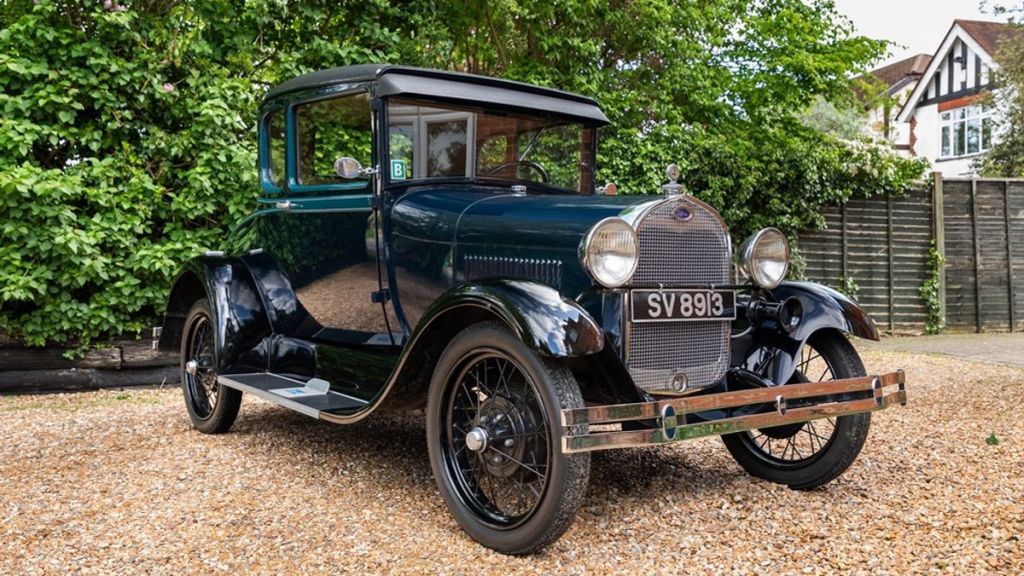
During the three years that I knew Miss Hix, I did assist her in many ways toward an education but I found it wasn’t was as appreciated as I thought it should be. Our association was not a love affair in any sense of the word but in time, Miss Hix developed a more determined attitude in regard to dictating my movements. The final culmination of this occurred on the 13th of June of this year when I met Miss Hix at the corner of Twelfth Avenue and High Street in the city of Columbus Ohio. We both got into my Ford Coupe and proceeded to drive to Lane Avenue and then to Fisher Road and the Columbus Rifle Range of the New York Central Railroad Co.
During which she remonstrated with me against leaving the city with my family for the weekend as I had previously planned to do. She threatened that if I did go she would take the life of my wife and baby. During this quarrel she grabbed for the purse in which she sometimes kept a .41 caliber Derringer, which I had given her. In the struggle she was hit on the head with a hammer with the intent to stun her.
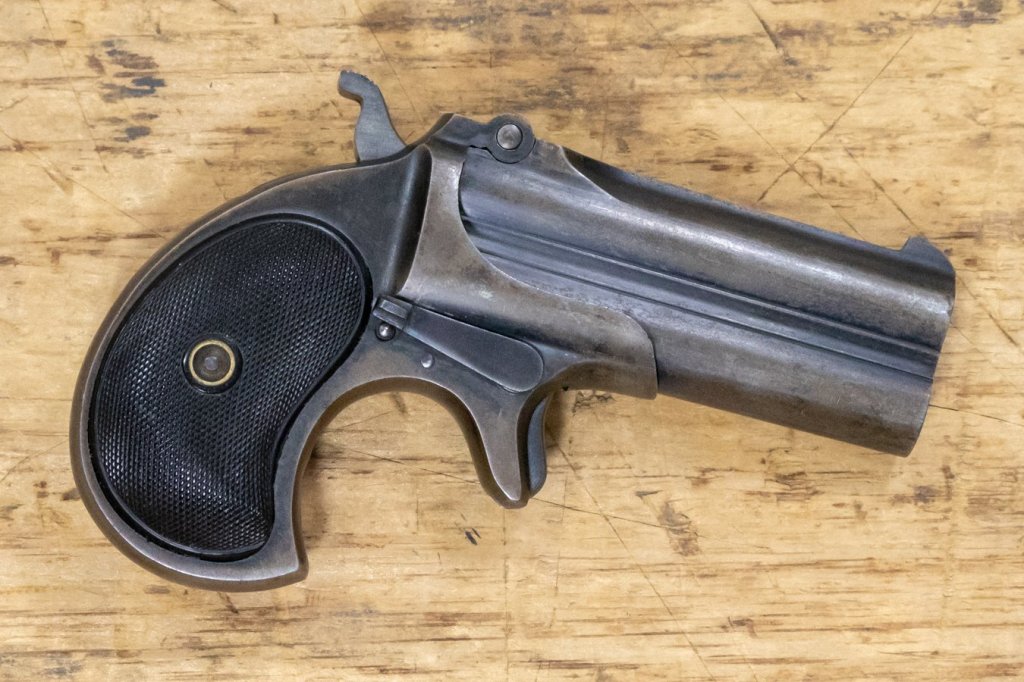
She continued to struggle and an increased number of blows, increasing in force was necessary to stop her. Realizing that her skull was fractured and to relieve her suffering, I severed her jugular with my pocket knife.
I, then proceeded to pick up the things that had been scattered during the struggle, leaving her body at that point. The instrument I used to quiet her was a hammer, which was laying on the back seat of the Ford. After leaving the range, I then proceeded to go home, tossing the purse from the Quarry Bridge into the Scioto River on my way. After the struggle I discovered the gun was not in the purse.”
Question: Now, Doctor, I want to ask you just a couple of questions. Are you making this statement voluntarily?
Answer: Yes, sir.
Question: Nobody threatened you or promised you anything for the making of this statement have they?
Answer: No, Sir.
Question: And everything that you have said in this statement is the truth, is it?
Answer: Yes, Sir.
[Signed: J. H. Snook]
Building The Case Against Dr. Snook:
On July 19th, the investigation team began stitching together the net that would ensnare James H. Snook. A confession was one thing, but the court would demand evidence and detectives had plenty:
- The Car: Theora was last seen in the blue Coupe the very same kind Snook drove. Blood confirmed to be human, stained the passenger side door and the doorjamb.
- The Clothing: Snook’s own garments carried human blood. A doctor testified that his hand injury had been treated on Friday June 14th, not on the Wednesday he claimed, the doctor also stated he saw James on Wednesday and his hand had no wound or bandage.
- The Apartment: Snook told his landlady he no longer needed the apartment the day after the murder, around the same time he removed all of Theora’s clothing, later suspected to be the charred remains found in the Snook residence incinerator.
- The Weapons: A hammer and pocket knife discovered in his garage bore human blood.
- The Spanish Fly: A disturbing find in his university office, raising unsettling questions about his intent, Did he put the drugs in the roast beef sandwich and give it to her?
- The Lies: He was absent from both his club and his office the night of the murder, no one saw him at either. He lied about having his car washed on Wednesday, a colleague confirmed he washed the car for Snook, at his request on Friday the 14th, the day after the murder.
- Time Arrived Home: He stated he arrived home at 9:30 pm. His wife said she heard him come in at 11:00 or 11:30 pm.
Bit by bit, the story sharpened into something far darker. Investigators already had enough to convict, but what came next went beyond bloodstains and timelines. The details, some too obscene for newspapers to print, would stain Snook’s reputation forever.
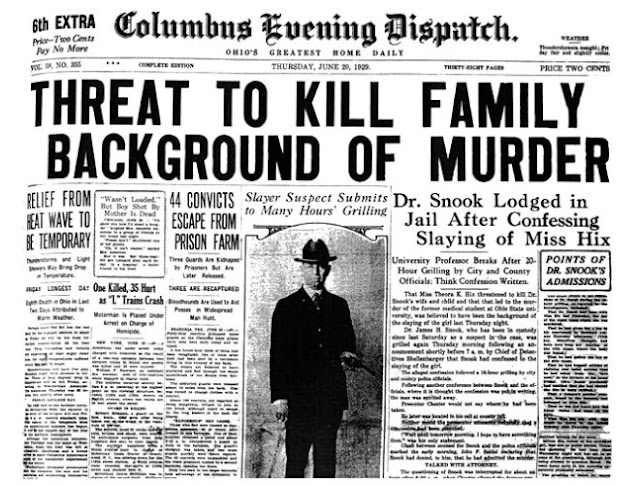
COLUMBUS, Ohio, June 23 (AP).— Dr. James H. Snook, deposed professor of Ohio State University, will be arraigned in Common Pleas Court here tomorrow on a charge of first-degree murder, he having confessed to slaying Miss Theora Hix, a co-ed student with whom he had been intimate. He slashed her throat after beating her with a hammer in a quarrel at a rifle range north of the city.
Dr. Snook’s attorneys, John F. Seidel and E. O. Ricketts, said they would enter a plea of “not guilty.”
A report of three alienists on Dr. Snook’s mental condition is expected Tuesday. The alienists were called in by the prosecutor, John J. Chester Jr., yesterday to forestall an insanity plea by the defense attorneys.
The alienists, Dr. William H. Pritchard, superintendent of the Columbus State Hospital for the Insane, and Drs. E. E. Garver and Robert Tarbell, operators of private sanitariums near Columbus, asked Mr. Chester to permit them time to examine statements made to them by Dr. Snook yesterday and the results of blood and reactionary tests they made behind closed doors in the prosecutor’s office.
COLUMBUS, Ohio, June 24 (AP).-
Dr. James H. Snook, dismissed university professor and confessed slayer of Theora Hix, student at the university, pleaded not guilty when arraigned on a first degree murder indictment this morning in Criminal Court.
On the request of John J. Chester Jr., county prosecutor, Judge Robert P. Duncan set July 22 as the date for trial. The date was fixed over the opposition of E. O. Ricketts, one of Snook’s attorneys, who said the defense would not have time to prepare its case.
Dr. Snook entered his plea of not guilty himself. Speaking in a clear and calm voice he answered “Not guilty.”
He was brought before the Judge handcuffed to another man under indictment for first degree murder—Albert C. Gunning of Columbus, alleged wife slayer. This was the first time in the history of Franklin County criminal procedure that two men handcuffed to each other were brought before a judge to plead.
When Theora’s grieving parents arrived for the trial, scheduled to open July 22nd, they had no idea the testimony they were about to hear would horrify the whole entire courtroom.
A Trial Too Scandalous For Print:
The courtroom was thick with July heat, the kind that made tempers short and handkerchiefs damp. In the jury box sat 11 men in stiff collars and one lone woman, her very presence a scandal in its own right., a rarity in 1920s America where female judgement was still a novelty.
Together they braced for testimony that Columbus newspapers warned was unfit for ladies ears. What spilled across the courtroom wasn’t just a murder story, it was a confession stepped in lust, a tale of secret trysts, violent appetites, and a gold medal professor undone by desire.
Reporters shifted uncomfortably in their seats, scribbling careful half-truths, omitting the details too raw for print. But jurors heard it all every sordid word, every image that stained the air like smoke in a speakeasy.
News of the murder and confession spread far and wide, for reporters this made for great headlines and kept them busy. The details were juicy, people couldn’t get enough. Sex, a love-triangle, scandal, an affair, and the death of a young woman, just 24-years-old, murdered by her much older lover, a well-respected professor, father, and husband.
Opening day of the trial, reporters and illustrators were allowed in the courtroom, they would jot down testimonies and readers would have it in hand by that night or the next morning.
The courtroom was standing room only. Outside the courthouse, crowds would gather staring at 3 am in hopes of getting a spot inside. 250 people stood in line, most of them young women. Snook would be testifying in his own defense. The courtroom was sweltering, four women fainted, one twice and she refused to give up her seat. The trial transcript would be over 3,000 pages long.
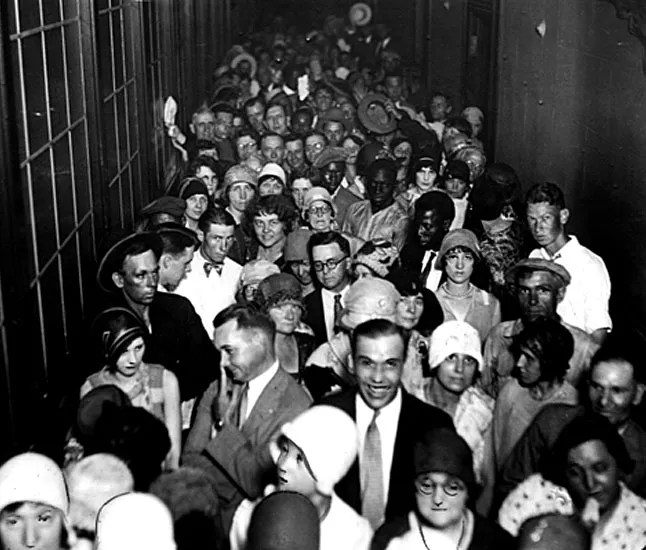
The trial wasn’t just about evidence anymore it was a spectacle. Every gasp, every whispered detail fed a public hungry for scandal, turning the courthouse into a stage and Snook into the unwilling star of a lurid drama. And as the proceedings unspooled, it became clear that this case was going to push the limits of what 1920s America was willing to hear, let alone print.
Opening arguments began on August 2, 1929, and reporters wasted no time in rushing their stories to press. One even scribbled a grim little poem:
‘For he had slain with cruel main/ a woman and they say/when murder’s done by six or one/the murderer’s must pay/there is a room of death and doom/where murderers “go west”/and in it there a ghastly chair/ beckons Heaven Rest/the evidence was quite immense piled up by cheater’s crew/it had the knife that spilled her life and the blood-stained hammer too. ‘
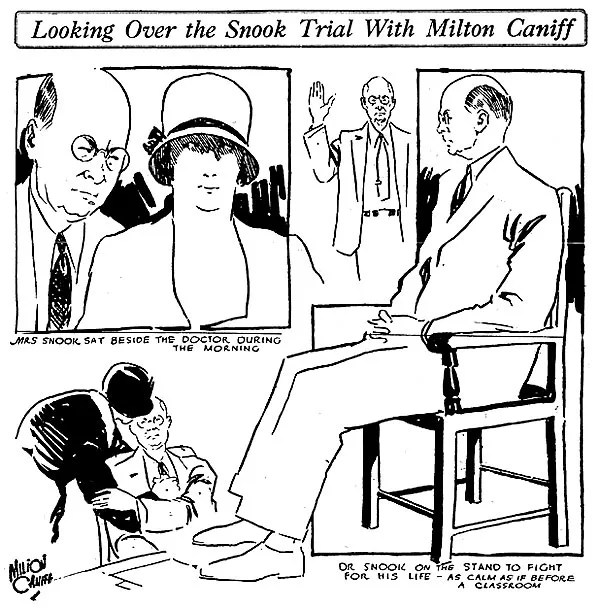
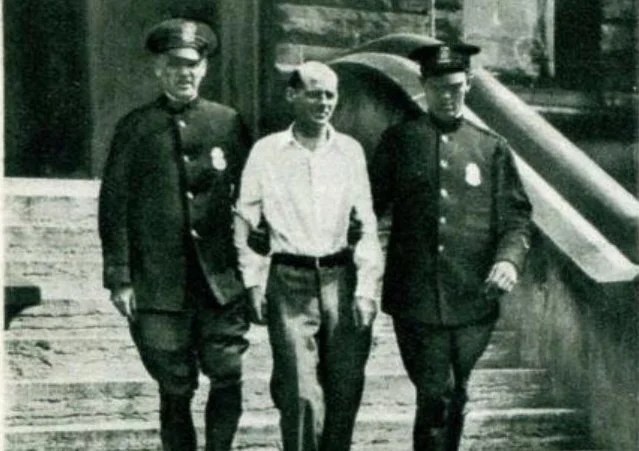
After days of expert testimony and witnesses, the defense began laying out their case, their strategy was as ugly as predictable. They dragged Theora’s name through the mud, painting her as a drug user, who used cocaine and belladonna, once used, in the Victorian era, as a cosmetic, drops of belladonna were placed into the eye to dilate the pupils, once considered a beauty standard had began to fade by 1925.
The defense called her a home-wrecker, a temptress, a loose woman who had led a good man astray, that she refused to give up her relationship with Marion Meyers, and that she drove Snook insane with jealousy. In their telling , Theora hadn’t been murdered, she practically begged for it.
It was a character assassination, pure and simple, but the crowd hadn’t packed the sweltering courtroom to hear what the lawyers thought of Theora, they were there for the main event.
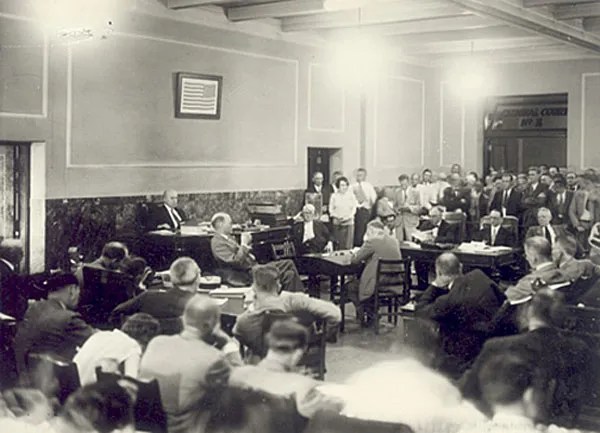
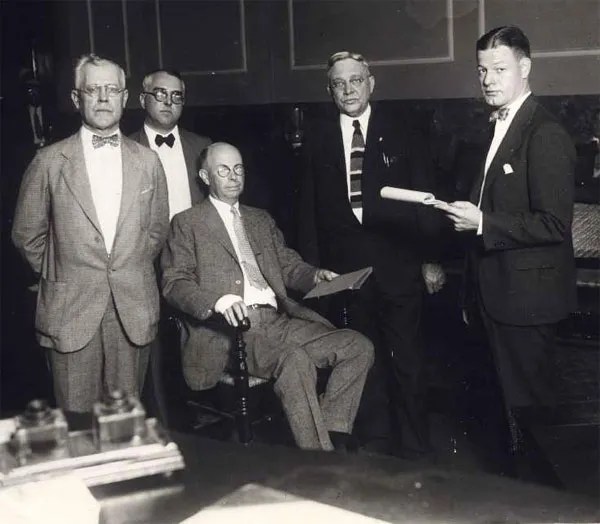
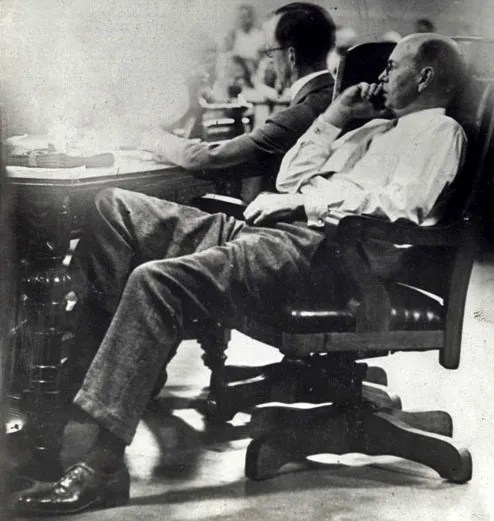
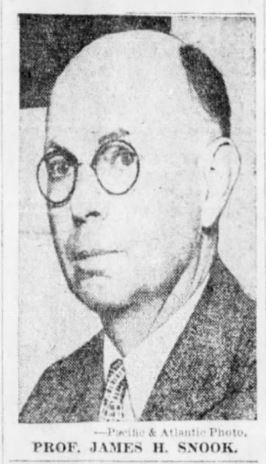
On August 7th, Dr. James Howard Snook, professor, father, husband, murderer took the stand. Judge Henry Scarlet ordered that no one under eighteen-years old could be present., but that didn’t stop the young flappers, who made up the majority of the spectators, from getting a spot.
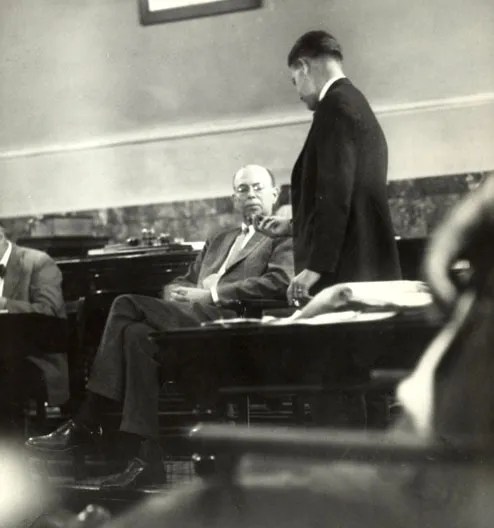
Q—Now, Doctor, when was the first time that you ever met
Miss Theora Hix? A—About three years ago in June.
Q—And where did you first meet her? A—At the public
office in the veterinary building.
Q—Who was with you if anyone, when you met Miss Hix?
A—I don’t recall. She came there—
Q—What were the circumstances of the meeting, Doctor,
between you and this girl? A—She came there as a stenographer at
that time, employed in the public office.
Q—Now, Doctor, when was the first time that you ever had
any conversation with Miss Hix after meeting her in June of 1926?
A—Well, I can’t say definitely, but probably each day for two or
three days; and a definite conversation, I recall, was probably four
or five days later when I asked her to ride home when it was
raining at five o’clock.
Q—Now, Doctor, where did you and Miss Hix go when
you took her home or when you started out in your automobile with
her? A—Directly from the office to Mack Hall where she lived.
Q—Well, now, Doctor, there at the first or second con-
versation that you had with Miss Hix, what if anything did you
discuss about reading matters? A—Well, it was in regard to—
The Witness— Within the first two weeks of our acquaint-
ance.
The Witness: First two weeks. She had a magazine in which
there was an article on Companionate Marriage by Judge Lindsey,
something of that nature, and a reference to it came up in which she
said that she thought the Companionate Marriage was all right for a
while, but then if you lost your companion, it wasn’t and that is
when the boy friend was referred to. He was gone and made things
rather disagreeable so that that is as near as I can quote it, as I recall
it.
Q—Doctor, after you took Miss Hix home in your auto-
mobile to Mack Hall in June of 1926, when was the next time that
you were with Miss Hix as near as you recall? A—Within probably
a few days, at five o’clock, she remarked it was too nice to go
home, something to that effect, and I told her that I had a few
minutes and I would drive her around the River Road, if she cared
to go; and she did. She knew that I was married at that time.
Q—Doctor, I will ask you whether or not, if you and Miss
Hix had a so-called, a “mutual understanding,” of any kind? A—
Well, after about the third week—three or four weeks—we
discussed Companionate Marriage and sex relations and books on
sex to that extent, and each one seemed to understand that the other
knew something about it, and there was a mutual understanding
there of that nature to talk about things of that kind.
The Witness: It brought up the matter of companionate
marriage in the beginning and she says when she lost her
companion—so I assumed from that that she knew a lot about it,
and we talked that way and she did say so, and we talked then
about disease, venereal disease of that type and each one assured
the other that they did not have any, and various discussions of that
type was brought up and I think about that time she said that she
knew there was so much trouble with the students—that is venereal
disease with students—and they always talked so much she was
afraid of them, and she didn’t go around much with students, and it
was along about that time she said that she preferred someone
older, who really knew something. That followed some of our
talks during the talk at that time.
Q—Dr. Snook, when was the first time as near as you recall
that you and Miss Hix had sexual relations. A—Probably within—
just about three—within three or four weeks after I met her.
Q—And where did that take place, Doctor, as near as you
recall? A—I think that was in a—I am pretty sure that was in a
room somewhere on the east side, but I can’t give the number or
place.
Q—What was that conversation there, either by Miss Hix to
you or what you said to her? A—Well, in a general way—there
was a general understanding to me that she knew a lot—
Q—Yes, the conversation there, Doctor? A—I ask her
directly what she knew about it, meaning sexual affairs, and she
told me that she knew more about it than I did, and that I should
read some books on that and that brought up the question of more
books, and I finally got one for her some place and she told me that
she had already read that book.
Q—Any other conversation as near as you recall there or anything else was said either by you or Miss Hix? A—Well, the
main part of it at that time was the assurance of being careful, free
from disease and not telling about it—not talking about it.
Q—Do you recall any of the names of the books that she
asked you to get? A—She never asked me to get any books, but
she told me of different ones she had read and one that I found
somewhere for her was—had been read, and then later on she got
one from somewhere else, a man friend of hers, and I think that
was called “The Art of Love,” —I am pretty sure that is the
name—by some physician. Quite a rare book and not always sold I
don’t believe.
Q—When was the next time you were with Miss Hix? A—
Well, I can’t say except that probably once or twice a week—
Mr. Chester—I object to anything probably.
The Court—Well, his best judgment.
The Witness—My best judgment, once or twice a week
thereafter.
Q—When was the second time, Doctor, as near as you
recall of sex relations between you and Miss Hix? A—Oh, within
a week.
Q—And where did the second time occur, Doctor? A—
Well, I don’t believe I can tell you, sure.
Q—Well, I will ask you whether or not, as a matter of fact
if your relations with Miss Hix continued all through the fall of
1926? A—Yes, sir.
Q—And continued for how long, Doctor? A—Until the
next June.
Q—Until June of 1927? A—’27, yes, sir.
Q—About how many times would you say during that fall
of 1926 and 1927 were you and Miss Hix intimate in a sexual way?
A—Once or twice a week.
Q—And where would you generally go with Miss Hix at
those times, Doctor? A—Well, during the winter go to rooms,
different places.
Q—Where would you go in the spring or early summer of
1927? A—Well, outdoors occasionally.
Q—I will ask you whether or not now during your entire
stay at Camp Perry, if you and Miss Hix had family relations with
each other? A—Yes, sir.
Q—About how often Doctor? A—Oh, two or three times.
Q—Do you mean two or three times during the entire three
or four days? A—Three or four days, yes, sir.
Q—You brought Miss Hix back to Columbus in your
automobile. A—Yes, sir.
Q—Doctor, up to October the 1st of 1927 I will ask you
whether or not as a matter of fact your sexual relations with this
girl were absolutely normal? A—Yes, sir.
Q—During the month of October, 1927, how many times
would you say you were with Miss Hix? A—During the month of
October?
Q—Yes. A—I can only say on an average of once or twice
a week.
Q—And where would you and Miss Hix go on these trips
during that respective month? A—To a room somewhere on up the
river shooting.
Q—Were the sexual relationships still resumed between
you and Miss Hix during that entire month, Doctor? A—Oh, yes.
Q—Doctor, when you would be with Miss Hix during the
month of October and the remainder of that fall about what time of
the day or evening would you be with Miss Hix? A—Well, probably 7:30 until 9:00, evenings, occasionally on Saturday
afternoon two or three times.
Q—Did you ever see Miss Hix of an afternoon during those
fall months of 1927? A—Well, on two or three Saturday afternoons
as I say.
Q—And about how many times would you say you saw her
in the company with Mr. Marion Meyers? A—Frequently.
Q—How long in the Fall of 1927, did your sex relations
with Miss Hix continue? A—Continued right through the Fall.
Q—They continued right through the Fall. A—Yes, sir.
Q—And for how long? A—On through until Spring of ’28.
Q—About what time in the Spring of 1928, Doctor? A—
April, sometime about the first of April.
Q—Now, Doctor, when was the first time that Miss Hix
admitted to you that she had had sexual relations of any character
with Marion T. Meyers?
The Witness: She said that they had been arrested along the
river earlier in the year, probably in February. She told me this
sometime in two months later—
Mr. Chester—Now, wait a minute, I move the answer be
stricken from the record. It does not show any immoral relations
because they were arrested.
Q—Answer the question, Doctor; what if anything did she
say concerning the arrest of herself and Mr. Meyers along the River
Road? A—Well, she said that they were actually caught in the act
up there and was arrested and fined before a squire.
Mr. Seyfert—Please read the last question; I think when we
adjourned for recess, the Doctor had not answered the last question.
(Previous question as follows:) “Doctor, when was the first
time that Miss Hix admitted to you that she had had sexual relations of any kind or character with Marion T. Meyers?” A—In
the early spring of 1928, when she told me about an arrest
sometime earlier up the River Road.
Q—What else did she say, Doctor, at that time in
connection with the same subject of conversation? A—You mean
in regard to the first time she told me?
Q—Yes. A—Well, I think it was in answer to a question
where they had been some time previously and she had occasion to
refer to it in that way; I don’t just remember the conversation, but it
came up in regard to after she said that, she told me about that part
of it.
Q—And what, if anything, did she say concerning her arrest
in company with Mr. Marion T. Meyers? A—She said they were
taken before a Squire and fined $20.00 apiece and lucky to get
away with it, they thought.
Q—By what name, if any, did she tell you that she gave at
the time that she was arrested in company with Mr. Meyers? A—
She gave the name of Thorn, I think, T—h—o—r—n, Marion
Thorn.
Q—Did she tell you at that time, what name, if any, Mr.
Meyers had given or gave? A—She didn’t give his name, no.
Q—Well, where did she say this arrest of the two, that is
Meyers and herself had been made, Doctor, if you recall? A—The
River Road not far from the dam, the first dam.
Q—On what River Road? A—The Scioto River.
Q—And near what dam? A—Well, I don’t know.
Q—Did she say in what county that they had been arrested?
A—Not definitely, no, sir.
Q—Doctor, did you have any other conversation with Miss
Hix at that time concerning any other relations that she had had up
to the Spring of 1928 with Mr. Meyers? A—Sometime about
April, the first of April, the last of March, she talked about it, and
as I recall then, it was about the first time, the last of March or the
first of April, and she told be about them going to Springfield, I
think, and stayed all night one night.
Q—Now, Dr. Snook, about the first—the latter part of May
or the first of June when you and Miss Hix took this ride, you say
for about an hour, what, if anything, was said by Miss Hix to you
about her sexual relations, if any, with Mr. Meyers? A—She told
me that she had been going out with him and she intended to
continue so inasmuch as I couldn’t go.
Q—Did she give any interpretation about what she meant
by going out with Mr. Meyers? A—Yes, go out for sexual
intercourse.
Q—What did she say in regard to that fact, if anything? A
—Well, she told me that in explanation of why she was going,
because I couldn’t go.
Q—What else, if anything, did she say, Doctor, at that time,
concerning herself and Mr. Meyers? A—Well, I asked her
something about whether it would be satisfactory to her, and she
said very much so, Mr. Meyers seemed to be very agreeable and
very pleasant company to go with in that respect.
Q—Did she say anything else in the same regard? A—
Well, she made a comparison of our sexual affairs in favor of Mr.
Meyers.
Q—Now, just state to the court and jury now what that
sexual comparison was. A—Well, I think she said that he was
larger than I was and gave her more pleasure, more satisfaction.”
Q—What else, if anything, did she say in regard to the
same? A—Well, I think she qualified that a little bit to ease my feeling, probably, by saying that it usually lasted longer with me,
something to that effect.
Q—Now, Dr. Snook, you are under oath. Do you say that
Miss Hix told you that, about the latter part of May or the first of
June, 1928, when you took this ride lasting about an hour? A—It
was a little earlier than that. It was soon after I was able to get out,
but I can’t give the exact date.
Q—Did she say anything else about the comparison
between you and Mr. Meyers, as far as her own idea or opinion of
either gentlemen was concerned? A—I don’t recall anything
definitely except that statement. It may have been qualified to
some extent, or may have been amplified some, but at any rate it
had that meaning to me.
Q—Did you make any trip to New York while Miss Hix
was in New York, Dr. Snook? A—No, sir, I did not.
Q—Do you know of anyone else that went down to New
York? A—She wrote Mr. Meyers had been down to New York the
second week she was there, probably ten days or two weeks after
she was there.
Q—Did she say how long Mr. Meyers had stayed in New
York City? A—About five days.
Q—What, if anything else, did she say in regard to Meyers,
that is, about him coming down to New York? A—He drove
down and stayed there, and they had a nice time going around New
York together, and she changed her rooming house in the meantime
so that they had plenty of time to be together.
Q—Up until July of 1928, I will ask you whether or not you
ever had advanced any money or funds of any kind to Miss Hix?
A—Yes, sir.
Q—At any and all of those times that you were with her, I will ask you whether or not you had any sexual relations with Miss
Hix at all during that time? A—We did.
Q—And how many times, Doctor? A—Oh, I think two
afternoons and one evening.
Q—Where did you go the first afternoon with Miss Hix?
A—She finally got a room down on Main Street somewhere.
Q—And where did you go the second time? A—The same
place.
Q—Where did you go the last time? A—The same place.
Q—The same place. Your relations with her even at that
time—now, if I get this right—was in August of 1928? A—Yes,
sir.
Q—Simply natural sex relations? A—Yes, sir.
Q—And about how many times would you and Miss Hix go
over there to this furnished room? A—Twice a week I imagine,
occasionally three.
Q—About what time of the day or evening would you go
over? A—Usually about five o’clock.
Q—Would you go over separately or would you go over
together? A—Usually separately. She would get there first.
Q—About what time, Doctor, would she go over? A—She
would leave either after the four or five o’clock class.
Q—And about what time would you go over? A—5:30.
Q—And how long or how late would you stay? A—8 :00 or
8:30
Q—And during that two months’ interval there of the
renting of the first furnished rooms, how late was the—what was
the latest that either you or Miss Hix either one or both stayed any
one evening? A—I don’t think I ever stayed later than 9:00
o’clock. She stayed all night once or twice, I think, that I know of.
Q—How do you know that she stayed there one night all
night? A—Because I left her there and she said she was going to
stay.
Q—Do you know, as a matter of fact, whether or not she
did stay? A—No, I don’t know about that.
Q—Now, who would leave the room there first, Doctor, as
a general rule? A—We would go out together sometimes, and if
we went out separately, she usually went out the front entrance to
the car and I would go out the rear entrance to the machine.
Q—Now, you kept this room then up until about the first
week of April of 1928? A—I kept it up until some little time after I
had that operation on my nose.
Q—Yes. Who took the belongings out of the room when
the room was vacated and given up? A—I did.
Q—Did you take Miss Hix’s also? A—No, she didn’t have
anything there only what I got for her in the way of toilet things
and tooth paste, tooth brush and toilet powder and things like that.
Q—Where did you take these belongings, then, Doctor?
A—Put them in the grip and took them to the office.
Q—Now, going back to about January the 1st of 1929, I will
ask you whether at that time you had any other furnished or rented
apartment? A—No, sir.
Q—Were your relations with Miss Hix up to the first of
February, 1929, perfectly normal and natural? A—Yes,
Q—Doctor Snook, from June of 1926, at which time you
state that you made the acquaintance with Miss Theora Hix I will
ask you when is the first time that you saw her take drugs of any
kind.
Q—I would like to have you relate some of the drugs then
that she took, if you know? A—Well, one of them was thyroid
extracts and thyroxin, a similar preparation, based on the fact that
she had had a test, that her metabolic rate was low, and that if it
was brought up to normal, she would be pepped up some. So we
took some of that, and then she urged me to try some, that it might
pep me up, not knowing whether my metabolic rate was low or not.
Then she tried atrophine. I know she had atrophine put in her eye,
and took some internally, and belladonna, fluid extract, and I
think—
Mr. Gessaman—I object unless he knows.
The Witness—Well, I was trying to think. It was alkaloid. I
am pretty sure it was the atrophine sulphate she used. Then later on
cannabis indica, fluid extract, but it was made up in tablet form that
she had. It was called fluid extract, yet it was in a tablet mixture.
Twice she used cocaine, once by way of the mouth and once with
the syringe, and that syringe dose was to remove a splinter.
Barbatol was tried—
Q—I did not get that? A—Veranol was tried—barbatol they
call it and neanol, and there were a few others that they used in
laboratory experiments that I really cannot name now.
Q—You testify that you saw her take cocaine twice. Now
where was the first time you saw her take cocaine? A—At the
room.
Q—At the room where? A—This last room that we had on
High Street.
Q—You mean the one at 24 Hubbard? A—24 Hubbard,
yes.
Q—And when was the second time you saw her take
cocaine? A—Well, it was soon thereafter when she made this
injection to get the splinter out.
Q—Is that also over in the room at 24 Hubbard? A—At 24 Hubbard, yes.
Q—Doctor, when did you rent the furnished room at 24
Hubbard? A—Early in February.
Q—Early in February of what year? A—This year, ’29.
Q—What was the occasion of your renting that room,
Doctor, and how; relate the facts and circumstances of how the
room was rented either by you, or Miss Hix, or both? A—Well, it
seems as though conditions of where she was living was not the
best, and she said she was fussy with the girls up there and did not
study well and she wanted to see me more often and when she
wanted to.
Q—Did the same conditions exist between you and Miss
Hix the month of April as the prior month of March only that your
visits were a little more frequent to the flat or to the apartment as I
understand you to state? A—Well, this is just a room, this last
time. No, she was more or less dissatisfied and had a gradual
beginning sometime in the early Spring. It seems—
Q—What do you mean, Doctor, by being more or less
dissatisfied? A—Well, it seemed that I couldn’t do anything to
please her; she didn’t like the way I would do things and frequently
had an argument about that, and then occasionally on Saturdays—
seemed to always come up on Saturday, that she would bring up
something to start an argument and it seems was different from any
other times, and I know she—one time she said she wanted to hurt
me or scratch me and referred to a statement in one of the books on
sexology she had had in which somebody said it always gave them
a lot of satisfaction to scratch someone else, and that was one of the
first things that she started then, and then she denied it later, and I
afterward made a few notes of the things that she did to show her
that she would do things like that and then deny them later.
Q—And now when was that you and Miss Hix went to the
Scioto Club? A—Well, that was on a Sunday, it was on a Sunday
afternoon, either the Sunday preceding or the Sunday before that; I
think it was the Sunday preceding the 13th.
Q—You say that you took Miss Hix out there with you?
A—No.
Q—To the Scioto Club? A—No, not on that time, she
came out there.
Q—Now, Doctor, about where is the Scioto Club located?
A—Three miles west of the University.
Q—Three miles west of the University? And you say on
Sunday, that is June 9th, you went to the Scioto Country Club?
A—I went out there about 1 o’clock.
Q—Who went with you, if anyone? A—No one.
Q—What did you do after you arrived there? A—Well,
called for caddy and immediately dressed to play golf.
Q—Whom were you going to or intending to play golf
with, Doctor? A—Well, I say, will say a Mr. Druggan, a member
of the club, and another man had lockers there beside him, had
already arranged a game and asked me to join them.
Q—You mean Mr. Charlie Druggan, an attorney here in the
city of Columbus? A—Charlie Druggan, yes, sir.
Q—And who was the other gentleman? A—I can’t just
recall now, Mr. Brehm, I think; they had arranged, and another
gentleman quit, and then they asked me to go with them, that is
how I started—
Q—About what time would you say, Doctor, that you
arrived at the Club? A—About 1:15 to 1:30.
Q—Did you and Mr. Druggan enter into a friendly game of
golf or start to entering in a friendly game of golf? A—Yes, sir.
Q—About what time did you and Mr. Druggan start to tee
off? A—I would say 1:45.
Q—What happened at that time, now, Doctor, as near as
you can recall? A—Well, a boy came out from the clubroom and
told me that I was wanted on the telephone and I went in in a
hurry—just ready to tee off, and I hurried in and the man at the
desk gave me the number and I couldn’t get any answer, and I
asked him what it was all about, and he said someone called me
and said it was important, so I called back again and then told him
to take the message and say that I would be in at 5 o’clock.
Q—Did he say who had called? A—He didn’t say.
Q—You made two attempts? A—And then I proceeded to
start out with Mr. Druggan to play golf.
Q—How far along had the golf progressed between you and
Mr. Druggan on that Sunday afternoon? A—Well, we got as far as
the—we made a drive on the fifth hole.
Q—What happened at that time, if anything, Doctor? A—
Well, Mr. Druggan’s ball was lost and we were looking for it and
finally found it and just about the time we found it, Miss Hix
walked up to me, I don’t know what direction she came from, but
she just came up hurriedly.
Q—How far was Mr. Druggan from you at the time when
Miss Hix came up to where you were standing? A—About fifteen,
twenty feet.
Q—What conversation, if any, did you and Miss Hix have
there at that time? A—Well, she started to—she looked peculiar
and her—had a peculiar look in her eye and I know her mouth
seemed to tremble and her whole chin trembled as if she was as
angry as she could be, and I asked her what it was about, and she
said she put in two calls for me and she kept on talking and Mr. Druggan was ready to shoot. I wanted to get her to keep still until
he shot and she said she didn’t give a damn whether he shot or not,
and as a matter of courtesy to not talk, say anything when anyone is
ready to shoot in golf. So she said, “I want you to go with me and
I asked her—I told her that I couldn’t go with her then, that I would
rather play on around. That these men expected me to go with
them, so I asked her to come and go along and walk around the rest
of the holes to the Number 9 hole, which is a more courteous way
to quit playing than it is to break up right in the middle of the game,
and she said no, she didn’t want to walk, and I said, “Will you wait
until I play nine holes?” She said, “No, I want you to go right
away,” and she said, “I mean it. So I picked up the ball then and
she went on up to the machine and I went back and changed
clothes, took a bath and dressed and went out in the machine.
Mr. Seyfert—Judge, do you want to take a recess at this
time? We have so many people to see—
The Court—I think we better go as long as we can at least
for today. Are you ready to begin on June 13th?
Morning Session, Thursday, August 8, 1929
Thereupon the further hearing of this cause was resumed
pursuant to adjournment.
Present: Same parties as at previous session.
And also,
Dr. James H. Snook,
resuming the stand, continued his testimony as follows:
Examined by Mr. Seyfert:
Q—Dr. Snook, you testified yesterday that in July 1928,
Miss Hix paid you back a thousand dollars with 6 per cent interest,
amounting to $30.00, that you had advanced to her before or prior
to that date, is that correct? A—Yes, sir.
Q—Now, I will ask you whether or not if Miss Hix as far as
you know, had any other saving accounts in any other bank on and
after July, 1928? A—I do not.
Q—I will ask you whether or not in the winter or spring, the
late winter of 1928, or the early spring of 1929, whether or not you
had any other financial arrangement concerning advancement of
money to Miss Hix in any way? A—About November or
December whenever we started our arrangement again, we made
the same financial arrangement, and I gave her what money I
collected on the outside to establish that fund on the same basis as
before, and we both kept account of it and considered it as a loan.
Q—I will ask you whether or not you made any such
arrangement with Miss Hix in November or December of 1928?
A—Well, that is when we made that arrangement.
Q—Now, Doctor, I would like to have you relate to the
court and jury what that arrangement was. A—She felt that the
relations with me might be found out and if so she wanted to get
out of town in a hurry, she didn’t want to be expelled from school.
She wanted money available to go without any preliminaries, and
therefore she wanted this fund in her control. I told her I would let
her have money to go back to New York and she said I might take
time to argue about it, and it might not be there, so it was on that
basis; and then she said she could save money better than I could
and she would make it a loan and pay interest on it, and she did so.
Q—How much money did you advance to Miss Hix from
November of 1928 up to and including June 12th, 1929? A—I
think my itemized account shows something around $700.
Q— What was the smallest amount of money that you gave
to her during that period of time and what was the largest? A—Oh,
I think at one time a hundred dollars the largest, and $5.00 probably
the smallest.
Q—Now, Doctor, you testified yesterday that up to April
the 1st
, 1929, your sexual relations with Miss Hix were natural; is
that true? A—About that time, yes.
Q—When was the first time that your relations, sexually
speaking, were unnatural with Miss Hix? A—Just about the first of
April.
Q—And where did this occur, Doctor? A—At 24 Hubbard.
Q—And about what time would you say that you and Miss
Hix were in the room at that time? A—It was one evening when
we were down there from five to about eight-thirty.
Q—I just want you to relate now, Doctor Snook, as near as
you can, without going into too many details, in a generalized way,
just what took place at that time between you and Miss Hix? A—
Well, some little time previous, sexual intercourse had not been
satisfactory to Miss Hix, and she complained of my general
condition. She said that I needed some kind of treatment to
improve my general health, and she was not satisfied as she had
been, and she fussed about it for quite a while, and finally she
insisted that she be allowed to satisfy it the way she wanted to, and
she did so by taking my privates in her mouth; and that was the first
time was about the first week in April.
Q—Doctor, you say that was the first time? A—The first
time, yes, sir.
Q—How many times did that occur or happen between you
and Miss Hix up to the 10th day of June, 1929? A—Well, once
again on the next week and then probably not for two weeks, and
then two or three times the next week.
Q—I will ask you whether or not you saw Miss Hix on June
13th
, 1929? A—Yes, sir.
Q—Where did you see her, Doctor? A—At Twelfth and
High.
Q—And about what time of the day or evening did you
meet her? A—Pretty close to eight o’clock.
Q—How was that meeting arranged if you recall? A—She
called me about 4:30.
Q—Where did she call you, Doctor? A—At the office.
Q—How did you meet her and about approximately what
time did you meet her? A—She said she would walk towards High
Street, and I was a little bit late driving up that way, I drove to High
either on Tenth or Eleventh, looked around and didn’t see her and
drove back again and mailed some letters, down High Street again,
and finally parked at Twelfth and High, north of Twelfth; I went in-
Q—Were you driving your car at that time? A—Beg
pardon.
Q—Were you driving your car at that time? A—In my
machine, yes.
Q—And what kind of car were you driving that evening,
Doctor? A—Ford coupe.
Q—And what was the color of the coupe? A—Dark blue.
Q—You say you picked Miss Hix up there at the corner of
Twelfth and High? A—I went in the State Market, a few doors
north and I got a loaf of rye bread and some hamburger to take
home for the usual late lunch. When I came out, I saw Miss Hix
coming from the south, and we both met at about the machine at
the same time.
Q—Where did you and Miss Hix go, Doctor, if you went
any place from there? A—We drove north on High Street.
Q—I would like to have you describe as near as you can the
route that you took on the ride with Miss Hix, starting from
Twelfth and High? A—Well, I asked her where we were going
first, and then we drove north to Lane Avenue and west on Lane
and across the river, out one of those roads, back and forth and
finally hit Lane Avenue again at the entrance of the Upper
Arlington Road, near the corner of the Scioto Golf Club.
Q—When you asked her where she was going or wanted to
go, what answer, if any, did she return? A—I asked her if we
would go down to the rom and she asked me if I wanted to go and I
said not necessarily and she said, well, let’s drive out some place.
Q—Did she say anything else about not wanting to go to
the room? A—No, I don’t think so.
Q—Did you have any other conversation—I want you to
relate now just what was the conversation between you and Miss Hix as you started in your automobile, that is the blue coupe—from
the corner of Twelfth and High? A—Well, I told her we were
going to give it up, we might as well go down for the last time.
Q—Give what up now? A—Give up the room; we were
going to give it up that week-end sometime, and she said not
unless you want to go, and I said, “No, I don’t particularly,” and
she said, “Let’s drive out,” and I said, “Well, that is the case then,
let me have your key because—before we forget it.”
Q—Which key? A—Her keys so that I could turn it in.
Q—The key to what? A—The room at 24 Hubbard. Once
before she didn’t give me a key and I had a lot of trouble getting
one made so that I could turn in when we gave up the other room.
Q—Did she give you the key at that time? A—Well, she
proceeded to get it out of her purse and didn’t give it to me until we
stopped at the next crossing light north.
Q—What other conversation, if any, did you and Miss Hix
have at that time, that is the conversation that happened between
you and Miss Hix from the time when you left the corner of
Twelfth and High up until the time that she gave you this key off of
the key ring? A—She asked me if I had eaten anything and I told
her no, and she said that she had, she looked for me and didn’t see
me, as she was a little bit early and she stopped and had a bite to
eat and she said, “I brought you a sandwich,” and she handed it to
me somewhere between—well, it was along on High Street before
we turned, about even with the campus, the north part of the
campus.
Q—When did you first see the sandwich, Doctor? A—
Well, I didn’t see it, to know it was a sandwich until she handed it
to me. The purse or something else in her hand and I did not notice
it.
Q—What conversation, if any, did you have with her at that
time when you came back to the car in which she was sitting? A—
Well, I got in and turned north on this parkway and it seems to
me—lets see—yes, we turned north, that would be turning to the
left on the parkway as we drove up. I said, “I wonder if we could
stop up here at the end of this parkway,” meaning we would stop
up there in the machine, up farther away from the club and he
remarked that “I would like to go out in the machine; I thought that
might be the only place we could go,” and I drove on up about 250
feet—200 anyway, and there were several machines there and she
said, “Well, this doesn’t look good to me.” She said, “I like to go
out some place farther where I can scream.”
Q—So she could scream. Where did she say that, Dr.
Snook? A—Well, while sitting in the machine as we drove up to
the north end of this parkway.
Q—Now, Doctor, was there anyone else there on the range
at the time you went out on June 13th? A—Yes, there were three
men fixing up a back stop, putting iron—slabs of iron up and
somebody was driving a mowing machine, but I don’t know who
they were.
Q—I will ask you whether or not you parked your car along
the River Road? A—No, sir.
Q—Fisher Road? A—No, sir.
Q—Fisher Road? A—No, sir.
Q—In front of the shooting grounds? A—No, sir.
Q—Now, how far, Doctor, did you drive onto the range
proper after you drove in off of the road? A—Drove in the upper
entrance and down parallel to the road which is about 75 yards, and
then turned to the left and drove probably 30—20 or 30—30 or 40
yards.
Q—Doctor Snook, what conversation did you have after
you parked the car, after you had stopped the machine, with Miss
Hix? A—Why, I asked her what she thought of this place; she said
it seems all right, it is dark enough—and I can not give you the
details of the rest of it, but I know I told her it was a side road and
didn’t expect anyone to drive by if we should hurry, and I asked her
if she would get out of the machine or inside, and she said, “Let us
try it inside once”; she had never been out in the machine before,
this new one and she suggested we try it and we proceeded to do
so.
Q—Just describe, now, Doctor, what you mean or what was
done by you or Miss Hix when you, to use your terminology of it,
were trying out once; just describe what happened? A—Well, we
proceeded to have sexual intercourse in the machine and the
machine was rather cramped, and the position of the cushion was
not satisfactory, and I had been using prophylactic tubes and didn’t
have any along, they were down at the room and we made the best
of it and so ended it and it was unsatisfactory for both of us. Well,
that was the first part of it. And then we resumed our seats, our
position back in the seat again.
Q—Go ahead, now, Doctor, just describe in your own
language exactly what took place between you and Miss Hix from
that time on? A—Well we resumed our place in the machine; I
was to the left and she to my right and she didn’t say anything, sat
up in position there without ever saying a word, and I looked
around and kept watching and didn’t see anyone coming, and I
said, “We better go,” and I started the engine, and she reached over
and turned it off, she said “Not now.” And I said, “We must go,
somebody might hold us up,” and then, well, she said, “I am not
had those kind of spells there is nothing much I can say to her, just
asking her to wait—or she just waits until she says something else.
Finally, I remarked that we must go. She said “You are not
going,” and then the next thing that she addressed was that she said,
“You are not going home over the week end,” and I said, “I have
to go.” She said, “You are not going,” and I said, “I have to go, I
have promised to go and I have told Mother that I would be there.”
And she said, “Damn your mother, I don’t care about your mother.”
Then she said, “You must not go.” My next remark was in regard
to the work that I was to do, and that Mrs. Snook was expecting me
to go, and she said, “Damn Mrs. Snook, I am going to kill her and
get her out of the way.” (At this point witness removes glasses and
breaks down.)
Q—Go ahead, Doctor, relate now what the— A—She
said, “Damn the baby, I will kill her, too.” (Here witness cries.)
Then she said—she said I simply have got to do something
for her; she said, “You have got to help me out,” and with that, she
grabbed open my trousers which had been buttoned up, and went
down on me then, and she didn’t do it very nicely and she bit me
and grabbed the right hand and got hold of the privates and pulled
so hard I simply could not stand it, and I tried to choke her off, and
I couldn’t get her loose that way, and then I grabbed her left arm
and gave it a twist, and finally pulled her loose, partly, and she
grabbed back again and all I could do was to hold her head up close
to keep her from hurting me, and turn around and got something,
and I got hold of something out of this kit and hit her with it, and I
didn’t hit her very hard; I finally got her loose and twisted her
away, very nearly twisted her arm off, I thought, to make her get up
in the machine, and she sat up there a little bit and she said, “Damn
you, I will kill you, too”
Q—What else, if anything, did she say to you at that time,
Doctor? A—Well, she said, “Damn you, I will kill you, too,” and
then she started out of the machine, grabbed for her purse and
started, and slid out of the machine; and I was all doubled over; I
couldn’t straighten up; and I didn’t realize what was happening; I
had so much pain, and I tried to straighten up and all at once it
flashed in my mind that she was getting out and I knew if she got
out, she would shoot me; that is what I expected her to do, and she
grabbed her purse and slid out of the machine.
Q—Where was her purse located at that time, Doctor, if you
recall? A—She reached round—she turned her back to me and
grabbed it and I could not see where she got it; I think she got it
off of the shelf; she reached around this way and grabbed for it and
that came from back of me and she started out and I grabbed for her
after she got about half way out and I pulled her back so that her
head was right down on the cushion of the machine and I hit her
once then, and apparently had no effect; I could not hit her—it
seemed like I was not strong enough—and I hit her again and she
slid right on down out on to the ground, and I followed her out, I
couldn’t get up, I couldn’t raise my legs up; I just crawled out and
fell out and we both were on the ground about the same time, and
she got up hanging on to the door, and I got up behind her and I
reached for the purse again and she turned her back to me and I hit
her once more with the hammer and she went down and her head
hit against the running board of the machine, and that put her to my
left, and she kept hanging on to the door all the time, that she was
up—I don’t know where she had hold of it, but she had hold of the
door, and as she fell, the door went shut or pushed shut and her
head and neck somewhere hit the running board and she rolled off
on the left of the machine, and that was as near as I know about it.
and that is all I can remember of hitting her. I am sure that I didn’t
hit her but three times in the machine and once when she got out,
and I can’t imagine any more licks with the hammer than that, I
couldn’t straighten up, and next thing I knew I was sitting on the
running board of the machine, doubled over with my elbows on my
knees.
Q—Now, at any time that night out there when you struck
the first, second, third or last blow I will ask you whether, Dr.
Snook, you intended at all to kill Theora Hix?
Mr. Gessaman—I object. That has been answered once.
Mr. Seyfert—Only as to the first and second blows now,
gentlemen.
The Court—All right; overruled.
Q—Answer the question, Doctor. A—Read the question.
(Question read.) A—I don’t know. (Witness cries.)
Mr. Chester—Let us take a recess.
The Witness—Heavens knows; she was a good friend of
mine. I never thought she would do it—that I would do it.
(Answer read.)
Mr. Chester—I want that in the record, though.
The Court—It stays as it is, certainly. We will take our
recess at this time. Bear in mind the usual admonition, members of
the jury.
Q—Doctor, what did you do after you found yourself on the
running board of the automobile? A—Why I was sitting there
stooped over and crying, tears running down my face. I saw the
girl laying there and I spoke to her and I didn’t get any reply, and I
raised up and looked around, and that is the first time I realized
somebody might come around there so—I don’t know just how I
got in the machine, but I got in and hurried away.
Q—How far from the place where you were sitting on the
running board of the car was the body of Miss Hix lying? A—Oh,
just within three or four or five feet; in plain view.
Q—Doctor, now after you got in the automobile where did
you drive to? A—I started for home.
Q—Which way did you drive off of the range? A—I only
knew one way and I went out the same way I came in.
Q—Doctor Snook, I will ask you whether or not—I will
withdraw that question. Which way did you drive from the range,
Dr. Snook, to your home? A—I don’t know whether I went up or
down after I crossed the bridge. I remember coming to the bridge
and as I turned the corner I put my hand over and touched the
purse, and I realized I should not take it home, and I threw it out.
Q—Where was the purse lying, Doctor, at that time? A—
Right—some place there on my right on the seat.
Q—What became of the hammer, if you know, at that time?
A—I don’t know then.
Q—I will ask you whether or not if you know what became
of any knife that you might have had on your person? A—I don’t
know.
Q—Now, Doctor, what time would you say that you arrived
home? A—I have no definite way of knowing except I made my
usual trip to get a paper and the same number of papers were there
that are usually delivered about 9:30. I thought it was around
anywhere between 9:30 and 10:00.
Q—Where did you park the car with reference to your
home after you arrived at that place? A—In the garage.
Q—What then did you do, Dr. Snook? A—I don’t know
much about it. I went in the kitchen way and hung my coat up and I
sat down to read a little bit, but I didn’t read. I laid the paper there without opening it up, just looking at the first page. Then I came
back to the kitchen and tried to fix up a bite to eat.
Q—Doctor Snook, if they found any powdered cantharides
in the stomach of Theora Hix, I will ask you whether or not you
gave her anything containing powdered cantharides? A—I
certainly did not.
Q—I will ask you now whether, if they found cannabis
indica by the analysis of the contents of the stomach of Theora Hix,
whether or not you gave her the cannabis indica in any way, shape
or form? A—I did not.
Cross-Examination
By Mr. Chester:
Q—Doctor Snook, do you remember the statement that you
made to the newspaper men? A—Some of them, yes, sir.
Q—Do you remember the statement that you made to them
in which you said you did not want to hide behind a woman’s
skirts?
The Court—Too much noise back there.
The Witness—No, sir; I never used those kind of words.
Q—I see. Now, do you know what a Steinach operation is?
A—What is that word again?
Q—Steinach, S-t-e-i-n-a-c-h? A—I do not.
Q—Do you know what a bisectomy is? A—Yes, sir.
Q—Did you ever perform a bisectomy? A—Yes.
Q—Upon yourself? A—Yes, sir.
Q—And was the operation successful? A—I don’t know.
It seemed to help some.
Q—Explain to the members of this jury what a bisectomy
is. A—A severing of the duct that leads from the testicle up to the
upper part of the ejaculatory duct that carries spermatazoa from the
testicle up.
Q—What is the purpose of performing a Steinach operation
or a bisectomy? A—To cause atrophy of the testicle and relieve
any sensation or any enlargement of it.
A—There are two results of the operation, one is it prevents
spermatazoa from passing out and naturally would prevent conception, and the other is it causes atrophy of the testicle and it
goes up farther and gets out of its usual position.
Q—What do you mean atrophy of the testicle? A—Gets
smaller.
Q—Makes it smaller? A—Yes, Sir.
Q—Now, the bisectomy that you performed, was it entirely
successful; did I ask that?
Mr. Seyfert—No.
Q—Well, answer the question at any rate? A—Partly so.
Q—Partly so. What happened; what do you mean partly
so? A—Will you permit me to explain why I did it.
Q—No, I am asking you what happened right now. A—
Well, the right one was already small and it made it smaller, and it
pulled it up farther so that it didn’t come in contact with the
trousers that I wore that were made to dress on the opposite side.
Q—Now, you may go ahead and tell them why you
performed that operation upon yourself. A—I had mumps several
years ago and the right testicle was apparently more sensitive than
usual.
Q—Is that the only purpose? A—The only purpose.
Mr. Seidel—Let him finish the answer.
A—And I talked to a friend one time at a race track who
came from Indianapolis and I was complaining about it, and he
said, “Why don’t you have it operated and it will make it smaller
and probably get it out of the way,” and I told him all my clothes
that I had made dressed on the wrong side, and the operation was a
very simple one and I did it on this one side only, the side that
already was small, and it seemed to make it come up higher and I
could wear those trousers with less discomfort.
Q—Where did you make the opening, Doctor? A—Just through the skin on one side of the scrotum.
Q—On one side of the scrotum? A—Only, yes, sir.
Q—And that is your sole and only reason—you have given
to this jury now your sole and only reason for performing that
operation? A—Yes, sir; because it was only on one side, only.
Q—I see. Now, why did you do it upon yourself? A—
Because I knew how and it is a very simple operation to do.
Q—You knew how and it is a very simple operation? A—
Yes, sir.
Q—So you just did it upon yourself? A—Yes, sir.
Q—Instead of going to a regular surgeon to have it done?
A—Yes, sir.
Q—In the letters that you wrote to Theora Hix, did you sign
them? A—I guess so.
Q—Doctor, isn’t it a fact that you used a girl’s name
practically all the time? A—No. I know once I used Jack because
that was an old nickname of mine, and I used—I think I signed
Janet one time because we had mentioned that name in our talk,
somewhere in our discussion.
Q—Is that the only girl’s name you ever used, Doctor?
A—That is all I can recall now.
Q—Now, Doctor, I want to read a part of this letter: “Now
to come to the sad part of the letter. There is a chance that I will not
be able to come up. And if I do come up, may not be able then.”
Underscoring “may not be able.” “You recall that I showed you a
little place and had you feel it, and which, if severed, would
prevent possible trouble. Well, I have been wanting to snip them
both for some time, and that was the plan that I had in mind when I
wrote you of a plan that would carry over last week-end and this
one, too. Well, that was it. So, thinking that this was a good time
to try, I did fix the little one only, did it soon as I came back. It
was simple and easy, and all went well until Friday. I went out to
the Golf Club to sit around, as there wasn’t much else to do. I got
coaxed into a little putting contest on the practice green in front of
the clubhouse, which you may remember. Well, I got a little warm
and was wearing the larger thing, like the little one that I showed
you, and it was put on tight and rubbed me in two places right
where it should not have done so for best results. Swelling
occurred yesterday and an annoying pain, worse in the evening and
not any better today, although the pain is less. The pain feels just
like a long sharp, smooth ice-pick was started down there and
passed quickly to the point where you had a pain that I rubbed, just
at intervals, but so quick and disconcerting. It will probably
subside now with careful treatment of ointment packs and heat, but
any disturbance down there always seems to be slow to recover,
because the parts are pendent and congestion is so easy. I don’t
think it will bother long, but then Friday is not far off. So then I am
in doubt. I am so sorry for both of us. But don’t give up until I
write you again. It is best that I keep quiet, off my feet and avoid
certain excitement. Am doing the best I can and all may be well by
Friday. Will keep you informed daily and you can see what is
coming.” A—Perfectly true.
Q—Doctor, did Theora Hix ever express regret to you that
she had ever started to have sexual intercourse with you? A—I
cannot just say that she expressed regret that she had started with
me.
Q—Doctor, did Theora Hix ever express regret to you that
she had ever started to have sexual intercourse with you? A—I
cannot just say that she expressed regret that she had started with
me, but she expressed regret about starting and about keeping it up.
Q—I see. A—And I cannot say how many times, but I
know she talked about it.
Q—She did talk about it? A—Yes.
Q—She was sorry, wasn’t she? A—Oh, yes.
Q—Tuesday—it is dated at Columbus, Ohio, July 5th or 9th
,
I am not sure which. It is 11:30 p. m. o’clock, 1927, and addressed
to Theora Hix at Devon Hall, Cleveland, Ohio.
A—Did it come out of that envelope?
Q—It did. A—It did.
Q—Wait a minute, I am asking you questions. This letter
reads as follows:
“Tuesday, One P. M.
“My Dearie:
“Your Monday morning note just received, am sorry you
are so opposed and that it is affecting your digestive department. I
know exactly what you mean as I have been that way ever since
you left except the two days in Cleveland. I am surprised to note
that you put your entire condition of forlornness and turbulousness
on the one thing, and—now in quotation marks—“wish you never
had”—end of quotation. “You once told me that you would never
say that.” Underscored, “You would never say that.” “Neither do I
believe it. You simply are alone and there, alone there, and that is
new for you, especially in the past year, being alone, gives you
time to think of the other. I could be contented just to be with you,
omitting special features, and think you could also. I hope you will
reconsider and can blame conditions rather than just the other.” Is
that correct? A—I don’t know definitely, something of that sort.
Q—“My Dearie: Awakened early about seven and of course
thought of you at once. Wondered how tough it makes one feel for
you to awaken, turn over, reach before opening your eyes, and
found no one”—underscoring the one there. “I know because I did
it yesterday. ’Tis awful. Rustling through papers last night and saw
a funny that tickled me and you can appreciate it.” Quoting
“Button Buster—I have heard it slightly different. It is told that
they snap off and put out the other fellow’s eye. However, they
come from lower down and entirely different cause, so beware if
you are the cause, either stand very close or a little to one side.” Is
that what you wrote when you got back from Cleveland that time?
A—I don’t recall that.
Q—Doctor, did Theora at any time refuse or not want to
have intercourse with you? A—Yes, I think so.
Q—On many occasions? A—Oh, no, just—
Q—But at some times she didn’t want to have intercourse
with you, did she? A—Well, during her menstrual period twice I
recall and another time when she was going somewhere in a hurry.
Q—Now, Doctor, I will ask you if you said this in a letter,
“And I never had such a joke as when I closed the door, clicked the
key and reached for you; a long trip, all anticipation, no chance
soon again, and I was greeted with a ‘No; I don’t want to muss my
hair,’ and then ‘I am hungry.’ Can you imagine anyone doing that?
And further to sit quietly through a show for three hours more.”
Did that happen? A—Yes, sir; that is true.
Friday Morning Session
Q—Doctor, coming down to the night of June 13, 1929,
where was it and what time was it that you first saw Theora Hix
that evening? A—Very close to eight o’clock.
Q—Now, Doctor, you drove on out then to the Rifle Range;
did you make a stop on your way out? A—Yes, sir.
Q—Where? A—At the Scioto Country Club.
Q—At the Scioto Country Club? A—Yes, sir.
Q—Then after that you went on out to the Rifle Range?
A—Yes, sir.
Q—Which entrance did you go into, Doctor? A—I only
knew of one entrance then and that was the farthest one up the
road.
Q—After you drove over into the field, 40 or 50 yards, then
what did you do? A—Stopped the machine, stopped the engine.
Q—Stopped the engine, turned your lights out? A—Yes,
sir, before that.
Q—Oh, you had done that before that? A—Yes, sir.
Q—Then what did you do, then, Doctor? A—Well, we
looked around and I thought there was no one close about, and she
said that would be all right.
Q—That what would be all right? To stop there.
Q—All right. A—And then we proceeded to have
intercourse there in the machine.
Q—In the machine? A—Yes, sir.
Q—All right. Now, Doctor, go ahead and describe the
manner in which you had sexual relations in that Ford coupe. A—
Well, Miss Hix sitting on the same seat which she rides on—
Q—That is on the right side of the car? A—Right side, yes,
and—
Q—The pedals and the wheel and everything are on the left
side of the car, aren’t they? A—Yes, sir.
Q—I see. Now, Miss Hix was on the right side of the car?
A—Yes, sir.
Q—All right, now, go right ahead. A—Well, I faced her in
that position on my knees, and she sat on the edge of the seat.
Q—Let’s see; you were on your knees on the floor of the
Ford coupe? A—Yes, sir.
Q—On the right hand side of the Ford coupe? A—Yes, sir.
Q—And she was sitting on the edge of the seat? A—Yes,
sir.
Q—And it was in that manner that you had sexual relations,
was it? A—Attempted to, yes, sir.
Q—Attempted to? A—Yes, sir.
Q—Well, you said yesterday you did have sexual relations.
A—Well, did have, yes.
Q—And in that position were you able to make connections
with her? A—Fairly so, but it was unsatisfactory.
Q—Fairly so? A—Yes, sir.
Q—You were able to make an insertion, were you, at that
time? A—Yes, sir.
Q—And your knees were on the floor? A—Yes, sir.
Q—And she was sitting on the seat of the Ford coupe?
A—On the edge of it, yes, sir.
Q—On the edge of it. Why didn’t you get out of the car
and take that blanket with you and have intercourse on the ground,
Doctor? A—One reference in going out was to try out the machine; that was the first time we had ever tried it in this machine.
Q—Then you were playing; everything was fine and you
were just experimenting and playing around that way, were you,
Doctor? This was an experiment in other words, is that what you
want this jury to believe? A—No, it is not.
Q—That is the mood that you were both in, was just an
experiment? A—Reference was made to that on our way out,
instead of going to the room.
Q—Then you completed that, didn’t you, your experiment?
A—It wasn’t an experiment, I know. We completed the
intercourse the best we could.
Q—Well, if it wasn’t satisfactory in that position, why
didn’t you get out and take the blanket and spread it on the ground
and have intercourse on the ground? A—Well, I don’t know as to
why.
Q—Did you have to squirm around and work a whole lot
when you were trying to get in position there? A—Naturally, in
the machine.
Q—It required quite an effort, didn’t it? A—Yes, indeed.
Q—Was the right door of the coupe open or closed? A—
Open.
Q—It was open. Where were your feet, Doctor? A—Well,
I don’t know as to that.
Q—Were they out the door or were they inside of the
coupe? A—One of them would be out; one of them had to be out.
Q—One of them had to be out? A—Yes, sir.
Q—Well, now, was it out or was it in? A—It was.
Q—Don’t reason the thing out, tell us from your memory
what happened. A—I can’t remember details right then.
Q—You can’t remember details of what happened then.
Was your right foot out or your left foot out? A—Left foot.
Q—Your left foot was out of the car and your right foot,
was it out or in? A—It was in.
Q—It was in the car. Where was it, Doctor? A—Pushed
up around the pedal, as best I know.
Q—Doctor, what became of Theora Hix’s legs at that time,
did they go down through the floor or what that happened to them?
A—They were elevated, to the best of my knowledge.
Q—Elevated to what or where? A—Simply held up.
Q—They were simply held up? A—Yes, sir.
Q—She held her legs up in the air? A—Yes, sir.
Q—I see. All the time that you had intercourse with her?
A—Well, partly.
Q—Partly. Did she put them down at any time? A—Well,
moved them around, couldn’t put them down. That was what made
it unsatisfactory.
Q—Oh, she couldn’t put them down? A—No.
Q—Well, did she put them down? A—No.
Q—Don’t reason the thing out, give us your memory of
what happened. A—Well, they moved around and that is about all
I can tell you as to details.
Q—You simply got out from under the wheel and over onto
her? A—Yes, sir.
Q—In that position, as you have described? A—Yes, sir.
Q—Now, Doctor, after that was over, did you have an
orgasm at that time? A—Well, just about half way.
Q—About half way. Did she have an orgasm at that time?
A—Well, they both seemed to start about the same time. We
didn’t have a prophylactic tube and I did the best to help her finish
and then quit before there was any trouble started.
Q—Did you have an orgasm, Doctor? A—Well, partly,
yes.
Q—Partly. Was that before you withdrew or afterwards?
A—Well, just about the time of withdrawal.
Q—Just at the time that you withdrew? A—Yes, sir.
Q—Now, Doctor—but you say she did have an orgasm at
that time? A—Well, just about finished, yes, sir.
Q—All right. Now, after that, Doctor, what did you do?
A—We resumed our positions in the car as we had before in
driving.
Q—All right now, what was the remark that you made
yesterday that she said after that conversation? A—Well, I started
the engine then.
Q—And she turned it off? A—She turned it off and said,
“We are not going now,” something to that effect.
Q—Wait. What was the remark that you made yesterday
that she is supposed to have said about helping her out? A—Well,
that was after she had turned off the engine.
Q—Yes. A—And then she said—
Q—What was that remark? A—“You have got to help me
out.”
Q—“You have got to help me out?” A—Something to that
effect, yes, sir.
Q—Now, did she elaborate on that in any way, shape or
form? A—Well, it was either just before or just after when she said,
“You are not going home over the week end;” and I don’t know
just when that came, whether it was before or after, but it was just
there in that same conversation, she said, “You are not going home
over the week-end,” and then nothing was said for a little bit.
Q—All right. A—Then she remarked, “You have got to help me out.”
Q—Now, Doctor, before we come to that, what kind of
underclothing did the girl have on that night? A—I don’t know as
to details, but it is some kind of a silky garment, I remember, and
made up in that way.
Q—How did it fasten or how did she unfasten it? A—She
pulled it loose from one side or the other, I don’t know which.
Q—She pulled it loose from one side or the other? A—
Yes.
Q—Did she fasten it up then, Doctor? A—I assume so. I
don’t know.
Q—Did you see her? A—I saw her working at her
clothing. That was all.
Q—Was she working at her clothing? A—Yes.
Q—That was all? A—Yes, sir.
Q—Doctor, this is the underwear that she had on at that
time, isn’t it? A—I don’t know.
Q—This is the underwear she had on that time, isn’t it,
Doctor? It fastens up— A—She wore garments of that type, yes,
sir.
Q—It fastens up the left side by means of snaps? It is tight
around her leg and there is a tight connection between the legs,
isn’t there, Doctor? A—There is on that, yes.
Q—Now you say she then buttoned up her clothing? A—
She adjusted them. I don’t know what she did—at the same time I
did mine.
Q—She adjusted them at that time? A—Yes.
Q—I see. Then, Doctor, she said that “You have got to
help me out,” didn’t she? A—Yes, sir.
Q—Then, Doctor, what was the next move she made? A—She grabbed for me and started to go down, holding the buttons
open and unbuttoned my trousers.
Q—She grabbed for you? A—Yes, sir.
Q—What movements did she make now, Doctor? Tell us
in detail just what she did? A—She pulled my right leg over,
pulled them apart, and then down on her knees, went right down
that way with her head.
Q—Now, Doctor, how long was this after you had had the
orgasm about which you told us a moment ago? A—Probably five
minutes.
Q—What condition were you in at that time as to being
either erect or soft? A—It was not erect, no.
Q—It was not erect? A—No.
Q—Did she open your trousers? A—She did.
Q—All the way? A—Clear up to the belt.
Q—And then did she reach in after your penis? A—She
did.
Q—Then did she get down on her knees in the bottom of
the car? A—Right down on her knees; on one knee and turned
around that way and pulled me around to the side towards her.
Q—Oh, she pulled you around to the side towards her?
A—Yes, sir.
right leg around, yes, sir.
Q—Now, she pulled you around to the side? A—Pulled my
Q—Did your left leg remain where it was? A—Oh,
approximately so.
Q—And the steering wheel, what became of it? A—It was
still there.
Q—It was still there? And then she proceeded to go down
on you at that time? A—Yes, sir.
Q—Did you resist? A—No, I did not.
Q—You did not? What did you do, Doctor? A—Well, it
seemed to satisfy her previously to do that, and I knew about it, and
she said I would have to help her out, and she proceeded to help
herself, and I didn’t do anything just then.
Q—Then, Doctor, what did you notice right after that? A—
Well, she got rough about it. That is the main thing.
Q—She got rough about it? Did your penis get erect in the
meantime? A—No.
Q—It did not? A—No, because she bit too hard and that is
what—
Q—Wait a minute now. Before the time that she bit you,
did your penis get hard? A—No.
Q—It did not? A—No.
Q—It was not hard at any time after that, was it? A—No,
sir.
Q—Then what did she do? A—Then she grabbed—
Q—Wait a minute now. She bit you, I think you said just a
moment ago; is that right? A—She bit me several times, but she bit
too hard right in the beginning.
Q—She bit too hard right in the beginning? A—Yes.
Q—Did she bite you then several times after that? A—
Continued to bite, yes.
Q—Now, Doctor, did she make any scars upon you? A—
Well, not particularly scars that I know of, but it was enough to
bruise it and hurt.
Q—Did it bleed? A—No, sir.
Q—At any time? A—No, sir.
Q—Are you sure of that? A—I am not real sure, I don’t
think it did.
Q—You saw yourself after that? A—I don’t remember
seeing any hemorrhage around there.
Q—No blood at all was there, Doctor? A—No, sir.
Q—Then after she bit you, then what did she do, Doctor?
A—Well, when she first started she bit me and then reached in with
her hand and took hold of the scrotum.
Q—She took hold of the scrotum? A—Yes.
Q—What did she do with it after she took hold of it? A—
She pulled and kept on biting, doing her best to help herself, the
way she had done before.
Q—Had she done that same thing before, Doctor? A—Yes,
sir.
Q—She had bit you before? A—No, I mean getting hold of
it and moving it up and down.
Q—What she did was to move the scrotum up and down?
A—Yes, and to move her mouth up and down on the penis.
Q—I see. Then did that hurt, Doctor? A—Yes, indeed.
Q—What hurt? A—Both the bite and the pull, when she
pulled too hard, and squeezed.
Q—Had she ever hurt you before? A—Not much.
Q—Had she ever hurt you any before? A—Just a little.
Q—Then what did you do when it began to hurt? A—Why
I attempted to push her head away.
Q—You attempted to push her head away? A—Yes.
Q—What did she do then? A—She held on that much
harder and that made it hurt worse.
Q—That made it hurt worse? A—Yes.
Q—Then what did you do? A—Then I reached underneath
and tried to choke her.
Q—Then what did you do? A—Well, I couldn’t get ahold to choke her and then I pulled her head in closer. The closer in I
pulled it, the easier it seemed to be.
Q—Let’s see. You said you couldn’t get ahold of her to
choke her? A—Yes.
Q—Why, Doctor? A—She was right down here between
my knees.
Q—She was right down here between your knees? A—
Yes.
Q—And you couldn’t get hold of her neck? A—I couldn’t
get down around to get hold of her to choke her.
Q—And then what did you do? A—Well, I pulled her head
close in; that seemed to ease it up so that she could not hurt me.
Q—Then what did you do? A—Well, it was just about that
time that I twisted this position, trying to get up so that I could get
loose and that hurt still more.
Q—Twisting which way? A—I pushed myself down and
trying to get my knees apart so that I could get in here and grab
hold of her arm and I couldn’t pull—
Q—What were you doing with your legs all of this time,
Doctor? A—Just there, I was not doing anything.
Q—Didn’t move your legs at all; did you just leave your
legs perfectly still; what did you do with your feet all of that time,
Doctor? A—Oh, I imagine I was kicking around, but I don’t know.
Q—Now, you imagine that you were, but you don’t know?
A—No.
Q—Your feet were kicking but your legs were still, weren’t
they? A—Well, I don’t know a thing about that part of it, the
detail.
Q—You don’t know a thing about that. All right then, after
that, what occurred, Doctor? A—Well, I simply held her head in close and kept telling her to quit, asked her to stop, but she didn’t
do it and she kept on pulling and then she pulled hard on the
scrotum.
Q—What were you doing with your hands at that time?
A—Pulling her head close to me.
Q—I see. Then what else did you do? A—Then is when I
reached up for the hammer and hit her with it.
Q—You reached back of the seat back of you right like
this? A—Right up to my right.
Q—Right up to your right, and you got the hammer? A—
Yes, sir.
Q—All right, then you hit her on the head? A—Yes, sir.
Q—With the hammer? A—Yes, sir.
Q—Then, Doctor, what did you do? A—She let loose
about that time and I had her by the arm and I twisted her arm
around now to make her—
Q—Wait a minute, let’s see, she let loose about that time?
A—Yes, sir.
Q—And then what did you do? A—I grabbed her and then
I twisted her arm.
Q—How did you get hold of her?
Mr. Seyfert: Let him answer the question.
Q—How did you get hold of her arm? A—With my hand.
Q—With your hand now, which hand did you get hold of?
A—Well, it was the hand—let’s see, be the one on the—that would
be the left hand.
Q—Why do you stop and figure it out, don’t you remember
which hand you got hold of? A—No, I remember which to the
door and to get hold of the seat—
Q—You figured out which hand you could get hold of, didn’t you? A—I twisted it around to the—
Q—Which hand did you take hold of? A—It would be the
left hand.
Q—All right now, Doctor, show me just how you grabbed
her hand? A—Like it was right down in this manner. It was down
like this, around there.
Q—Show me how you got hold of her? A—I got hold of
her hand and twisted right up over—
Q—Oh, you had her hand up between you and her? A—I
grabbed this hand when she came up and whirled her around.
Q—Then you grabbed her by this and to throw her right up
in the cushion. Go ahead and push me, take that wrist and take me
on over—take that wrist— A—And right up around this way.
Q—Go on—well, push me right up like that? A—Well,
there is no cushion.
Q—Well, just throw me right around, you needn’t to worry
about me, you could not hurt me? A—That is all there is about it,
give me—
Q—Go on. A—You are big, you are stout.
Q—You threw her right around with that one wrist and
threw her into the seat, didn’t you? A—This position. (Indicating.)
Q—And she came right on around? A—She came right on
by me.
Q—And you lifted her up by that one hand, and threw her
back in the cushion like that, is that it, Doctor? A—I didn’t lift her
up, twisted her in the automobile.
Q—You twisted her hand? A —Back into that seat.
Q—She was down on the floor in front of you? A—And
she came up.
Q—You used an expression yesterday that you almost twisted her arm off; did you use plenty of force at that time? A—I
used all I had.
Q—All the force that you had at that time. Then she was up
in the seat beside you? A—Yes, sir.
Q—How long do you suppose it was that she stayed in that
seat? A—No time at all, just right up there.
Q—Right up in the seat? A—Yes, sir, a very instant.
Q—A what? A—Just an instant, just up there for an
instant.
Q—Then what did she do? A—Grabbed her purse and said,
“Damn you, I will kill you now.”
Q—Now, Doctor, I think you said the door was shut all of
this time? A—It was closed; it may not have been latched, but I am
sure it was closed.
Q—It was closed? A—Yes, sir.
Q—And then she reached for the pocketbook? A—Yes, sir,
she reached around to grab that.
Q —Where was that? A—That was to her right, or back of
her.
Q—Up on the shelf back of her? A—I think it was on the
shelf, because she turned her back to me to get it, and it was up on
the—
Q—All right, you were sitting here in the one seat. (Here
prosecutor places two chairs side by side in front of jury box.)
Now you take this chair over here, Doctor? A—(Here witness does
as requested.)
Q—Now, you were sitting there in that chair, weren’t you,
and the steering wheel was in front of you? A—Yes, sir.
Q—Right there, Doctor. Well, Doctor, the door is shut
here. A—Yes, sir.
Q—And she turned around and reached up here and got the
pocketbook, is that correct? A—Yes, sir.
Q—All right, then what did you next do? A—Well, I don’t
know just the next move because I was doubled over there and with
pain, and I know that she turned her back to me, and I didn’t realize
what was happening until I saw her slipping out of the door.
Q—When you saw her, did you see her open the door?
A—I think the door was open; it went open somehow.
Q—The door got open some way or other? A—Because it
opened, I think—
Q—Now, she was sliding out of the door, you say—you
used that same expression yesterday; what do you mean by that?
A—Well, she started to get out and slid right off of the seat on—
Q—Slid right off of the seat kind of like that? A—
Edgeways, to the right of the door—
Q—Right out through the door that way? A—Yes, sir.
Q—And then what did you do? A—Well, I couldn’t realize
what was coming off, in a little bit, I straightened up and saw her
and then I knew that she had the purse. I thought then instantly that
she was going to shoot at me.
Q—Now, let’s see, she had gotten the purse, she had turned
around and gotten the purse; she was over here, (indicating) and
she had one hand there and opened the door and after that, you saw
her sliding out of the car, and you realized then that she had the
purse? A—Yes, sir.
Q—In her hand, is that correct? A—Yes, sir.
Q—Then what did you do? A—I grabbed for her.
Q—You grabbed for her; now, I am getting out of the car;
how did you grab for her? A—Well, I grabbed her, or I grabbed
and pulled her back.
Q—Pulled her right back in the car? A—Yes, sir.
Q—Right back into the seat? A—Yes, sir.
Q—What had become of the hammer all of this time? A—I
had hold of it or else it was right on the seat.
Q—You had kept hold of the hammer all of the time? A—
Yes, sir.
Q—Had it right in your right hand? A—Yes, sir.
Q—All right then; what did you do when you put her in this
position? A—She kept sliding right on down so that her head was
lower than this—
Q—All right then, what did you do? A—I grabbed her over
the face.
Q—You grabbed her over the face with your hands? A—
Yes, sir.
Q—And pulled her back in? A—Yes, sir.
Q—And then what did you do? A—She kept on sliding
and I hit her over the head.
Q—And she kept on sliding down and you hit her over the
head? A—Yes, sir.
Q—Where was the pocketbook at that time? A—I don’t
know.
Q—Did she have it in her hand? A—Started out with it.
Q—Did she have it at this time? A—I don’t know.
Q—Had she dropped the pocketbook yet? A—I don’t
know.
Q—Where did you find the pocketbook? A—Well, I am
not sure whether it was on the running board or on the ground.
Q—Did you find it? A—I picked it up after I had sat upon
the running board for a while.
Q—You picked it up from where? A—Well, I don’t remember whether on the ground or on the running board.
Q—Either on the ground or on the running board? A—Yes,
sir.
Q—Doctor, you hit her on the head how many times while
she was in this position and you had your hand over her face? A—
As near as I can recall, two or three times.
Q—You hit her two or three times. Then, Doctor, what
happened? A—She went on clear on out.
Q—Then she fell down on the ground? A—She slid down.
Q—Clear down on the ground? A—Yes, sir.
Q—Is that correct? A—Yes, sir.
Q—What did she do when she got down on the ground,
Doctor? A—Well, I came right on out.
Q—You followed her out? A—I followed her out.
Q—Right out the car, didn’t you? A—I couldn’t get on my
feet so I was right on out there, following her on the ground by her.
Q—With the hammer in your right hand? A—Yes.
Q—And then what did you do? A—Well, I was back here
when we got up, that is, she was hanging on to the door or hanging
by the door, and I was back of her toward the back of the machine,
I mean.
Q—Then what did you do? A—Then I tried to look for the
purse, I reached for it and I went around to her right.
Q—Now, let us get this thing straightened out, now; she
was laying on the ground down here beside the car? A—Yes, sir.
Q—Right the side of the door, the door of the car was
open? A—Yes, sir.
Q—And then after, when the door of that car was open and
she was laying on the ground, you followed her out of the car and
you were both on the ground at the same time, is that right? A—Practically so, yes, sir.
Q—Then what did you do, Doctor? A—Well, we both got
up or was getting up, she came to—
Q—Well, what do you mean you both got up? A—Well,
got on to our feet.
Q—Got on to your feet? A—Yes, sir.
Q—Well, both stood up then? A—Yes, sir.
Q—Then what did you do, Doctor? A—Well, I was after
the purse and she turned with her face toward the car from me, and
I went around to the right side after it somehow.
Q—You walked around to the right side of her? A—I was
grabbing for it, she kept turning from me.
Q—All right, I see. Then what did you do, Doctor. A—
Then is when I hit her on the side of the head.
Q—Then you hit her on the side of the head? A—Yes, sir.
Q—Where abouts on the side of the head, Doctor? A—I
don’t know.
Q—You don’t know. How many times did you hit her,
Doctor? A—Once to my knowledge, that is all I could remember.
Q—One blow, and was that the one that you described to
the reporters as the one really hard one? A— I think it was, because
I didn’t hit her very hard in the machine. It seems as though I
couldn’t hit hard.
Q—I see. Then after that, Doctor, what did you do? A—
Well, that is when she fell, and then the door went shut and she fell
so she hit the running board of the machine.
Q—Now, let’s see. When you hit her this time you were
standing up looking for the purse; she was standing up and you hit
her on the side of the head a real hard blow? A—Yes, sir.
Q—Then it was that she fell down, is that right? A—Yes,she fell back then against the running board of the machine.
Q—Fell down against the running board of the machine;
then what happened, Doctor? A—Well, she rolled from the
machine toward the left; she rolled away from it.
Q—She rolled away from the machine? A—Yes, sir.
Q—Very far? A—Oh, as near as I can make it, it was about
three or four, 4 or 5 feet, something like that.
Q—She rolled over sideways over and over like this? A—
Yes.
Q—And then what did you do, Doctor? A—Well, that is
what I don’t know, and that is the only time that I can remember
hitting her was that one hard one when she fell out of the machine.
Q—That is you don’t know what you did from that time
on? A—No, I don’t. I know that I doubled up and was sitting on
the running board of the machine holding my scrotum with both
hands.
Q—That is, that is the next thing that you know? A—Yes,
sir.
Q—You don’t know what you did in the meantime? A—
No, I do not.
Q—Now, Doctor, over at police headquarters, what did you
tell me and Chief French and Chief Shellenbarger and the rest of
them there at that time that you did? A—I told you the same story
up to that time, and that is as near as I could tell them, and I
wouldn’t believe that the girl was hit over five times.
Q—You told us the same story? A—Five times, yes, sir.
Q—Did you tell us the same story that you have told here?
A—Well, approximately so; of course, I may have had some little
variation, but that is all I could give up to that point.
Q—You didn’t say anything, Doctor, about your cutting her throat? A—No, sir, I didn’t know about that; I didn’t know when.
Phillips told me that. I couldn’t tell him anything about it—
Q—I am not asking that. I am asking what you told in my
presence, in Chief French’s presence, in Chief Schellenbarger’s
presence, and in all their presences over there? A—I didn’t tell
anything more about that.
Q—You didn’t tell anything? A—No, sir.
Q—That is your positive statement? A—I didn’t know
anything about that.
Q—You are not saying that you don’t remember that now,
are you; you are saying that you didn’t say it, aren’t you? A—Yes,
I don’t remember it so—
Q—Now, do you remember it? A—No, sir.
Q—Is that what you mean to say, that you don’t remember
telling us that; is that it? A—Well, I didn’t tell you that because I
didn’t remember it.
Q—Now, then, the statement is positive that you didn’t tell
us that at that time, is that it, Doctor? A—Yes, sir, yes, sir.
Q—And if we say that you did say that, we are liars, aren’t
we? A—Yes, sir.
Q—Doctor, did you get hurt in any way, shape or form
outside of the injury that you have described? A—Which injury?
Q—The injury to your person? A—Well, I was hurt on the
scrotum, that is, I was pulled and pinched that way and hurt, and
then the bite on the penis is all, and two or three bruises, one on my
arm and one on my leg.
Q—One on your arm and one on your leg? A—Yes sir.
Q—Those are the only marks that you had on you in any
way, shape or form; is that right? A—The only ones that occurred
there. My hand had been hurt the day before, and it was still sore.
Q—It was still sore? A—Yes, Sir.
Q—Doctor, did she, at any time, have any instrument in her
hands whatsoever outside of the pocketbook? A—No, sir.
Q—None whatever? A—That I know of.
Q—None that you know of. Now, then, after that, Doctor,
you got in your car? A—No, I was sitting on the running board of
the machine.
Q—Well, after you were sitting on the running board—
A—Stooped over there, and then I spoke to her and she didn’t
answer me.
Q—What did you say to her at that time, Doctor? A—Oh, I
just called to her; I can’t tell what words I said, but I just said,
“Come on,” or “Let’s go,” or something like that. I can’t
remember the words but I made some expression to her.
Q—You said something; you have a distinct recollection of
that? A—Yes, sir.
Q—Did you call her name? A—No, I never did call her by
name.
Q—Now, tell us what you said. A—I don’t know.
Q—You don’t know what you said? A—No, sir.
Q—You don’t know what you called her? A—No, sir.
Q—But you are positive you did call her? A—I said
something to her, and she didn’t move.
Q—She didn’t move. Then what did you do? A—Well, I
realized then that I might—somebody might come in there, we
might be seen or something of that kind, and I got up and looked
around.
Q—Yes. A—And the purse was either on the ground or on
the running board and I threw it in the machine.
Q—Did you examine the purse at that time? A—I did not.
Q—You did not. Was the gun in the purse at that time?
A—I don’t know.
Q—You don’t know? A—No, sir.
Q—Doctor, do you remember making the statement to me
when I asked you the same question over in Chief French’s office,
that you examined the purse and that there was no gun in it? A—
No, sir, I didn’t.
Q—You don’t remember that statement. Did you make that
statement? A—No, sir.
Q—Did not; in the presence of Chief French, Chief
Shellenbarger, Detective Phillips and Officer VanSkaik and myself
and Deputy Sheriff Paul? A—No, sir.
Q—Didn’t you make that statement at that time? A—No,
sir.
Q—You are positive that you did not? A—Positive.
Q—Now, after that, after you had examined—or after you
had picked up the purse at any rate, what else did you do? A—
Well, I clambered in and drove away.
Q—Did you go over and look at Miss Hix? A—I didn’t
look after I was sitting on the running board, I think. I spoke to her
and then I realized about what had happened, and that is when I got
scared.
Q—Doctor, did she answer you when you spoke to her?
A—She did not. ·
Q—She did not. Why did you leave then, Doctor, without
knowing what her condition was? A—Well, I was scared and I
was afraid someone would come in there.
Q—Scared of what? A—Well, I seemed to be scared of
everything around there.
Q—Scared of everything? A—Yes, sir.
Q—Scared of your shadow? A—Yes.
Q—Anything else that might happen? A—It seemed as
though I was uneasy about something all the time I was out there.
Q—I see. You knew you had hit her on the head with the
hammer, didn’t you, Doctor? A—Well, I knew something like that
had happened, yes, sir.
Q—And you knew that you had hit her three or four times
on the head with a hammer, didn’t you, Doctor? A—Yes, sir.
Q—And you knew you had hit her one real hard one, to use
your own words, on the head with a hammer, didn’t you, Doctor?
A—Yes, sir.
Q—You knew that the girl was lying there in the weeds,
didn’t you, Doctor? A—Yes, sir.
Q—And yet you drove away without seeing whether she
was dead or alive? A—Well, I spoke to her and she didn’t move or
didn’t answer.
Q—So that you knew she was dead, didn’t you, Doctor?
A—Yes, sir.
Q—You say yes, sir? A—Well, she didn’t move and she
didn’t answer, so I—
Q—You knew she was dead then, didn’t you? A—Well, I
won’t say I absolutely knew it, but since she didn’t move and
didn’t answer—
Q—You took it for granted she was dead, didn’t you? A—I
assumed that was it, yes, sir.
Q—And you left the spot? A—Yes, sir.
Snook’s words didn’t just linger in the courtroom, they slipped out into the streets of Columbus. Copies of Snook’s testimony had somehow been smuggled out of the courtroom and printed up into booklets and sold for .35 cents each.
The book was deemed obscene and police confiscated them upon order of Columbus Safety Director, J.P. McCune, who cited obscenity laws in having the book pulled from the newsstands. He threatened to arrest anyone caught selling the books. (only a handful exist today)
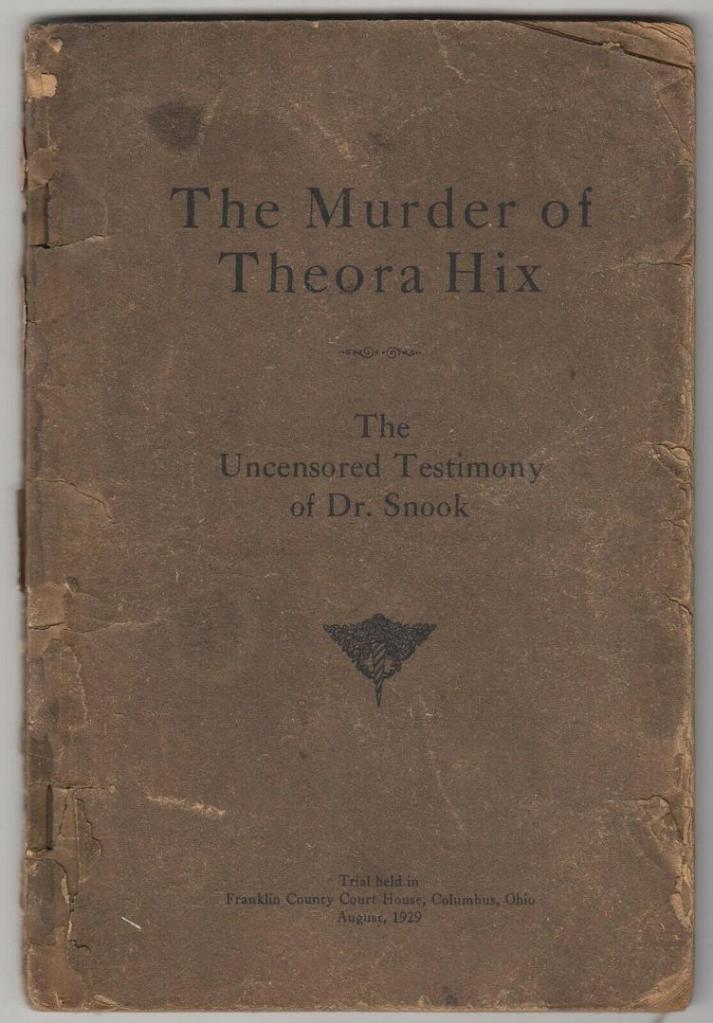
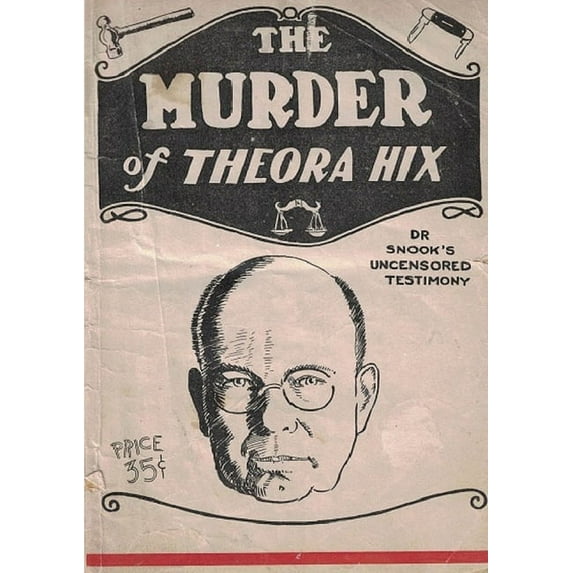
The scandal of the booklet rippled far beyond Ohio.
By the time Snook stepped down, the courtroom was reeling, his testimony hadn’t laid out a defense it had pulled back the curtain on a secret world of lust, obsession, and violence that few had imagined possible from a man of his stature.
Truth, Lies, and The Chair:
In closing arguments, Theora’s character was once again dragged through the mud by the defense.
‘I would like to say peace to her ashes, but I cannot do that with the life of a man at stake. She has to be ridiculed to be pictured as she was. She was the type that was quiet, but sneaky. If Snook wrote three letters that were read to you, then Theora must have written something first, which caused Dr. Snook to write such replies, and she saved those letters. They were deadly weapons. She was a scheming two-man woman, one for the afternoon one for the night. “
The prosecution painted a different picture, one of deceit and cruelty.
“A man who has lied to the police, lied to the prosecutor, lied to his own attorneys, who is now coming on the stand, trying to blacken this girl’s character, trying to say he was afraid of her to escape the electric chair. His crimes are like those of Leopold and Loeb. You, the jury, must uphold the honor of Ohio by finding James Howard Snook, guilty. “
The courtroom broke out in applause.
It took the jury just thirty minutes to reach their decision. In reality, only fifteen minutes of those were spent deliberating. One juror later explained to press “It took us fifteen minutes to select a foreman and to pray for guidance, and fifteen minutes to find him guilty.”
One week later, Judge Henry Scarlet sentenced James Howard Snook to death by electrocution. He was led from the courtroom and taken to the state prison to await execution.
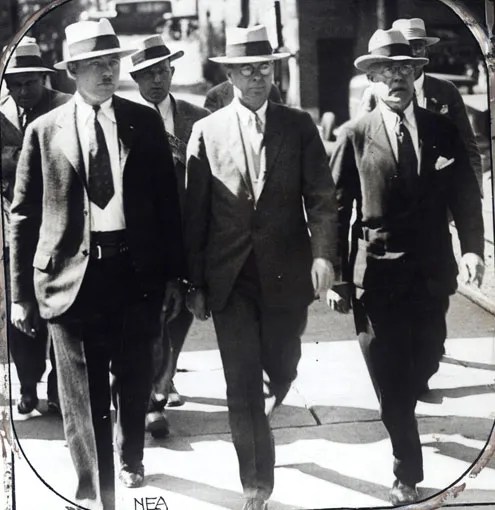
All appeals were rejected and on November 22, 1929, his execution date was set for February 28,1930.
His wife, Helen and two friends, were permitted to spend his final day with him. Together they shared a last meal of fried chicken, lamb chops, mashed potatoes, ice cream and coffee.
When the time came, Helen was taken to the warden’s office to wait until it was over.
Snook gave one final statement to the press.
” I make this statement because I want an unsympathetic public to know the facts. I did not intend to kill her. I was under a great deal of strain and in a weakened physical condition and I cracked. I make this statement fully knowing that I will not stay the hand of the thing they call justice, but instead to correct a wrong impression that an infuriated and incensed public has had of those involved. I repudiate absolutely the confession wrung from me by third degree methods. “
The Last Mile:
When the time came at 7:00 p.m . James Howard Snook was walked down the green mile, where he came face to face with old sparky. The professor, olympian, husband and father, now reduced to a prisoner making the final walk.
His sentence was carried out and he was declared dead at 7:09 pm.
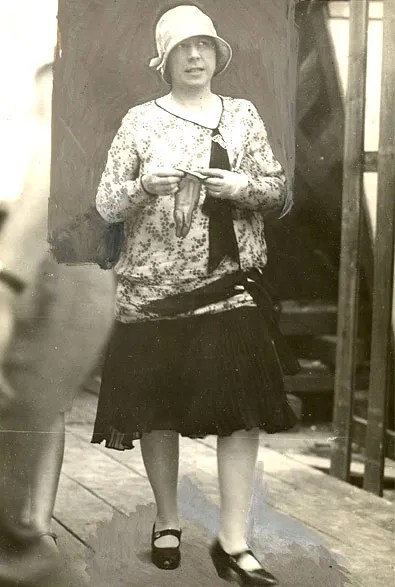
Theora’s father, Melvin, told the press “It’s over, thank God for that. The air seems cleaner about me. I can breathe easier. “
James Snook was buried in Greenlawn Cemetery under the alias James Howard, at Helen’s request, with no public record of the exact grave location.
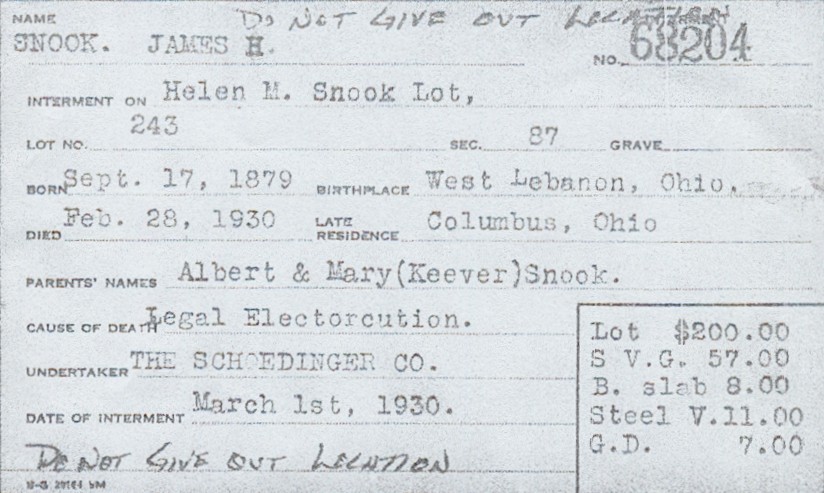
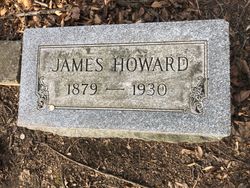
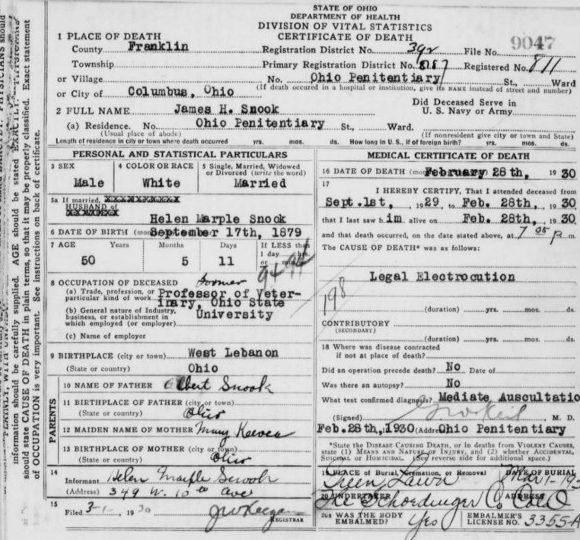
Theora’s body was returned to Johnson City, New York.
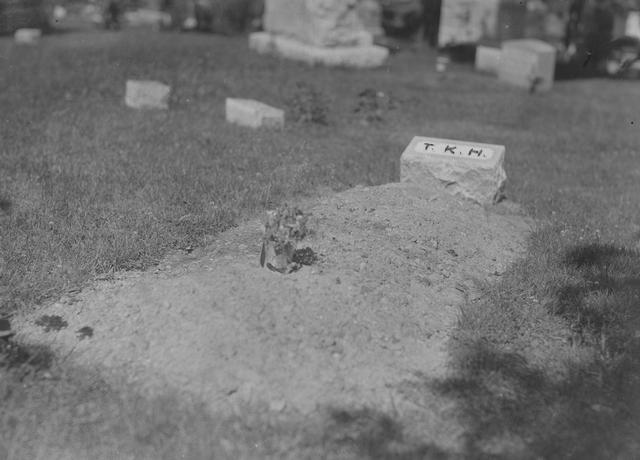
Those Left Behind:
To distance herself further from her husband’s trial and execution, Helen changed her and her daughter’s last name, to Marple, Helen’s maiden name. Helen remained in Ohio, living there until her death on October 26,1978. Mary, Helen’s daughter, graduated from Bryn Mawr College, married and moved to Hawaii, where she taught school at the Punahou School.
Theora’s parents never lived to see how history remembered the case, Joanna Hix died in 1941 and Melvin in 1944.
Shadows That Remained:
The murder of Theora Hix was more than a crime of passion, it was a story that peeled back the veneer of respectability in Columbus. In the summer heat of 1929, a gold medal professor was unmasked, not as a scholar or family man, but as a killer driven by lust and jealousy.
The newspapers eventually moved on , the crowds stopped lining up before dawn at the courthouse and the faint scent of scandal faded from Ohio’s front pages. The echos linger.
Theora’s name survives in the whispers of forgotten headlines, her life reduced to courtroom testimony and defense slander.
Snook’s grave lies hidden under an assumed name, his olympic triumph eclipsed by the chair that ended his life.
Two families were shattered, two reputations destroyed, and yet the fascination endures. Nearly a century later, the story of Theora Hix and Dr. James Snook still clings like smoke, a reminder that beneath the polished surface of even the most respectable lives, darkness waits for its chance to step into the light.
https://digital-collections.columbuslibrary.org/digital/collection/p16802coll28/id/189995
https://www.findagrave.com/memorial/14429029/james_howard-snook
https://www.findagrave.com/memorial/69541842/helen_thatcher-snook
https://www.findagrave.com/memorial/14429049/theora-kathleen-hix
 Crimes and Catastrophe
Leave a comment