
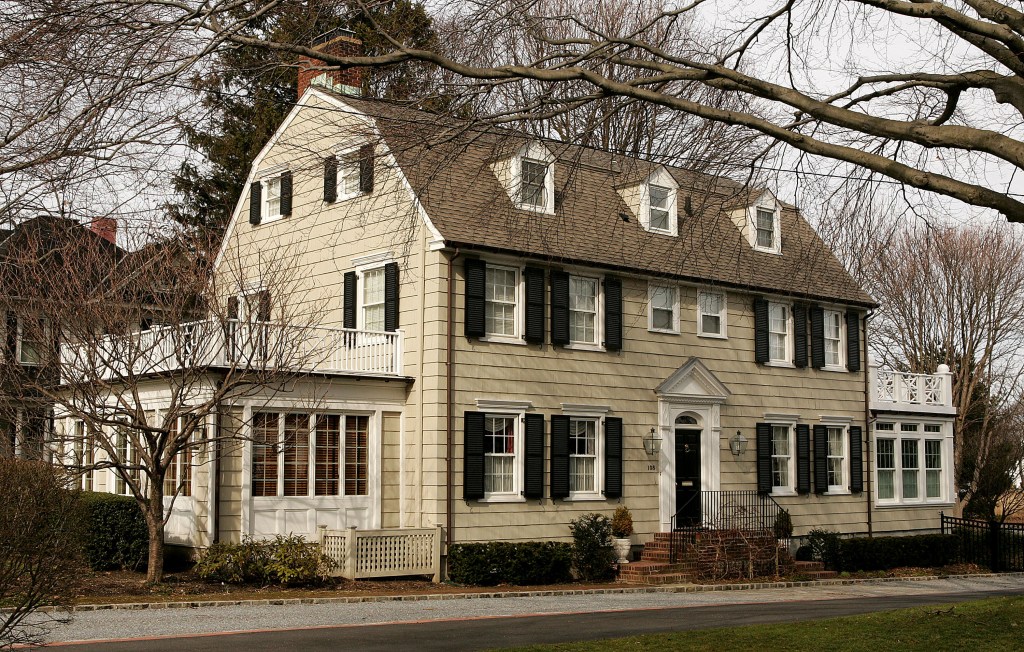
Amityville was the kind of quiet Long Island town where you left your doors unlocked and trusted the neighbors to water your plants. But on the night of November 13, 1974, something evil moved through the Dutch Colonial at 112 Ocean Avenue. By sunrise, the DeFeo family was gone all six of them and the only one left standing was their son, Ronald. The cops would call it a massacre. The papers would call it a mystery. And Hollywood? Well, Hollywood turned it into a horror show. But before the demons and the flies and the bleeding walls, there was just a boy, a rifle, and a night that would never end.
Operator:This is Suffolk County Police. May I help you?”
Man: “We have a shooting here. Uh, DeFeo.”
Operator: “Sir, what is your name?”
Man: “Joey Yeswit.”
Operator: “Can you spell that?”
Man: “Yeah. Y-E-S W I T.”
Operator: “Y-E-S . .
Man: “Y-E-S-W-I-T.”
Operator: “. . . W-I-T. Your phone number?”
Man: “I don’t even know if it’s here. There’s, uh, I don’t have a phone number here.”
Operator: “Okay, where you calling from?”
Man: “It’s in Amityville. Call up the Amityville Police, and it’s right off, uh . . . Ocean Avenue in Amityville.”
Operator: “Austin?”
Man: “Ocean Avenue. What the … ?”
Operator: “Ocean … Avenue? Offa where?”
Man: “It’s right off Merrick Road. Ocean Avenue.”
Operator: “Merrick Road. What’s … what’s the problem, Sir?”
Man: “It’s a shooting!”
Operator: “There’s a shooting. Anybody hurt?”
Man: “Hah?”
Operator: “Anybody hurt?”
Man: “Yeah, it’s uh, uh — everybody’s dead.”
Operator: “Whattaya mean, everybody’s dead?”
Man: “I don’t know what happened. Kid come running in the bar. He says everybody in the family was killed, and we came down here.”
Operator: “Hold on a second, Sir.”
(Police Officer now takes over call)
Police Officer: “Hello.”
Man: “Hello.”
Police Officer: “What’s your name?”
Man: “My name is Joe Yeswit.”
Police Officer: “George Edwards?”
Man: “Joe Yeswit.”
Police Officer: “How do you spell it?”
Man: “What? I just … How many times do I have to tell you? Y-E-S-W-I-T.”
Police Officer: “Where’re you at?”
Man: “I’m on Ocean Avenue.
Police Officer: “What number?”
Man: “I don’t have a number here. There’s no number on the phone. “
Police Officer: “What number on the house?”
Man: “I don’t even know that.”
Police Officer: “Where’re you at? Ocean Avenue and what?”
Man: “In Amityville. Call up the Amityville Police and have someone come down here. They know the family.”
Police Officer: “Amityville.”
Man: “Yeah, Amityville.”
Police Officer: “Okay. Now, tell me what’s wrong.”
Man: “I don’t know. Guy come running in the bar. Guy come running in the bar and said there — his mother and father are shot. We ran down to his house and everybody in the house is shot. I don’t know how long, you know. So, uh . . .”
Police Officer: “Uh, what’s the add … what’s the address of the house?”
Man: “Uh, hold on. Let me go look up the number. All right. Hold on. One-twelve Ocean Avenue, Amityville.”
Police Officer: “Is that Amityville or North Amityville?”
Man: “Amityville. Right on … south of Merrick Road.”
Police Officer: “Is it right in the village limits?”
Man: “It’s in the village limits, yeah.”
Police Officer: “Eh, okay, what’s your phone number?”
Man: “I don’t even have one. There’s no number on the phone. “
Police Officer: “All right, where’re you calling from? Public phone?”
Man: “No, I’m calling right from the house, because I don’t see a number on the phone.”
Police Officer: “You’re at the house itself?”
Man: “Yeah.”
Police Officer: “How many bodies are there?”
Man: “I think, uh, I don’t know — uh, I think they said four.”
Police Officer: “There’s four?”
Man: “Yeah.”
Police Officer: “All right, you stay right there at the house, and I’ll call the Amityville Village P.D., and they’ll come down.”
When police stepped through the front door of 112 Ocean Avenue, they walked straight into a nightmare. Six members of the DeFeo family lay dead in their beds, shot as they slept.
What could drive someone to slaughter an entire family? Why didn’t the neighbors hear the gunfire that echoed through the house? What really happened inside those walls on that cold November night?
Was the sole survivor, Ronald “Butch” DeFeo Jr., a cold-blooded killer, or, as he later claimed, was he driven by something darker? Was it a mob hit? Did he act alone? Or was the house itself hiding secrets no one wanted to believe?
High Hopes:
Before the headlines, before the horror, they were just a family. Ronald and Louise DeFeo built a life on Ocean Avenue with their five children, a life that looked picture-perfect from the outside. But behind the front door of the Dutch Colonial, things weren’t always so peaceful.
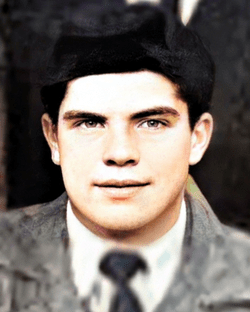
Ronald DeFeo Sr. (43) – Was born November 16, 1930 in Brooklyn, New York to Rocco and Antoinette Bianco-DeFeo. Ronnie grew up in a strict Italian family, who had ties to the Genovese crime family, through Ronald’s uncle Peter DeFeo. The patriarch of the family, Ronald Sr. was known as “Big Ronnie.” He worked at his father-in-law’s car dealership and provided well for his family, but he also ruled the house with an iron fist. Neighbors described him as proud and imposing, and those who knew the family said his temper often flared. Arguments between father and eldest son, Butch, were frequent and heated.
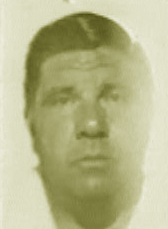
Louise DeFeo (42) – Was born November 30, 1931 in Brooklyn, New York to Michael and Angelina Brigante. Louise grew up in a well to do family, who hung out with celebrities such as Mel Torme, and who, like Ronnie’s family, had ties to the Gambino crime family, her father Michael was an associate of Carlo Gambino. When Louise was younger, she had dreams of becoming a model, however fate had other plans for her when she met Ronald DeFeo, who was handsome with the looks of Valentino, the couple, after a brief courtship quickly married in 1951. Louise was the heart of the household. A homemaker devoted to her five children, Friends remembered her as warm and kind, with a softer presence than her husband. While she tried to shield the children from Ronald Sr.’s temper, she often found herself caught in the middle of family conflicts.

Ronald “Butch” DeFeo Jr. (23) – The eldest child, known as “Butch,” had a turbulent relationship with his father. He struggled with drug use, skipped work at the dealership, and carried a reputation for being volatile. Butch’s resentments and paranoia ran deep, and he often told friends about his hatred for his father. Later, he would become the only surviving member of the household.
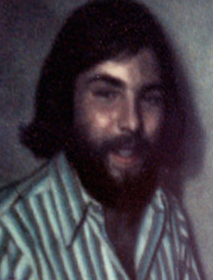
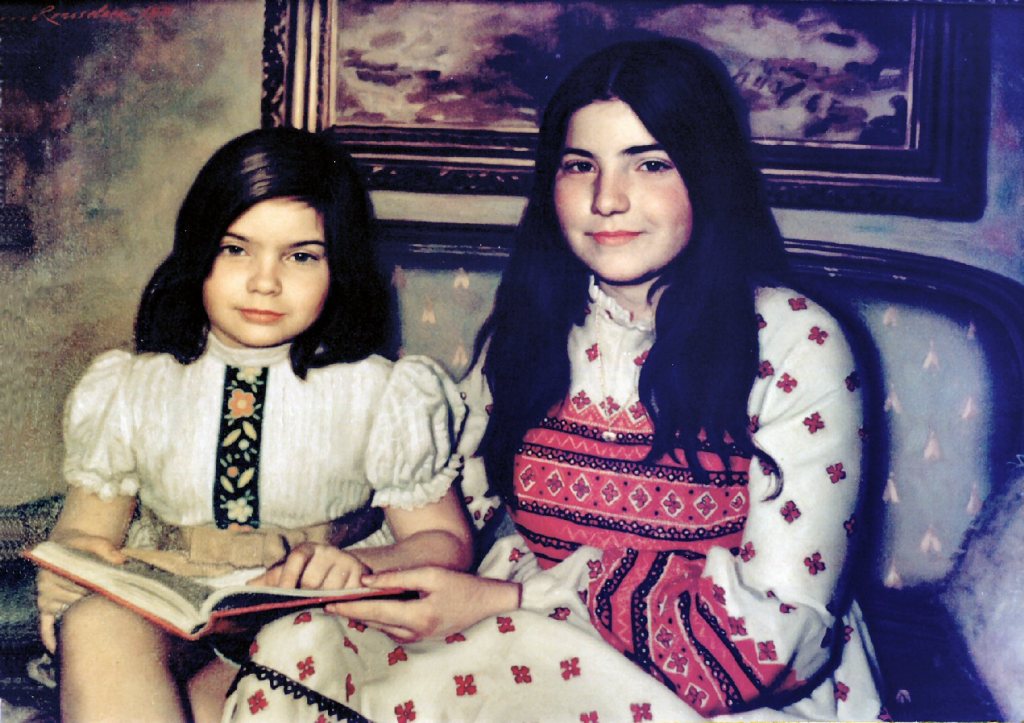
Dawn Theresa DeFeo (18) – Just on the edge of adulthood, Dawn longed for independence. She dreamed of leaving Amityville for a bigger, freer life. Friends said she often felt stifled by her father’s strictness, but she shared a close bond with her siblings ,especially her younger sister, Allison.
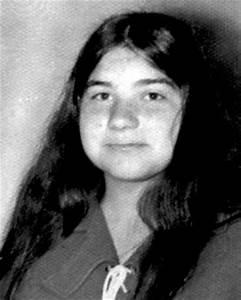
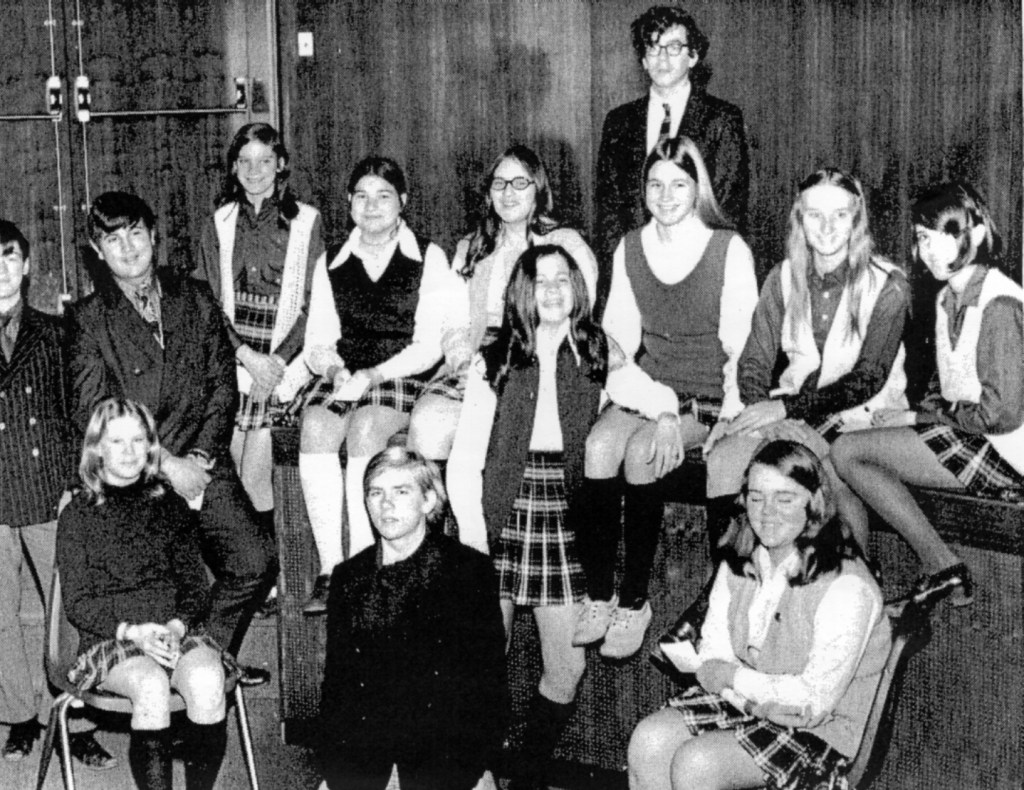
Allison Louise DeFeo (13) – Described as sweet, gentle, and thoughtful. She was a bright girl who had just started stepping into her teenage years, balancing school, friends, and the normal dreams of a 13-year-old. She had a close relationship with her siblings and was well-liked by classmates.
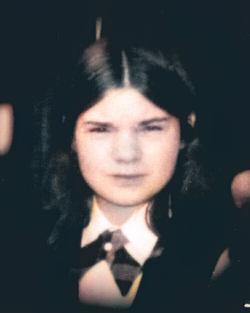
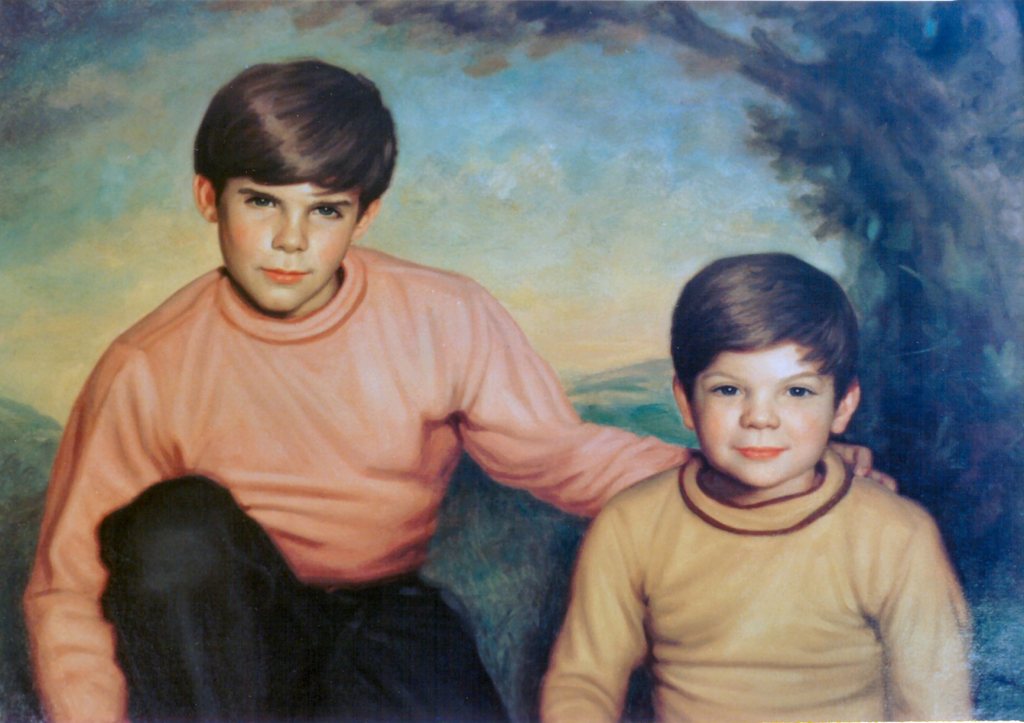
Marc Gregory DeFeo (12) – Was active and loved sports, especially football. At the time of the murders, he was sidelined by an injury, which frustrated him, but he remained spirited and outgoing. He was remembered as a lively boy who loved being with friends and family.

John Matthew DeFeo (9) – The youngest of the family, John was still very much a child — energetic, playful, and innocent. He enjoyed riding his bike around the neighborhood and was often described as the “baby” of the family, doted on by his older siblings.

To their neighbors, the DeFeos seemed like a tight-knit, ordinary family. The big house at 112 Ocean Avenue wasn’t just impressive, it looked like stability. The DeFeos prayed together, traveled together, and on snowy Long Island winters, were known to pelt each other with snowballs in the yard.
Every Sunday, they hosted prayer gatherings, and Louise DeFeo, kind and soft-spoken, was remembered for her generosity. She baked for others in the neighborhood, stopped in on friends who were sick, and lent comfort to those who had lost loved ones. When Catherine O’Reilly, a widow, and neighbor, lost her husband, the DeFeos were among the first to check in on her, offering companionship and warmth.
From the outside, they looked like the very definition of “a nice, normal family.” But appearances, as Amityville would soon learn, can be deceiving.
As the oldest child, Ronald “Butch” DeFeo Jr. carried expectations he never seemed able or willing to meet. Overweight as a boy and bullied in school, he grew up angry, resentful, and volatile. By his teens, he was already experimenting with drugs, and by 17 he had been expelled from school for violent outbursts, his temper too explosive to contain. By his twenties, heroin, LSD, and heavy drinking had become part of his daily routine.
His father’s domineering personality only fueled the fire. The two clashed constantly, their arguments erupting into shouting matches that the younger children learned to tune out. Sometimes the fights turned violent. Friends remembered a chilling incident when Butch pulled a rifle on his father during an argument. One evening, a fight broke out between Mr. and Mrs. DeFeo. In order to settle the matter, Butch grabbed a 12-gauge shotgun from his room, loaded a shell into the chamber, and charged downstairs to the scene of the altercation. Without hesitation, Butch pointed the barrel of the gun at his father’s face, yelling, “Leave that woman alone. I’m going to kill you, you fat fuck! This is it.”
Butch pulled the trigger, but the gun mysteriously did not go off. Ronald, Sr. froze in place and watched in grim amazement as his own son lowered the gun and simply walked out of the room with indifference to the fact that he had almost killed his father. The fight was over, but Butch’s actions foreshadowed the violence he would soon unleash not only upon his father, but his entire family.
Even outside the home, Butch’s life was spiraling. Though he was given a job at his grandfather Michael Brigante’s car dealership, he rarely showed up, and when he did, his work was erratic. One co-worker admitted that staff always tread carefully around Butch, adding “please” to their requests just to avoid setting him off. Soon, he began skimming money, and when that wasn’t enough, he staged a phony robbery of the dealership, claiming over $20,000 in payroll cash had been stolen. It was a sloppy scheme, and his father quickly saw through it. The betrayal deepened the rift between them, Big Ronnie was furious, Butch was humiliated.
His parents eventually sought psychiatric help for him, but therapy didn’t last. The sessions stopped, the deeper issues went unresolved. Instead, Ronald Sr. and Louise tried to pacify their troubled son with money and material things. Butch received a generous cash allowance and expensive gifts, but the handouts only fueled his drug use and reckless behavior.
Friends noticed him becoming paranoid and unpredictable. He carried himself with bravado, flashing his father’s money around town, but beneath it was a simmering rage. What should have been a steady path forward only gave way to chaos, leaving Butch careening deeper into addiction and resentment. The pieces were already falling into place. The walls of 112 Ocean Avenue were closing in, and the tension inside tightened like a noose.
Shots In The Dark:
November 12–13, 1974
The morning of November 12, 1974, began like any other in Amityville. The DeFeo family carried on with their daily routines, unaware it would be the last ordinary day they would ever see.
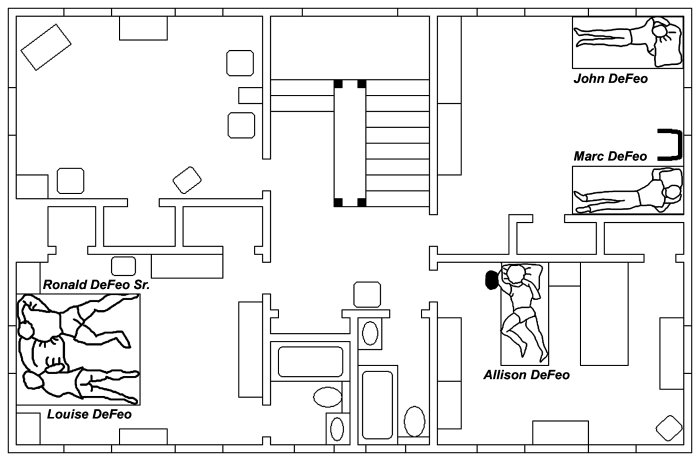
Then just as the clock struck 3:00 a.m. the morning of November 13th ,the house at 112 Ocean Avenue fell silent forever. In less than fifteen minutes, Ronald “Butch” DeFeo Jr took a .35 caliber Marlin rifle and gunned down his family, one room at a time. His parents, Ronald Sr. and Louise, were the first to die, each shot as they slept.
From there, Butch moved to the boys’ bedroom. Twelve-year-old Marc and nine-year-old John Matthew were killed next, their young lives ended before they even stirred. Then he climbed to the third floor, where eighteen-year-old Dawn and thirteen-year-old Allison were sleeping. They, too, were executed in their beds, leaving all six members of the DeFeo family dead before dawn.
When it was over, Butch didn’t panic. Instead, he began crafting his cover. He showered, trimmed his beard, and dressed in jeans and work boots. Gathering his bloodied clothing and the murder weapon, he stuffed them into a pillowcase, loaded it into his car, and drove off into the pre-dawn darkness. Somewhere in Brooklyn, he tossed the bundle down a storm drain — the rifle, the clothes, the evidence of what he had done.
By 6:00 a.m., Butch was back on Long Island, reporting for work at his grandfather’s Buick dealership, as if nothing had happened. Business as usual, while his family lay dead just a few miles away.
Around the same time that Butch left for work, a neighbor out walking his dog noticed something unusual, the lights on the third floor still burned, far later than normal. By 6:30 a.m. , Butch was found dozing in his blue Buick Electra at the car dealership, detached from the nightmare he had left behind.
That same morning, Catherine O’Reilly, a family friend and neighbor, came by the house to pick up the younger DeFeo children for school. Both parents’ cars were still parked outside, no one answered the door. She returned later, around 8:40 AM, after dropping off her own children, and again found the house dark and unresponsive.
By 10:30, the mailman arrived to deliver the day’s letters. Even the DeFeo’s sheepdog, Shaggy, was quiet, unusual for the normally protective animal. The silence weighed heavy, but still no one went inside.
Butch didn’t stay long at the dealership that morning. He made a few calls home, acting irritated when no one answered, and by noon he had left, claiming there was nothing to do. Around 1:30 p.m., he showed up at the home of his girlfriend, Sherry Klein, casually mentioning that he had tried calling his house several times but couldn’t get through. The cars were in the driveway, he said, but no one was picking up. To prove his point, he dialed the house from Sherry’s phone, and once again, no one answered.
Butch acted puzzled, but not overly concerned. He took Sherry shopping, and later drove to see his friend Bobby. The story stayed the same: he couldn’t reach his family, something was “going on” at the house, but he shrugged it off with a laugh. “The cars are all in the driveway,” he told Bobby. “And I still can’t get in. I called twice and nobody answered.” Just as quickly, he changed the subject, asking Bobby if he was going out that night. Bobby told him he’d be at Henry’s Bar around 6:00.
Butch spent the rest of the afternoon drifting between friends, drinking, and taking heroin. By the time he walked into Henry’s after 6:00 p.m., Bobby was already there. Once again, Butch put on the same routine the cars were there, the house was quiet, no one was answering the phone. “I’m going to have to go home and break a window to get in,” he muttered.

Minutes later, he burst back into the bar, his face twisted in panic. “You’ve got to help me,” he cried. “I think my parents have been shot.”
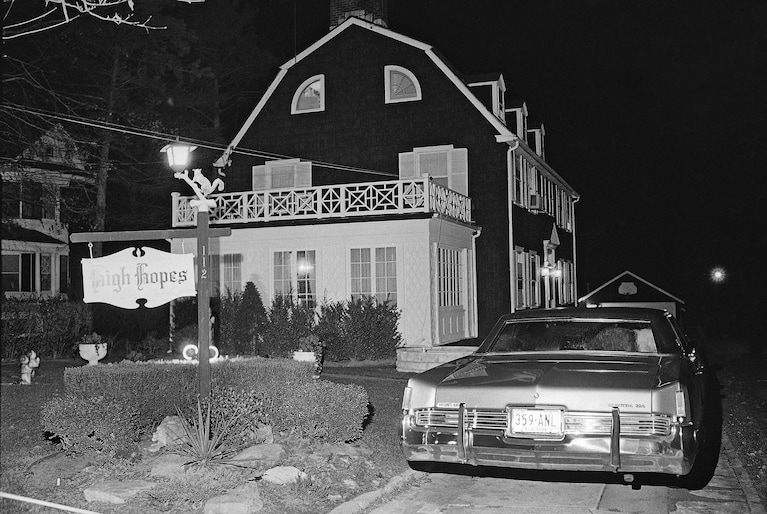
The DeFeo house loomed quiet in the fading light, its stillness unsettling. Together, they pushed through the front door, and stepped into a nightmare. A call to police was made, the neighbors still slept unaware about what was to unfold. They would later tell how it was eerily quiet, not a dog barking, nor screams for help, or the sound of eight shots piercing the stillness of the night. People often wonder how could the neighbors not have heard the shots.
The police arrived ten minutes after Joey Yeswit’s frantic call, first on the scene was Patrolman Kenneth Geguski. Outside the house, a small crowd of men stood on the lawn. Butch was among them, his body shaking, tears streaming down his face. “My mother and father are dead,” he choked out as Geguski approached.
Inside, Geguski climbed the stairs and found the bodies of Ronald Sr. and Louise, then Mark and John Matthew. Shocked, he hurried back down to call for backup. At the kitchen table sat Butch, still crying, insisting that his two sisters were also inside. When Geguski and a second officer, Edwin Tyndall, searched further, they found Dawn and Allison. The amount of blood was staggering. Even the officers couldn’t immediately tell where the girls had been shot.
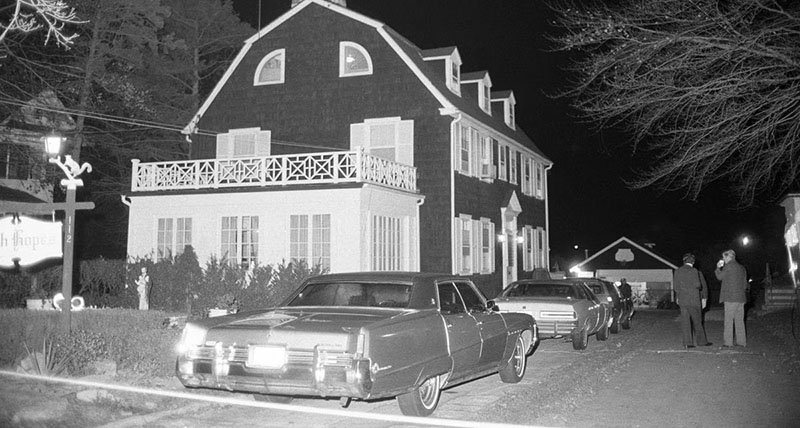
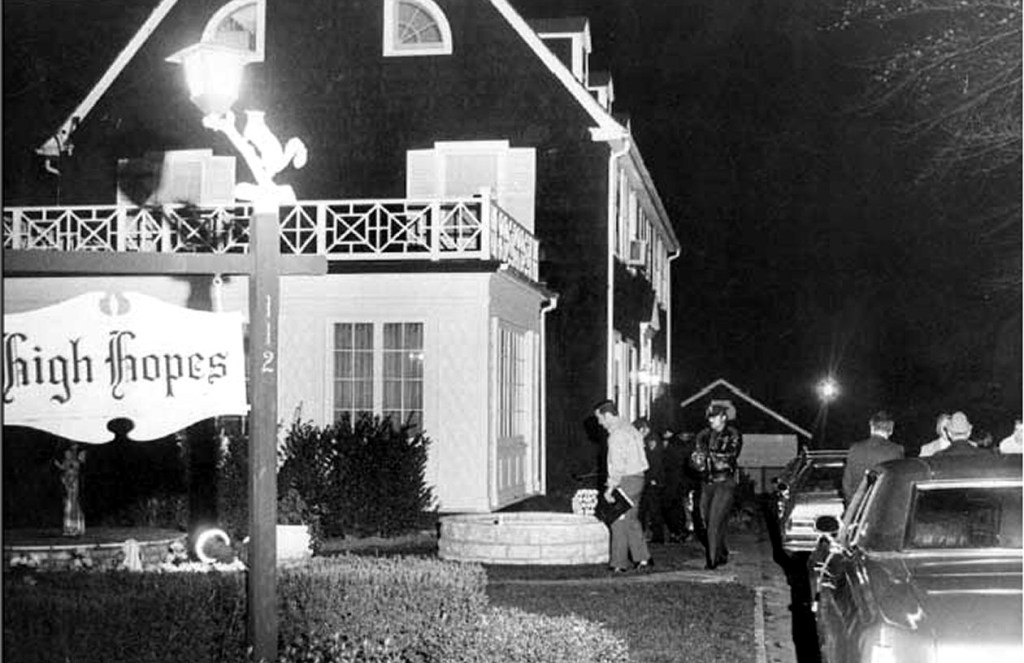
By 7:00 p.m., the street outside “High Hopes,” as the DeFeo house was ironically nicknamed, was swarming with police and neighbors. The horror inside was no longer a secret.
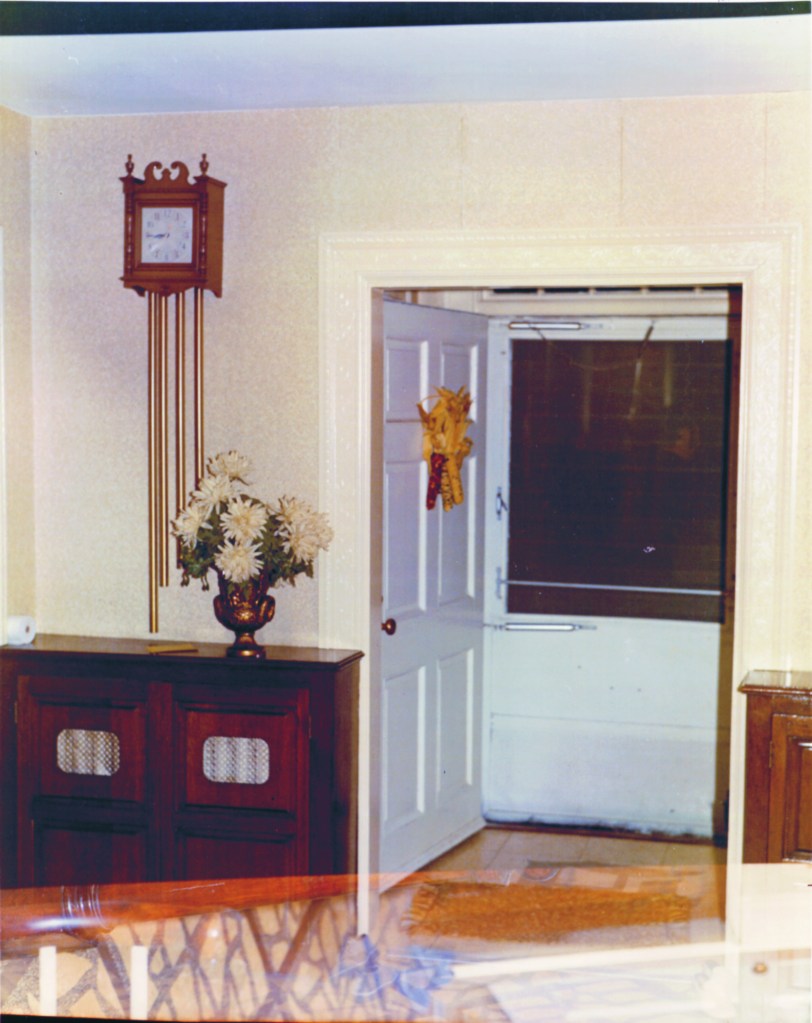
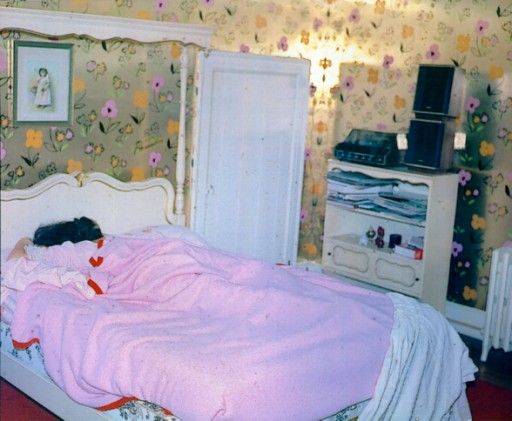
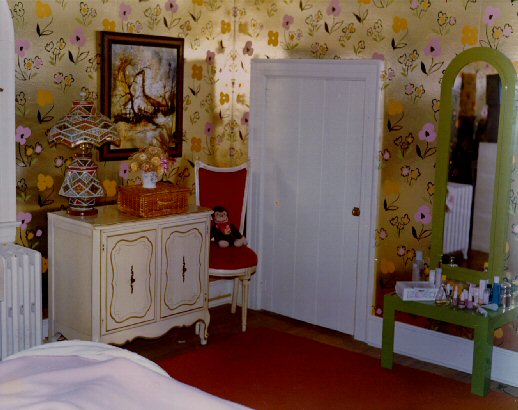
Are you ready, kid.? What you’re about to see ain’t pretty. The camera don’t lie, and neither does death. These photos freeze the DeFeo family in the last positions they ever took, and they’re as raw as the November night they were shot. If you’re not ready to walk down the blood-stained hallways of 112 Ocean Avenue, now’s the time to turn back. But if you’ve got the guts to keep going, I gotta tell ya, kid , it’s hard seeing the bodies of those kids. So if you’re still with me… open the file, and take a look. If not well you know what to do, we’ll stop here and I’ll put the file away.
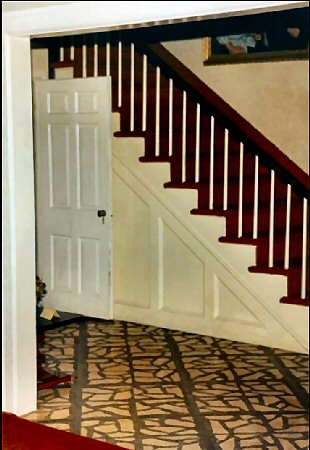
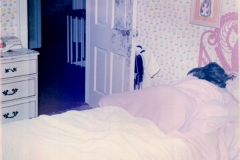
Inside, officers moved from room to room, documenting what they found. Each body was photographed in place, a permanent record of the massacre. The stillness of the children’s bedrooms, with their toys and schoolbooks nearby, made the crime all the more haunting.

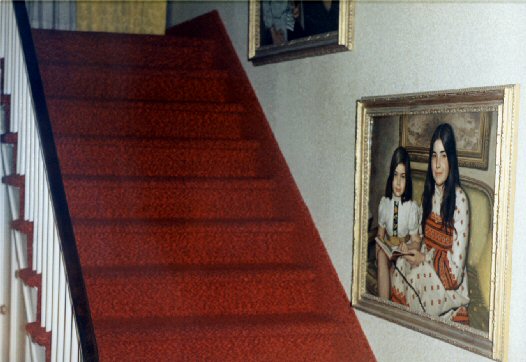
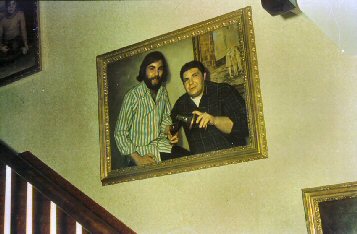

The first grim sight was Ronald Sr. and Louise, each lying face down in their bed, shot where they slept.

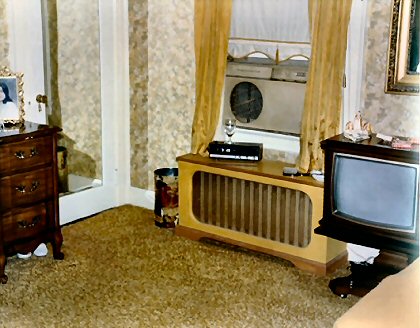



The men quickly realized this was no isolated crime, room after room revealed the same horror. Dawn, Allison, Marc, and John Matthew were all found in their beds, each executed with precision. Not one showed signs of waking or struggling.

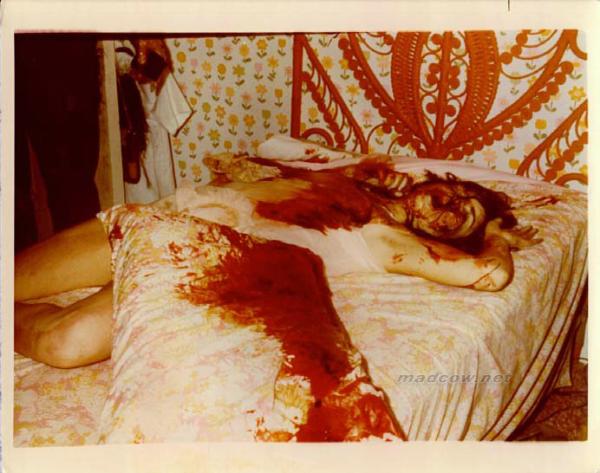

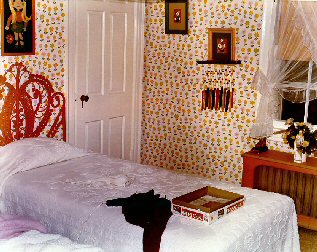
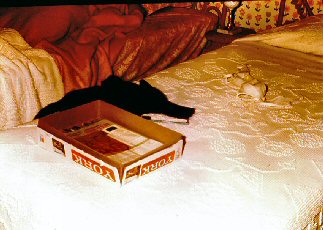


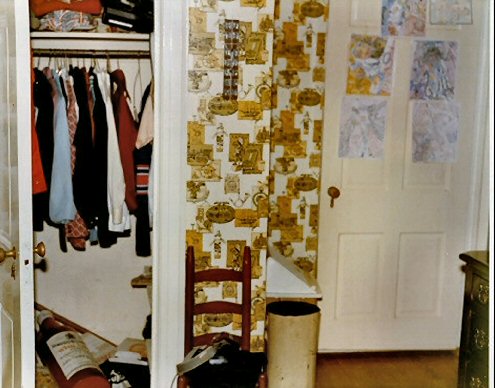


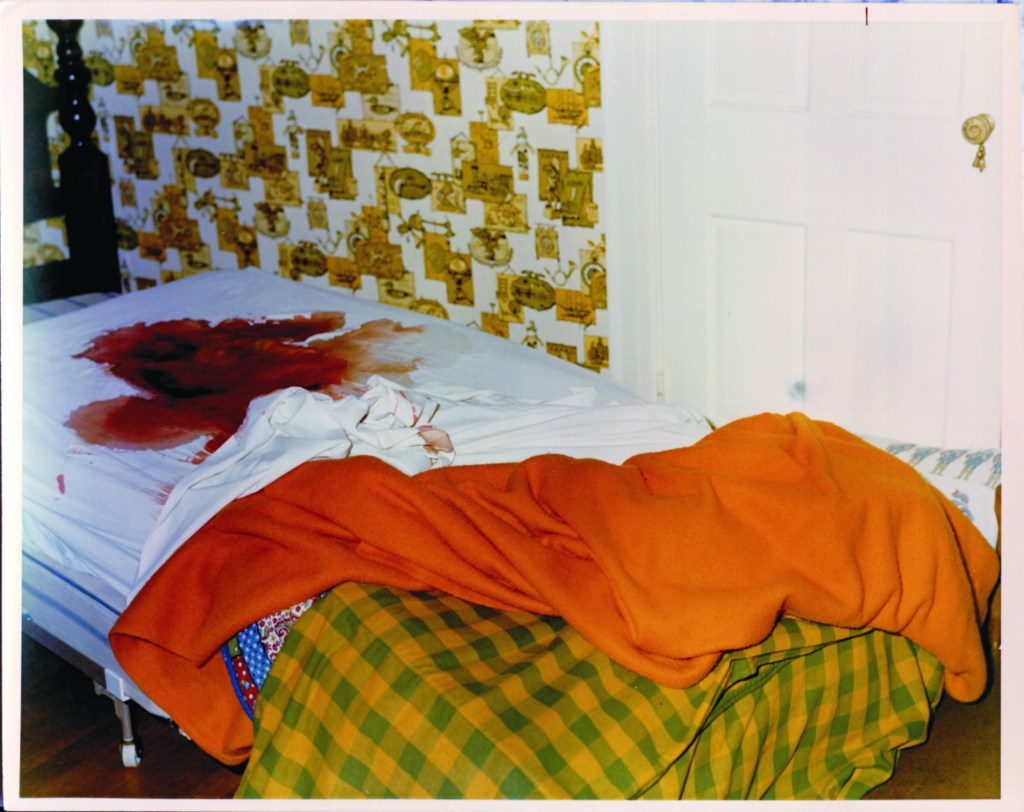

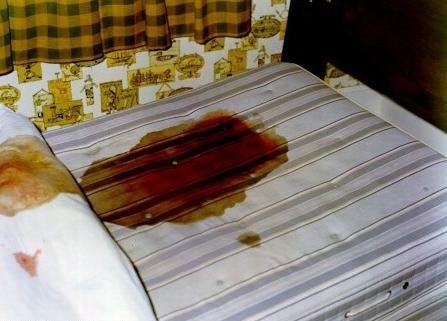
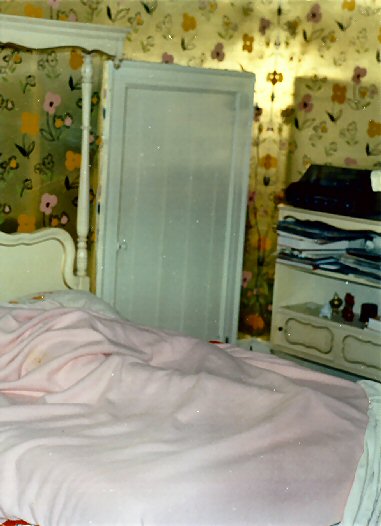

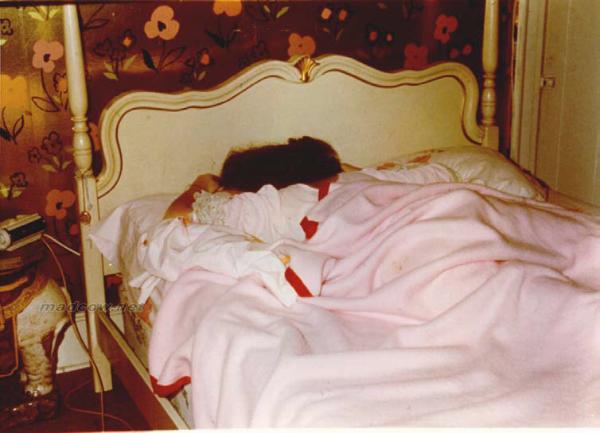

Detective Gaspar Randazzo was the first to sit Butch down in the kitchen for questioning. Who could have done this? he asked. Butch had an answer ready: Louis Falini, a mafia hit man. Falini, he claimed, had a grudge and must have carried out the massacre.
For the moment, police treated Butch as a witness — even a possible target. Detectives suggested moving him to headquarters for safety. He agreed.
Once the crime scene photos were taken and evidence logged, the coroner arrived. One by one, the bodies were lifted from the beds where they had been found, zipped into heavy black body bags, and carried down the narrow staircase.
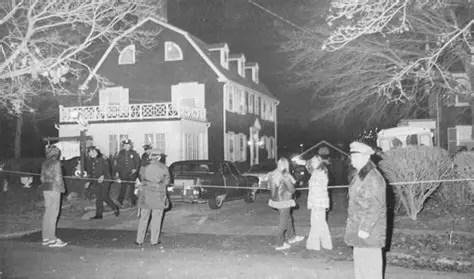
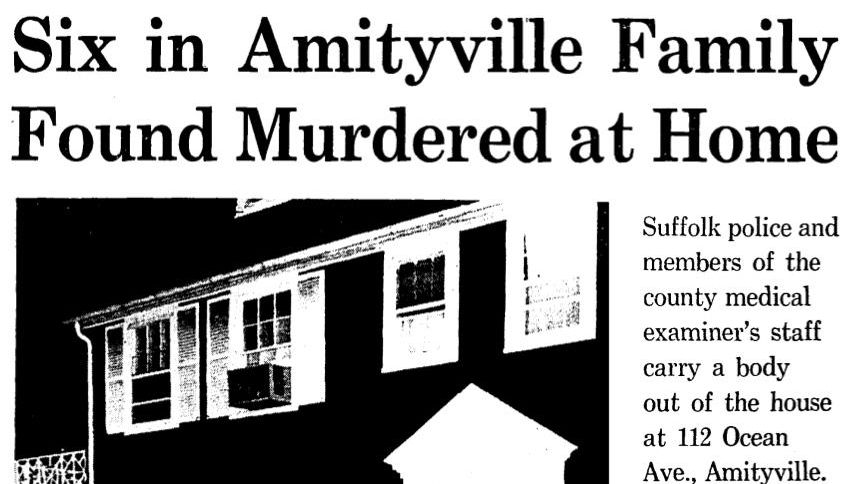
Neighbors watched from behind police tape as the stretchers emerged into the cold November night. Six bags, six lives — all from one house. Some residents crossed themselves. Others whispered in disbelief. The quiet street of Ocean Avenue had turned into something resembling a funeral procession, only with sirens, floodlights, and news cameras snapping in the dark.
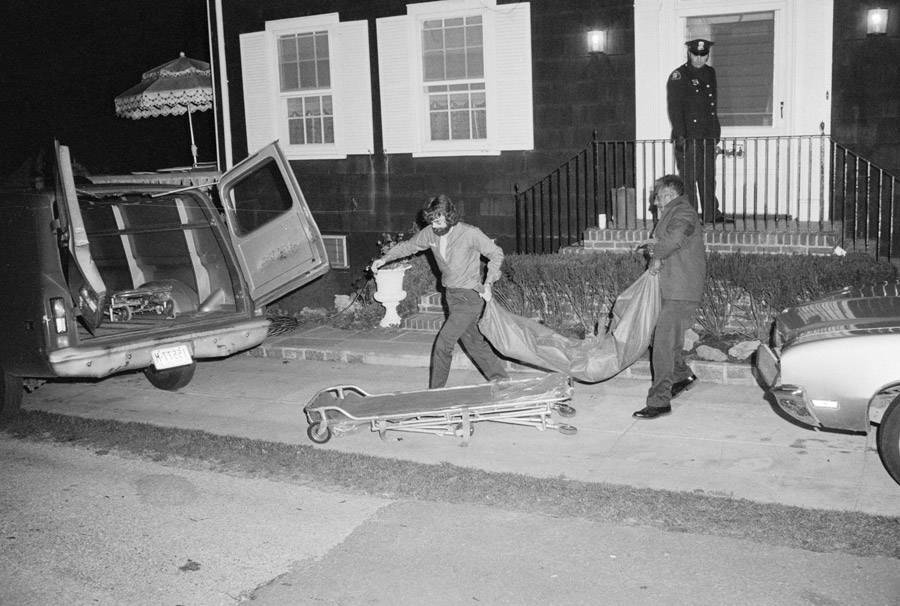
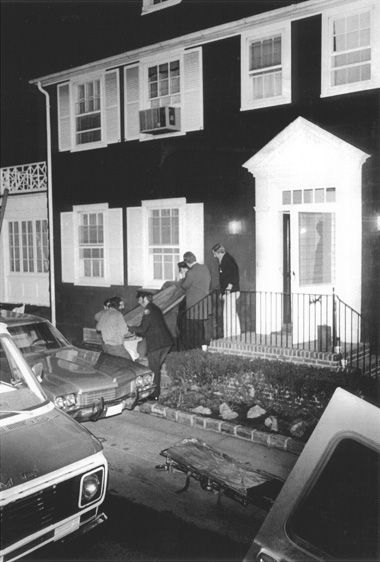
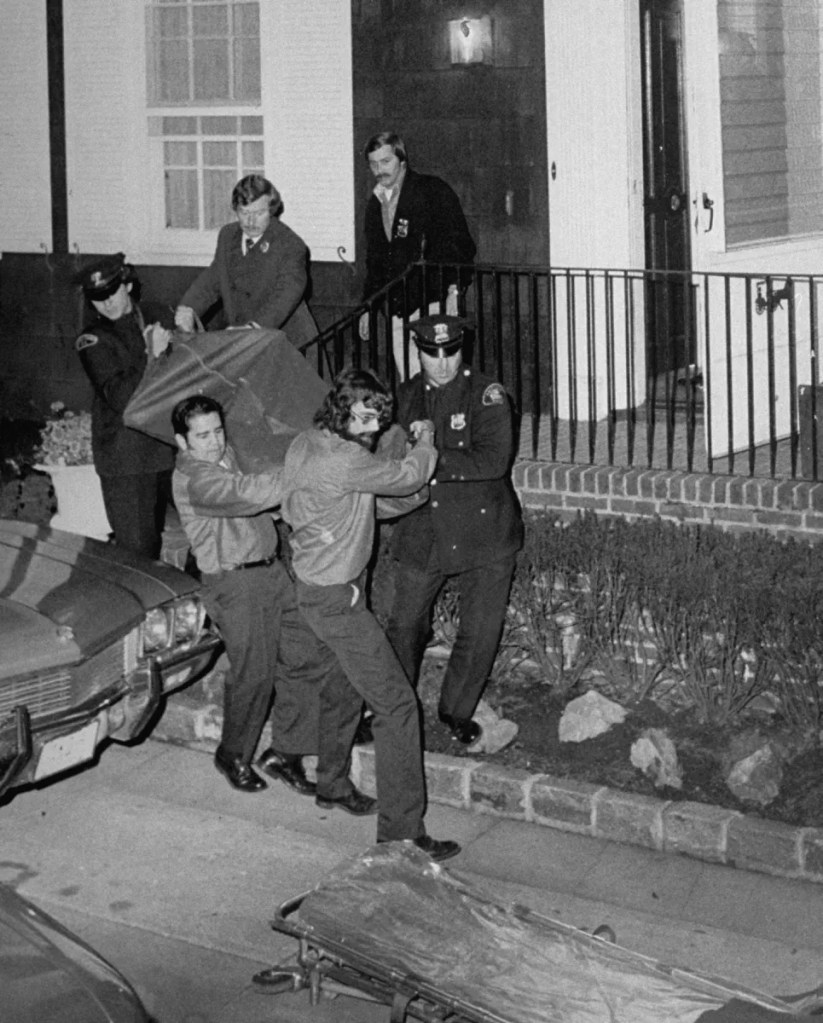
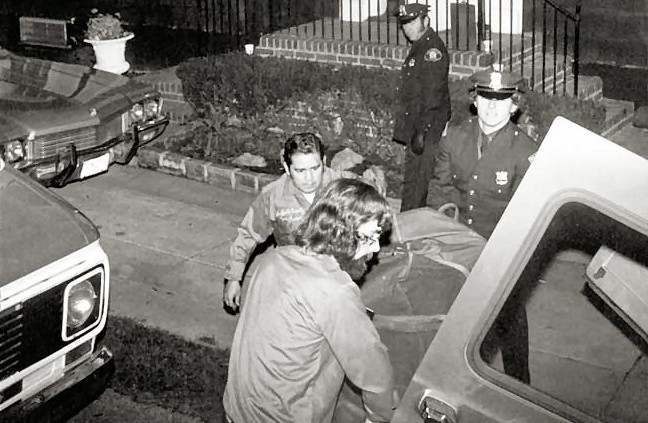

Inside, officers continued their methodical sweep, marking shell casings and taking measurements. Outside, the reality of what had happened hit the community: the DeFeos weren’t coming back, and the house that had once been “High Hopes” now looked like something cursed.
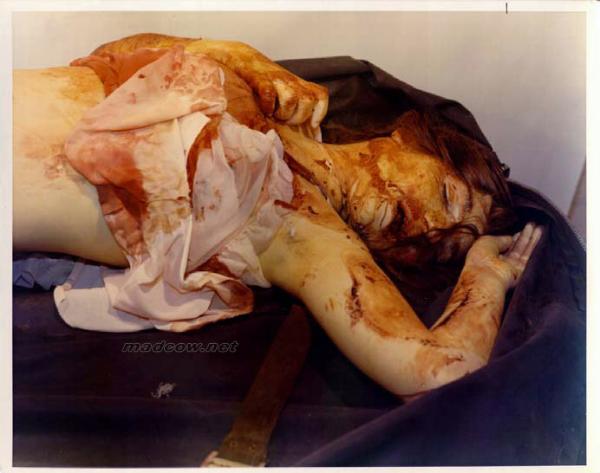
At the morgue, further images captured the reality of what had been done, stark reminders that the victims weren’t just names on a case file, but flesh-and-blood lives cut short.
The medical examiner’s report confirmed the brutality of what had happened inside 112 Ocean Avenue. All six victims had been shot with the same weapon, aMarlin rifle. Each body was discovered lying face down, undisturbed, as if death had come without warning. There were no drugs or sedatives in their systems, no sign that anyone had been incapacitated before the shots rang out.

At headquarters, DeFeo gave a written statement: he said he had stayed up late watching TV, left for work early, called his family throughout the day with no answer, and finally discovered the bodies before running to the bar for help. He sounded convincing enough. By the early morning hours, he was resting on a cot in the back of the station, treated as the sole survivor of a mob hit.
But the cracks in his story showed quickly. On November 15th, Detective John Shirvell searched Butch’s room again and discovered empty rifle boxes, one for a .35-caliber Marlin, the same weapon used in the murders. That, combined with inconsistencies in Butch’s timeline, shifted suspicion sharply toward him. They just needed to find the gun.


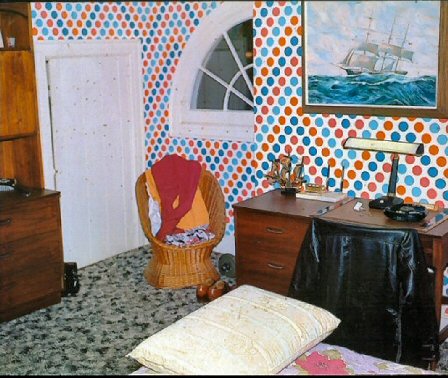


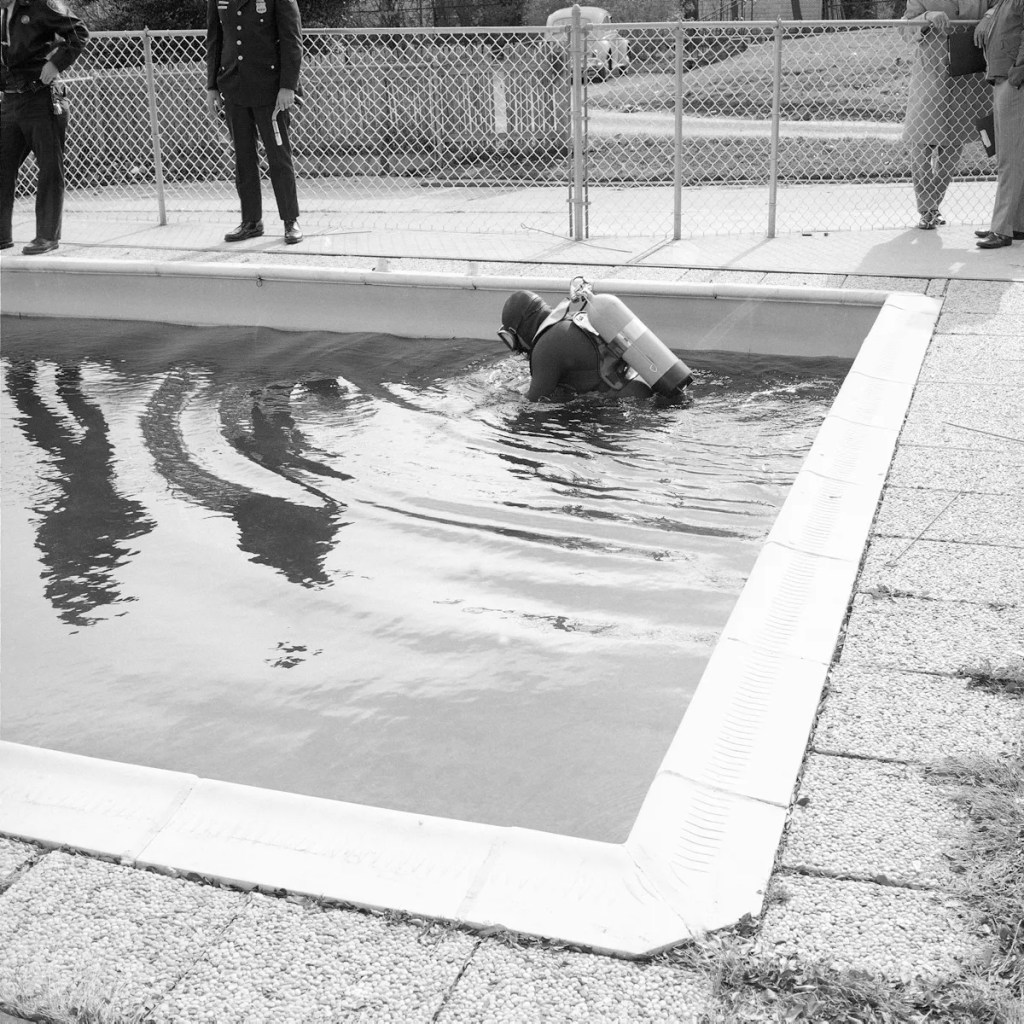


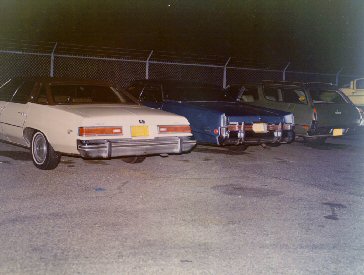
Detectives Robert Dunn and Dennis Rafferty began pressing harder. They confronted Butch with the facts: the victims were all found in bed in their nightclothes; the murders had to have happened in the dead of night, not after he left for work. His flimsy alibi unraveled.
Butch tried another story: Falini and an accomplice had forced him at gunpoint to accompany them as they killed his family. But even as he talked, he slipped, admitting to handling cartridges and disposing of evidence. The detectives let him run until he tied the noose himself.
Finally, Rafferty leaned in.
“It didn’t happen that way, did it?”
Butch buried his head in his hands. “Give me a minute,” he muttered.
“Falini was never there, was he? None of it was true.”
There was a long pause, and then the words came out. “No. It all started so fast. Once I started, I just couldn’t stop. It went so fast.”
With that, the lies ended. Butch DeFeo had confessed to murdering his entire family.
After his confession, Butch told detectives where he had hidden the rifle and the bloody clothing he wore the night of the murders. Acting on his directions, police recovered the bundle from the storm drain in Brooklyn where he had dumped it.
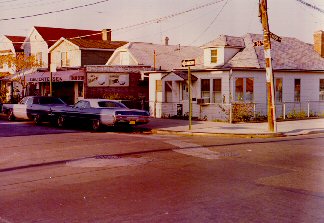

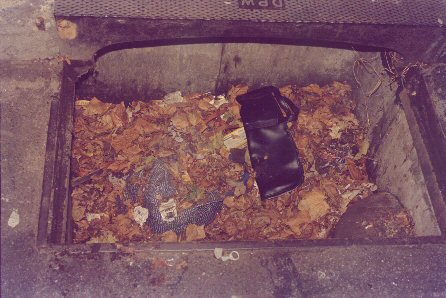

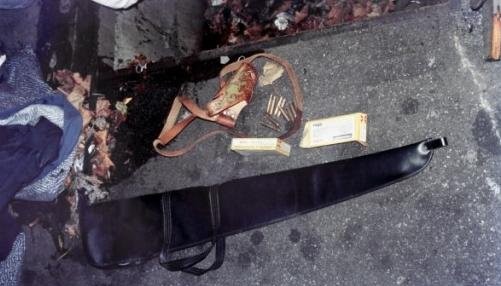
The weapon ,a .35 caliber Marlin rifle , was quickly matched to the bullets pulled from the bodies. The bloody clothes were his size, his style, and carried the same blood type as his family. What had started as suspicion was now locked down with cold, physical proof.
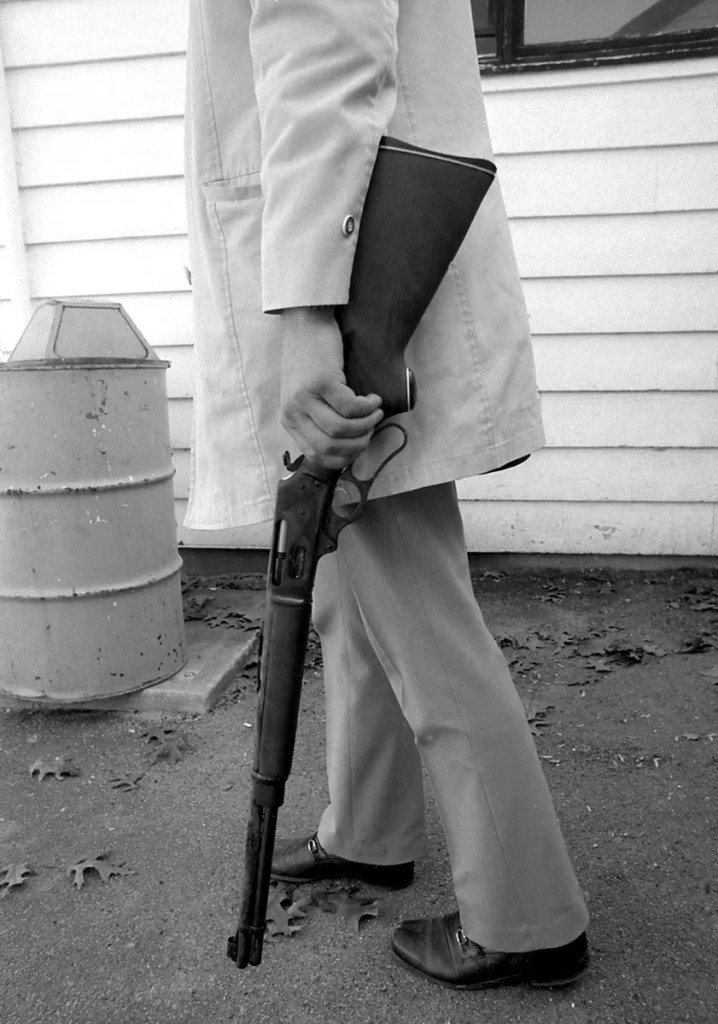
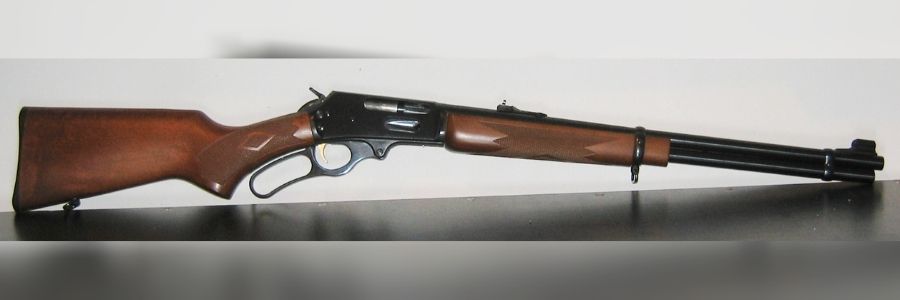

For the investigators, there was no more question: Ronald “Butch” DeFeo Jr. had murdered his family in their sleep.
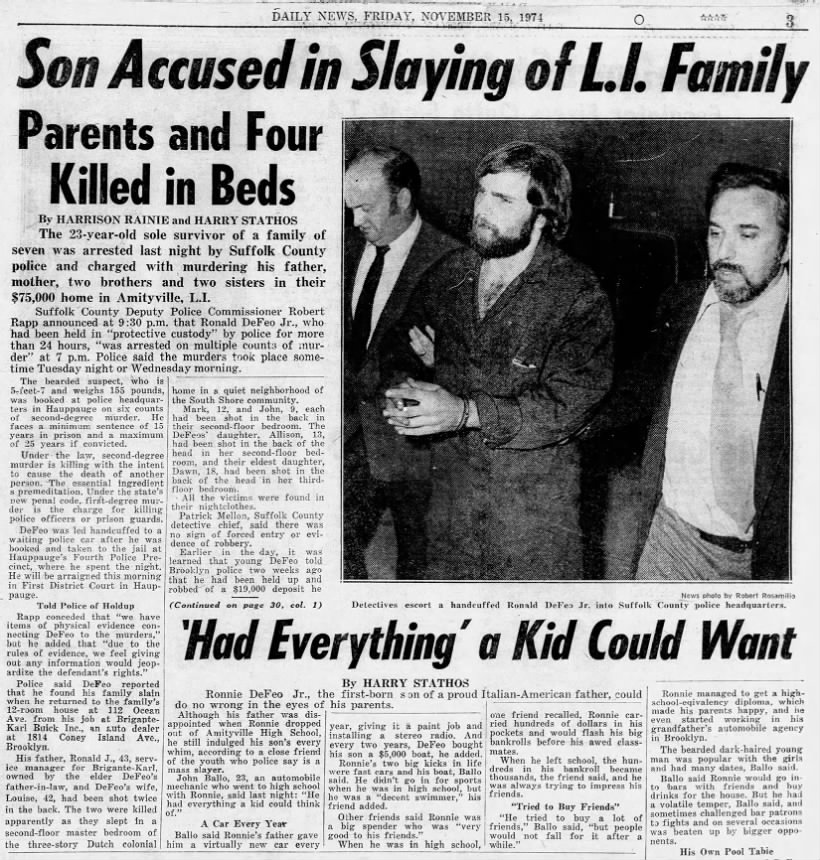
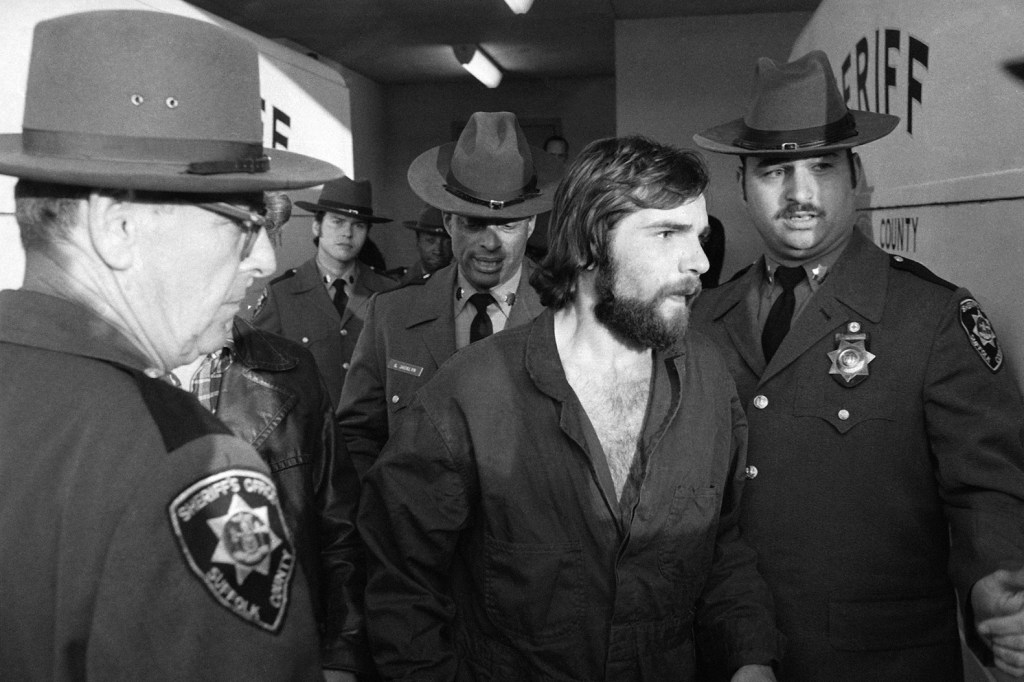
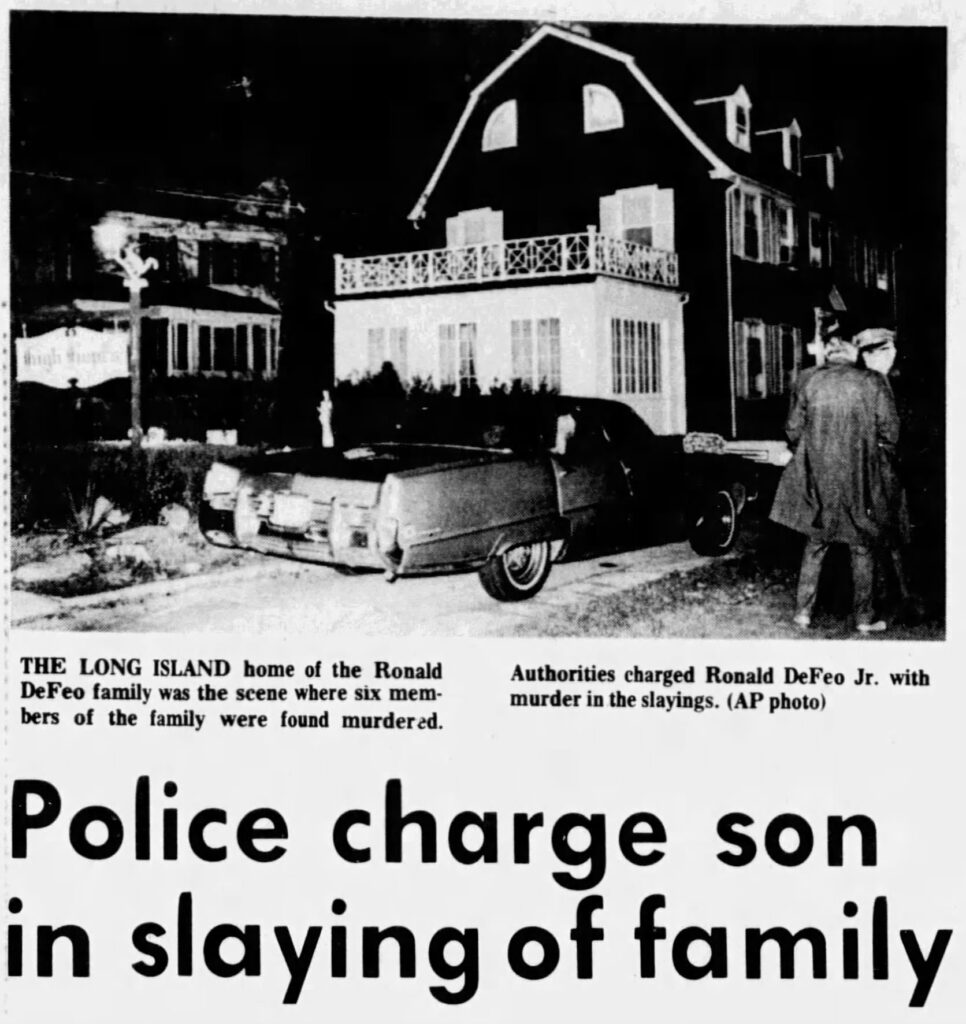


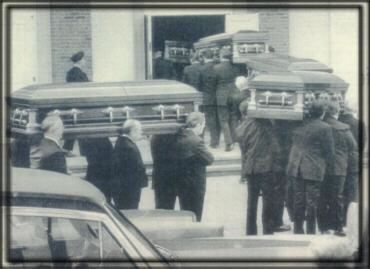
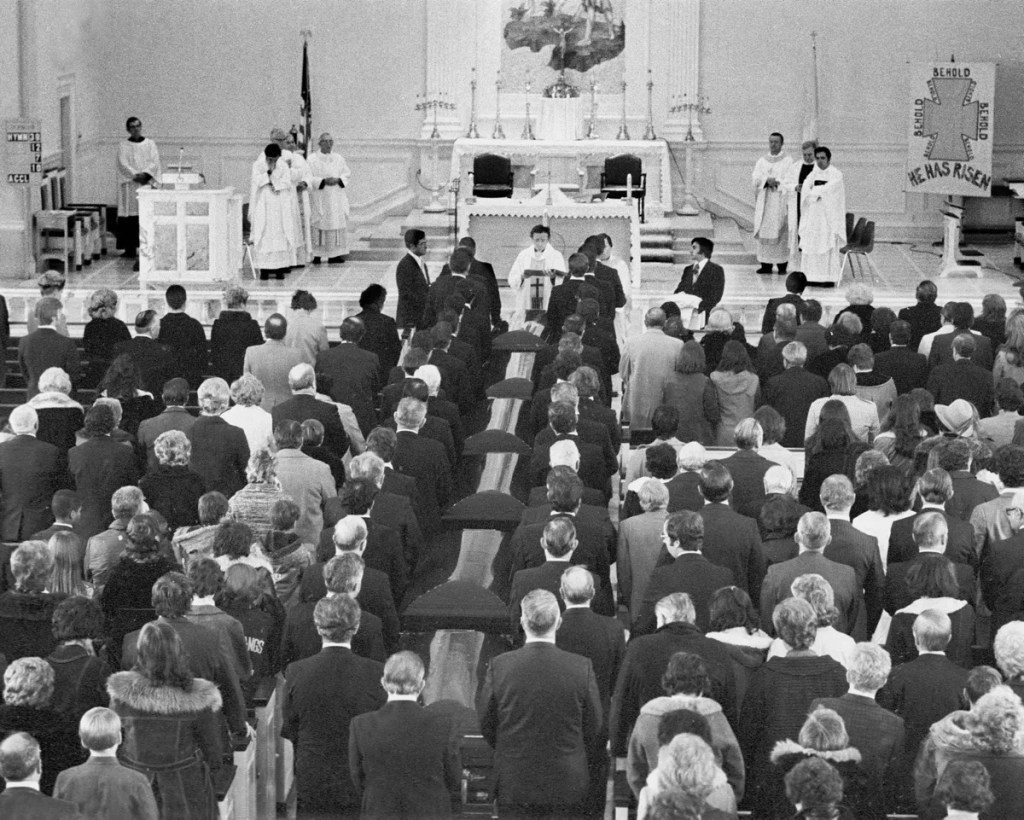
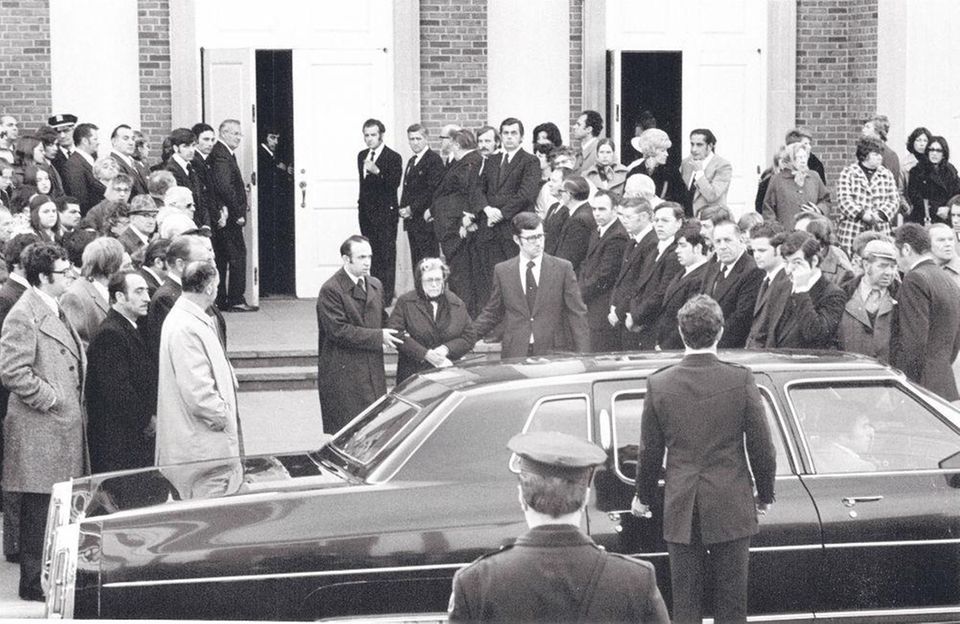
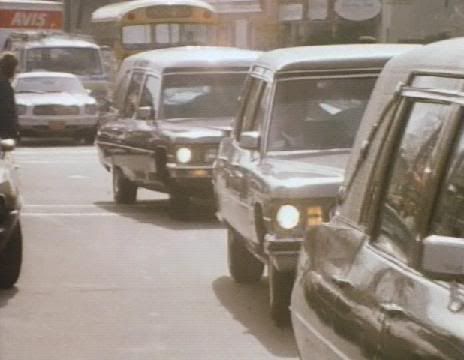
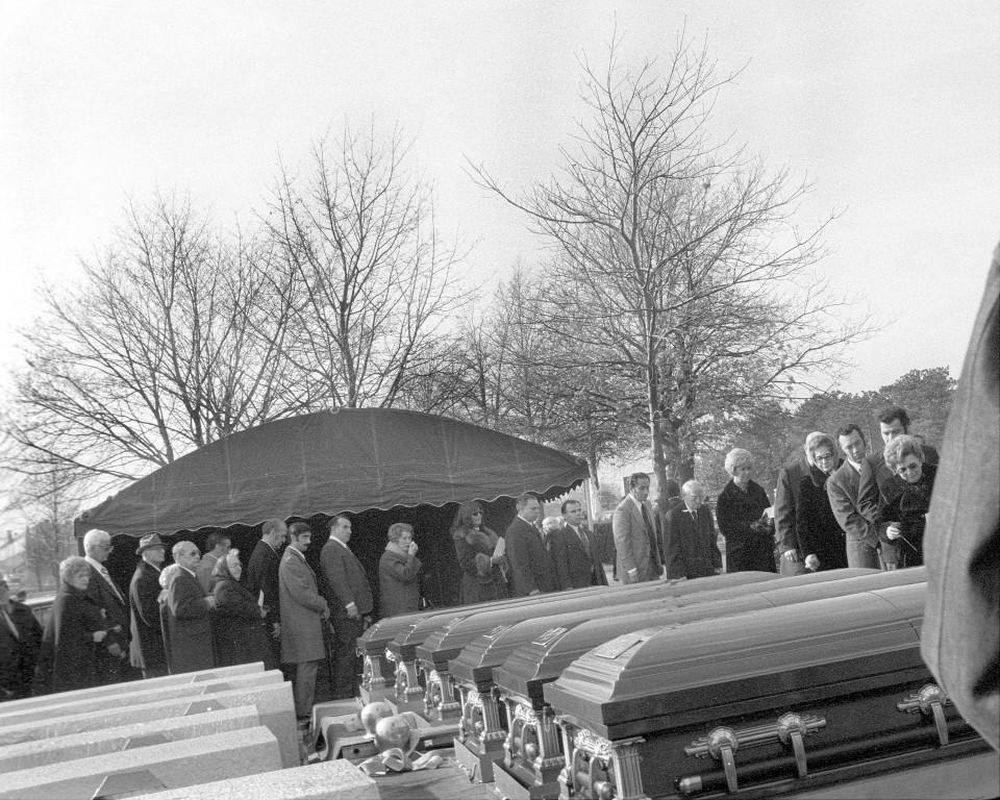
AMITYVILLE, L. I., Nov. 18—Nearly 1,000 friends, relatives and village residents gathered here today at the funeral services for the six members of the DeFeo family who were found murdered in their beds last week.
While the services were held at the St. Martin of Tours Roman Catholic Church, a Suffolk County grand jury in Riverhead handed up an indictment charging the 23‐year‐old surviving son of the family Ronald Jr., with six courts of murder in the second degree.
“What can you say? They gone now and the least could do is to bid them fair well,” one relative said after the Mass of the Resurrection at the church, where the DeFeds had worshiped in the nine years they lived in this village on Long Island’s South Shore.
“They were a nice family” another mourner said
A spokesman for the family said that the services were to have been private but that the “response from sympathizers was overwhelming.” The pews were packed, and outside, watched by a heavy police detail, stood scores of bystanders.

The Trial:
Nearly a year after the murders, the trial of Ronald “Butch” DeFeo Jr. opened on October 14, 1975 in Suffolk County, New York. The task of putting him away for good fell to Assistant District Attorney Gerard Sullivan, a man who’d already spent months studying Butch—his posture, his lies, the way his temper flared like a struck match.
Despite a full confession, despite the gun recovered exactly where Butch said he tossed it, and the bullets that matched it perfectly, Sullivan wasn’t taking chances. He knew juries could be swayed by sympathy, or by the word insanity.
Across the aisle sat defense attorney William Weber, ready to argue that his client wasn’t evil, just ill. Butch had begun claiming that a voice commanded him to kill his family, that something in the house whispered orders he couldn’t resist.
Sullivan’s opening statement set the tone:
“Ladies and gentlemen of the jury,” he said, his voice low but steady, “each of you will leave this courtroom changed. What happened at 112 Ocean Avenue was deliberate, and the evidence will show it.”
He promised the jurors proof that Butch DeFeo was no madman—just a cold, methodical killer.
Weber leaned hard into the insanity plea. When Butch took the stand, he seemed half-detached from reality. Holding up a photo of his slain mother, Weber asked gently, “Ronnie, that’s your mother, isn’t it?”
“No, sir,” Butch replied flatly. “I never saw that person before in my life.”
Weber pressed on, showing a photo of Ronald Sr. “Did you kill your father?”
“I killed them all,” Butch said. “Yes, sir. I killed them all in self-defense.”
The courtroom gasped. Some jurors looked away; others just stared. When asked why he’d done it, Butch said, “If I didn’t kill them, they were going to kill me. When I’ve got a gun in my hand, I’m God.”
Sullivan went in for the kill. Calm, methodical, he started picking apart the lies.
“You felt good at the time?”
“Yes, sir,” Butch said without blinking. “I believe it felt very good.”
“Because you knew they were dead?”
“I don’t know why. I can’t answer that honestly.”
“Do you remember being glad?”
“I remember feeling very good. Good.”
Sullivan kept pushing, needling, breaking through the mask. Butch’s temper finally snapped. “You think I’m playing?” he barked. “If I had any sense, which I don’t, I’d come down there and kill you now.”
After five weeks of testimony, the jury began deliberations on November 19, 1975, almost exactly a year after the killings. Their first vote was 10–2. The holdouts wrestled with whether Butch might have been insane. But after reviewing his own testimony—the threats, the contradictions, the chilling calm—they came back unanimous.
On November 21, 1975, Ronald DeFeo Jr. was found guilty on six counts of second-degree murder. Two weeks later, the judge sentenced him to twenty-five years to life on each count—six consecutive terms.
He would spend the rest of his life in the custody of the New York State Department of Corrections. outburst said more than any closing argument could.

Aftermath & Legacy
With the verdict read and the sentence handed down, the courtroom fell silent. But outside the walls of Suffolk County, the echoes of what happened at 112 Ocean Avenue were just beginning to spread.
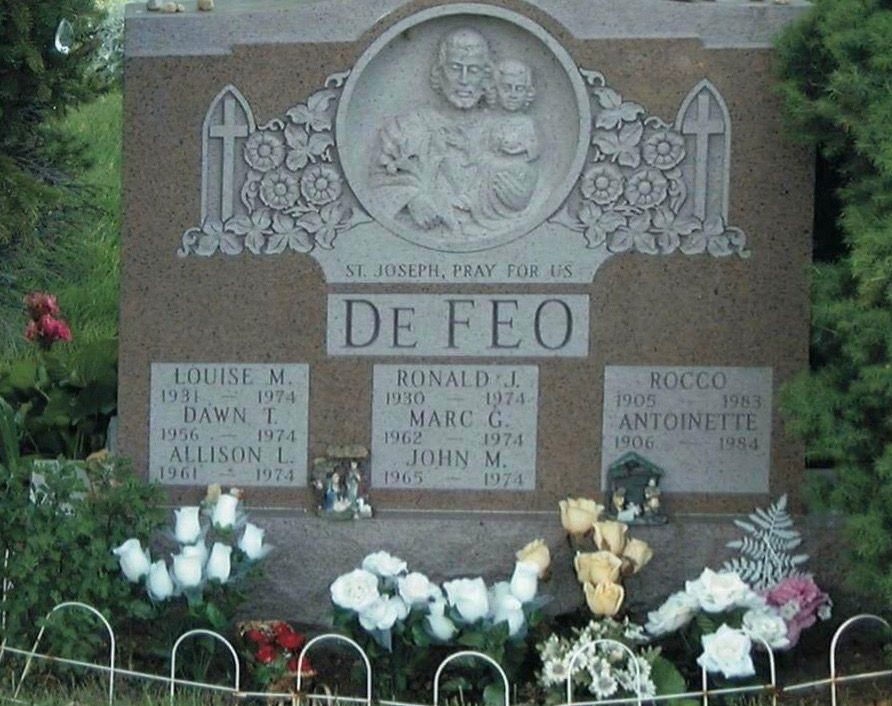
Reporters called it the “Amityville Massacre.” Neighbors called it unthinkable. For months, the big Dutch Colonial sat empty, its windows staring blankly over Ocean Avenue like the hollow eyes of the dead. Butch was locked away, and six graves in Saint Charles Cemetery held what was left of the DeFeo family.
Behind bars, Butch began rewriting his own history. Some days he swore his sister Dawn had helped him. Other days, he claimed voices in the house told him what to do , that something unseen had taken hold of him that night and whispered death in his ear. Those whispers would become the seed of something bigger , and far stranger.
On March 12, 2021 Ronald DeFeo Jr. passed away at the age of 69.

A year later, George and Kathy Lutz moved into the house on Ocean Avenue with their three children. They lasted only twenty-eight days. What they claimed happened there , the voices, the flies, the cold spots, the blood seeping from the walls ,became the book The Amityville Horror, and later, a string of movies that blurred the line between truth and legend.
The real story, the DeFeos’ story, faded into the shadows, swallowed by talk of demons and hauntings. But under the fiction lies the brutal fact: six innocent people died in their beds, killed by someone who should have loved them.
Today, the house still stands, repainted, remodeled, and renumbered. Tourists still slow down to stare. Locals still cross the street to avoid walking past after dark. And somewhere in the quiet of that old house, the echoes of November still linger, a reminder that real horror doesn’t need ghosts to haunt it.
I’ve seen plenty of bad endings in my line of work, but this one sticks like smoke in the lungs. Six bodies, one house, and a story that just won’t stay buried. Some folks say it was the devil whisperin’ in Butch DeFeo’s ear. Others say it was greed, hate, or the bottle. Me? I think sometimes evil doesn’t need a reason, it just needs a place to sit for a while.
They say the new owners painted the shutters, changed the address, tried to scrub away the blood that wasn’t theirs. But the thing about houses like that, kid, is they remember. Every creak, every gust through those walls carries what happened there. And when the night goes still enough, you can almost hear it again, the echo of November, rattlin’ through the bones of 112 Ocean Avenue.
Do I believe the house was haunted? Well, kid… maybe it was. But not the way the Lutzes claimed. Not with demons or green slime or the Devil himself. I think it’s haunted by memory, by the lives lost that night in November of ’74. And that kind of haunting? You don’t need a priest for it. You just need a conscience.
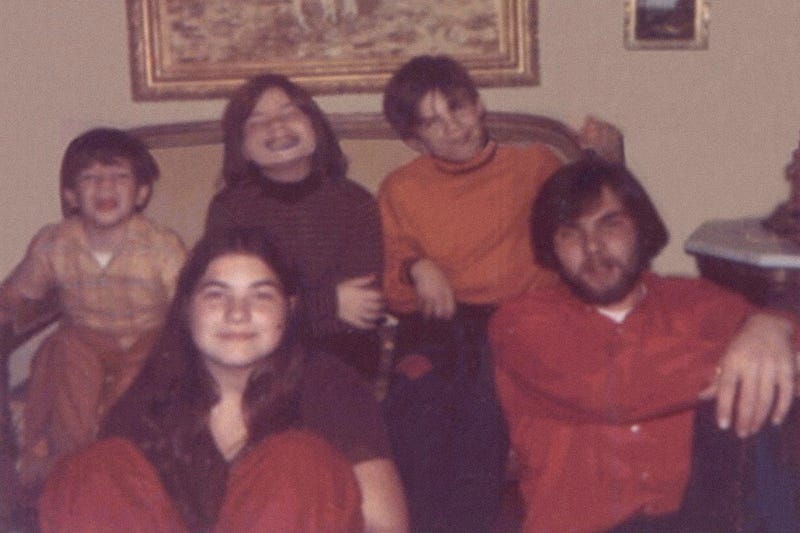
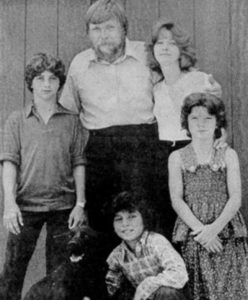
John, Allison, Marc, Dawn, and Ronald Jr. before 112 Ocean Avenue.
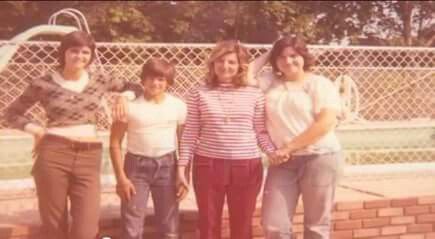
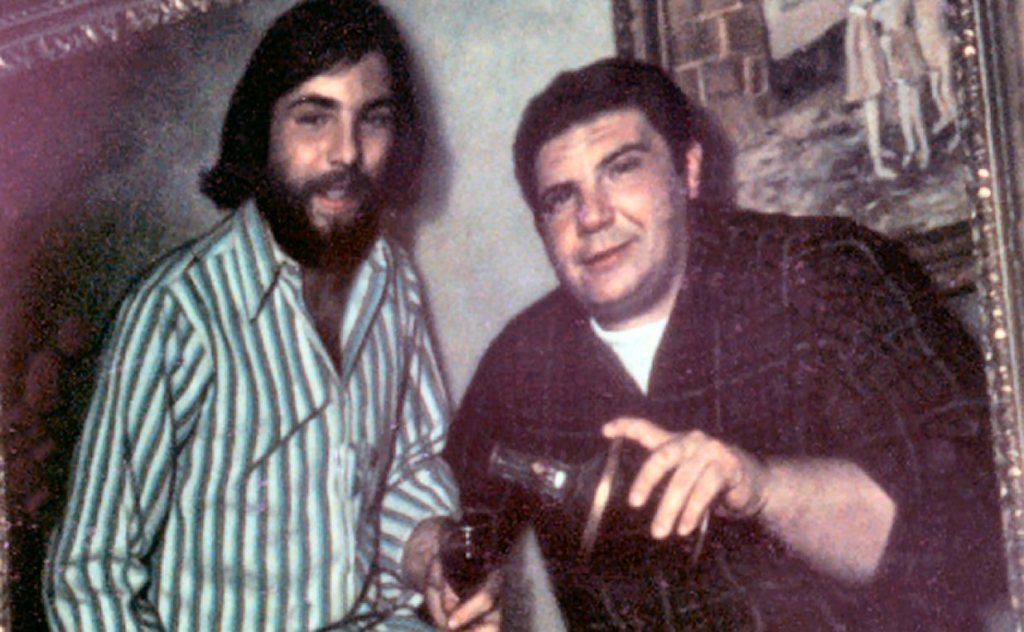
Dawn, Marc, Louise, Allison.

The Truth About The Ghost Boy Photo:


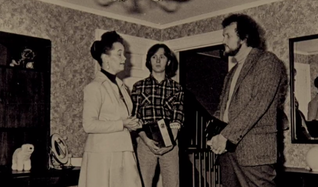
Among the most famous pieces of “evidence” from 112 Ocean Avenue is the so-called ghost boy photo. During an investigation by paranormal researchers Ed and Lorraine Warren, a camera set to fire automatically captured an image of what appeared to be a small boy peeking around a doorway on the second floor. For years, the picture was held up as proof that the DeFeo house was haunted by the spirit of young John Matthew.
But decades later, the mystery unraveled. Paul Bartz, who was about eighteen at the time and assisting the Warrens, came forward in an interview. He explained that he had been kneeling down to examine some equipment when he heard someone coming up the stairs. He peeked around the door at the exact moment one of the motion-triggered cameras flashed. The burst reflected off his glasses, producing the eerie “glowing eyes” effect that made the image famous.
In one admission, the photo shifted from evidence of a ghost to a simple accident of timing and light , another piece of Amityville folklore built on a misunderstanding.
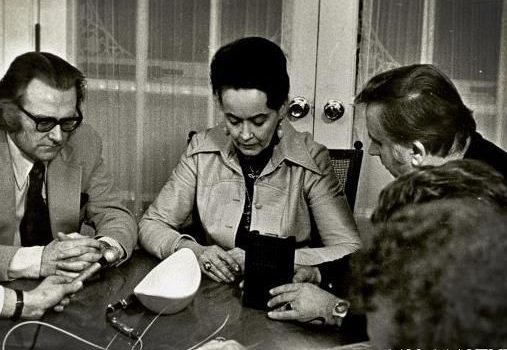
Funny thing about ghosts, kid, they don’t always rattle chains or whisper your name in the dark. Sometimes a ghost is just a story somebody tells to make sense of something they can’t face. The Warrens said they caught the spirit of little John DeFeo peekin’ around a corner, but turns out it was just a kid with glasses and bad timing. A flashbulb, not a phantom.
People will always believe what they want to believe. Maybe it’s easier that way ,easier to picture demons in the house than to face the one that pulled the trigger. Maybe that’s why the legend keeps goin’, year after year, because the truth’s too heavy to carry on its own.
I still say that place is haunted, but not by spirits. It’s haunted by the echoes ,of voices that can’t take back what they said, and of a November night that never really ended.
https://www.findagrave.com/memorial/5066762/ronald_joseph-defeo
https://www.findagrave.com/memorial/5066764/louise_marie-defeo
https://www.findagrave.com/memorial/5066765/dawn_theresa-defeo
https://www.findagrave.com/memorial/5066766/allison_louise-defeo
https://www.findagrave.com/memorial/5066767/marc_gregory-defeo
https://www.findagrave.com/memorial/5066774/john_matthew-defeo
 Crimes and Catastrophe
Leave a comment